Hire a Video Editor for YouTube Channel Growth
Learn how to hire a video editor for YouTube channel growth: where to find talent, what skills to test, real costs, and when a subscription beats one-off hires.
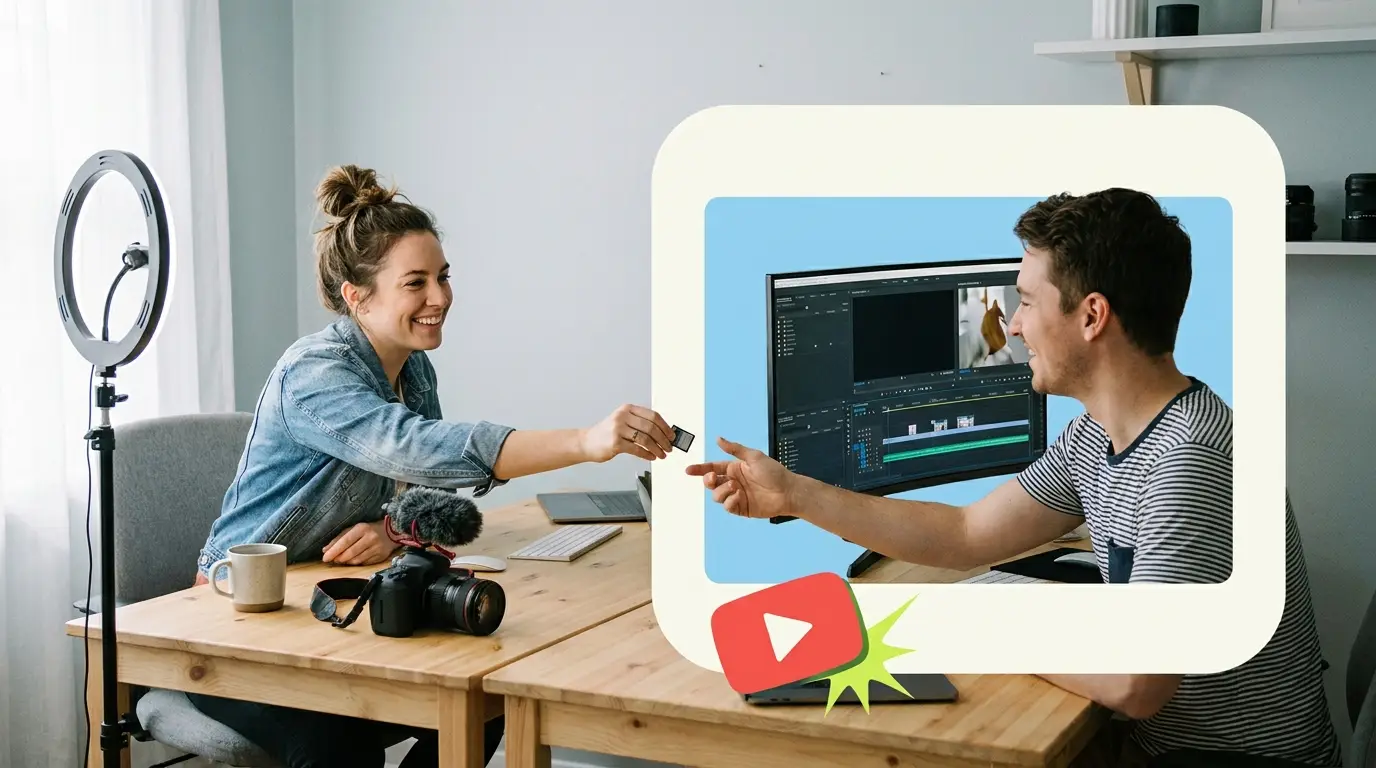
If you want to hire a video editor for YouTube channel growth, you are already thinking like a creator who plans to scale. The decision to hire a video editor for YouTube channel work is rarely about handing off a chore. It is about buying back the hours you spend trimming clips and reclaiming the focus you need for ideas, scripting, and on-camera performance. The right editor protects your watch time, sharpens your hooks, and keeps your upload schedule alive even during the weeks you feel burned out. The wrong one quietly drains your budget and your patience.
This guide walks through where to find editors, what skills actually matter, how to test candidates before you commit, what each hiring model costs, and how to brief and manage the person you choose. It also covers the moment when a done-for-you subscription makes more sense than a traditional hire.
Why editing is the real bottleneck for most channels
Video keeps winning attention. According to Wyzowl, 91% of businesses use video as a marketing tool, and 82% say a video convinced them to buy a product or service. That demand is good news for creators, but it raises the bar. Audiences now expect tight pacing, clean audio, motion graphics, and hooks that earn the first thirty seconds.
The catch is that editing eats time. A single long-form video can take six to ten hours to cut properly, and that is before thumbnails and packaging. When you film, write, edit, and publish alone, editing becomes the wall you hit. Channels stall not because the ideas dry up but because the editing queue grows faster than one person can clear it. Hiring solves that, as long as you hire well.
Where to find a YouTube video editor

You have more sourcing options than ever, and each comes with tradeoffs.
Freelance marketplaces. Sites like Upwork and Fiverr give you a large pool fast. You can filter by YouTube experience, price, and reviews. The volume is high, which means screening matters. Look for editors who show real YouTube work, not just wedding reels or corporate explainers.
Creator communities and Discord servers. Many strong editors hang out in niche communities built around editing software or specific channels. These referrals tend to be higher quality because someone in the community vouches for the work.
Job boards and direct outreach. Posting on YouTube editing job boards or reaching out to editors whose work you admire on other channels can surface talent that never touches a marketplace. The best editors are often already booked, so a direct, specific message helps.
Agencies and subscription services. Instead of finding and vetting an individual, you hire a company that assigns an editor and manages quality for you. This trades a higher monthly rate for far less management overhead, which we cover in detail below.
If you are weighing the broader build-versus-buy question, our guide on how to outsource video editing breaks down the full sourcing process step by step.
What to look for in a YouTube editor
Editing for YouTube is not the same as editing a film or a commercial. The skills that move the needle are specific.
Retention editing. This is the single most important skill. A retention editor understands that every second has to earn the next one. They cut dead air, add pattern interrupts, layer in b-roll and graphics at the right beats, and watch the audience retention graph the way a trader watches a chart. Ask candidates how they think about retention. If they only talk about "making it look clean," keep looking.
Hook construction. The first fifteen to thirty seconds decide whether a video lives or dies. A good editor can take your raw intro and restructure it so the payoff lands faster, the stakes are clear, and the viewer has a reason to stay. Hooks are a craft, not an afterthought.
Pacing and rhythm. Great editors feel the rhythm of a video. They know when to let a moment breathe and when to cut hard. Pacing is what separates an edit that feels alive from one that feels like a slideshow.
Story structure. Even a talking-head video has a narrative arc. Editors who understand structure can tighten a rambling recording into a clear beginning, middle, and end without losing your voice.
Reliability. This one is unglamorous and underrated. An editor who turns around clean cuts on a predictable schedule is worth more than a slightly more talented one who vanishes for a week. Consistency is what lets you build a real upload cadence.
Brand consistency. Your channel has a look: fonts, colors, lower thirds, sound effects, captions. A strong editor maintains that style so your videos feel like they belong together.
How to test candidates before you commit

Never hire on a portfolio alone. A reel shows their best moment, not their average week. Run a paid test edit instead.
Send two or three candidates the same five to ten minutes of your raw footage along with a short brief. Pay them fairly for the test, because free work attracts the wrong people and insults the right ones. Then judge the results against the skills above. Did they fix the hook? Did they cut the boring parts? Did they match your style without being told every detail? Did they hit the deadline you set?
Pay attention to communication too. The test is also a preview of what working together feels like. An editor who asks smart clarifying questions up front will save you hours of revisions later. One who disappears or delivers late during a paid audition will not improve once they have the job.
For a deeper framework on building this process so it survives past your first hire, see our piece on how to scale a YouTube channel without editing yourself.
What it costs: freelance, in-house, and subscription
Cost is where most creators get surprised, so let us put real numbers on each model.
Freelance, per video. Independent editors typically charge $75 to $250 per video for standard long-form work, with rates climbing for heavy motion graphics, faster turnaround, or longer runtimes. The general market for freelance and project work runs from $500 to $3,000 depending on scope and complexity. This model is flexible and low-commitment, but costs scale linearly. If you upload eight videos a month, the bills add up quickly, and you carry all the management.
Agency or project-based. Agencies charge $500 to $5,000 or more per project. You get polish and reliability, but the per-video math rarely makes sense for a creator publishing on a regular cadence.
In-house hire. Bringing an editor on as a full-time employee gives you the most control and dedication. According to ZipRecruiter salary data, a video editor in the United States earns roughly $55,000 to $75,000 per year, and that is before benefits, software licenses, hardware, payroll taxes, and the cost of managing them. For a single channel that is a heavy fixed cost, and you still have to cover gaps when that one person takes vacation or gets sick.
Subscription, done-for-you. A flat monthly subscription gives you a dedicated editor and managed quality for a predictable fee. This sits between freelance flexibility and in-house dedication. We break the tradeoffs down further in our comparison of a dedicated video editor versus an in-house hire and in our full outsource YouTube video editing cost breakdown.
The HubSpot research on video marketing statistics makes the broader point clear: video is too central to your growth to treat editing as an afterthought. Whatever model you pick, the editor is an investment in your channel's compounding output, not a line item to minimize.
How to brief and manage your editor

Hiring is only half the job. How you brief and manage the relationship decides whether you get great videos or a constant stream of revisions.
Write a style guide. Document your fonts, colors, caption style, music preferences, pacing notes, and the things you never want to see. A one-page guide saves dozens of corrections and lets a new editor match your channel from the start.
Give clear, footage-specific briefs. For each video, note the hook you want, the sections to keep or cut, any specific b-roll or graphics, and the deadline. The clearer the brief, the fewer revision rounds you need.
Set a feedback loop. Use timestamped notes instead of vague comments like "make it punchier." Point to the exact second and say what you want. Editors cannot read your mind, but they can follow a clock.
Protect the schedule. Agree on turnaround times and stick to a rhythm. If you send footage on Mondays and expect a first cut by Wednesday, hold both sides to it. Predictability is what makes the partnership scale.
Build a backup. Single editors get sick, travel, and burn out. Have a plan for coverage, whether that is a second freelancer or a service that guarantees turnaround regardless of who is out.
What Pixel8 Production offers
Pixel8 Production is a done-for-you B2B video editing subscription built for creators and brands that publish on a schedule and do not want to manage a freelancer roster or carry a full-time salary.
For a flat $2,000 to $3,200 per month, you get a dedicated editor who learns your style, a 48-hour turnaround on most edits, and unlimited revisions until the cut is right. There is no per-video billing to track, no recruiting and onboarding cycle, and no scramble when one person is unavailable. The dedicated-editor model means your videos stay consistent because the same person owns your channel's look, while the subscription structure removes the management overhead that comes with hiring and supervising an individual.
That predictability is the point. You know your monthly cost, you know your turnaround, and you know your videos will sound and look like your channel. If you want to understand how this model fits a growing channel, our overview of a done-for-you video editing service covers the workflow in detail.
When a subscription beats a one-off hire
A one-off freelance hire is the right call when your needs are occasional. If you publish once or twice a month, want maximum flexibility, or are still testing whether you even like delegating, paying per video keeps your commitment low.
A subscription wins when volume, consistency, and reliability matter more than flexibility. If you publish weekly or more, if revision cycles are eating your week, or if you have been burned by editors who vanished mid-project, a flat-fee dedicated service removes the friction. You stop being a recruiter and a project manager and go back to being a creator.
The math often favors the subscription sooner than people expect. Once you are publishing four to eight videos a month, per-video freelance costs and the hidden cost of your own management time frequently exceed a flat monthly fee, and you lose the reliability guarantee on top of it. An in-house hire only pencils out when you have enough volume to keep a salaried editor busy full time, which most single channels do not.
Bottom line
Hiring a video editor is one of the highest-impact moves a YouTube creator can make, and our roundup of the best video editing services for YouTube creators compares the realistic options side by side. because it buys back the hours editing steals and protects the consistency your channel needs to grow. Decide based on volume and reliability, not just the cheapest rate. For occasional uploads, a tested freelancer is a smart, flexible start. For steady weekly publishing, the predictability of a dedicated editor on a flat subscription usually wins on both cost and peace of mind. Whichever path you choose, hire for retention skill and reliability first, brief clearly, and protect your schedule, and the editor will pay for themselves in watch time and the time you get back.
Where to go from here
Frequently asked questions
How much does it cost to hire a video editor for a YouTube channel?
Freelance editors usually charge $75 to $250 per video, with the broader market for freelance and project work ranging from $500 to $3,000 depending on complexity. A full-time in-house editor costs roughly $55,000 to $75,000 per year before benefits and overhead. A done-for-you subscription like Pixel8 Production runs $2,000 to $3,200 per month. A $900 trial is available to test the service before committing to a monthly plan.
What skills should a YouTube video editor have?
The most important is retention editing: cutting dead air, building strong hooks, and pacing the video so each second earns the next. Beyond that, look for story structure, brand consistency, and reliability with deadlines.
Should I hire a freelancer or a full-time editor?
Freelancers are best for low or occasional volume and maximum flexibility. A full-time editor only makes financial sense when you publish enough to keep one person busy all week. For steady weekly publishing, a subscription often beats both.
How do I test a video editor before hiring?
Send two or three candidates the same short clip of raw footage with a brief, and pay them fairly for the test edit. Judge whether they fixed the hook, cut the boring parts, matched your style, and hit the deadline. The test also previews their communication.
How fast should a YouTube editor turn around a video?
Turnaround depends on length and complexity, but a healthy cadence for long-form is two to four days for a first cut. Pixel8 Production offers a 48-hour turnaround on most edits, which keeps a weekly schedule comfortable.
How do I manage a video editor so I get fewer revisions?
Write a one-page style guide, give footage-specific briefs for each video, and leave timestamped feedback instead of vague notes. Clear input up front and precise corrections after are what reduce revision rounds.
When is a video editing subscription better than hiring an individual?
A subscription wins when you publish weekly or more, when revision cycles are draining your time, or when you need a reliability guarantee no single freelancer can promise. It removes recruiting, management, and coverage gaps for a predictable monthly fee.

Prakhar Mehta
Pixel8 is a done-for-you video editing subscription, giving SaaS companies, agencies, and founders a dedicated editing team with 48-hour turnaround.
Ready to stop doing this yourself?
Get a dedicated video editing team. 48-hour turnaround, unlimited revisions, month-to-month.