Done for You Video Editing Service: The Complete B2B Guide
Everything B2B teams need to know about done-for-you video editing services: scope, pricing, ROI, and how to choose the right partner. Get started today.
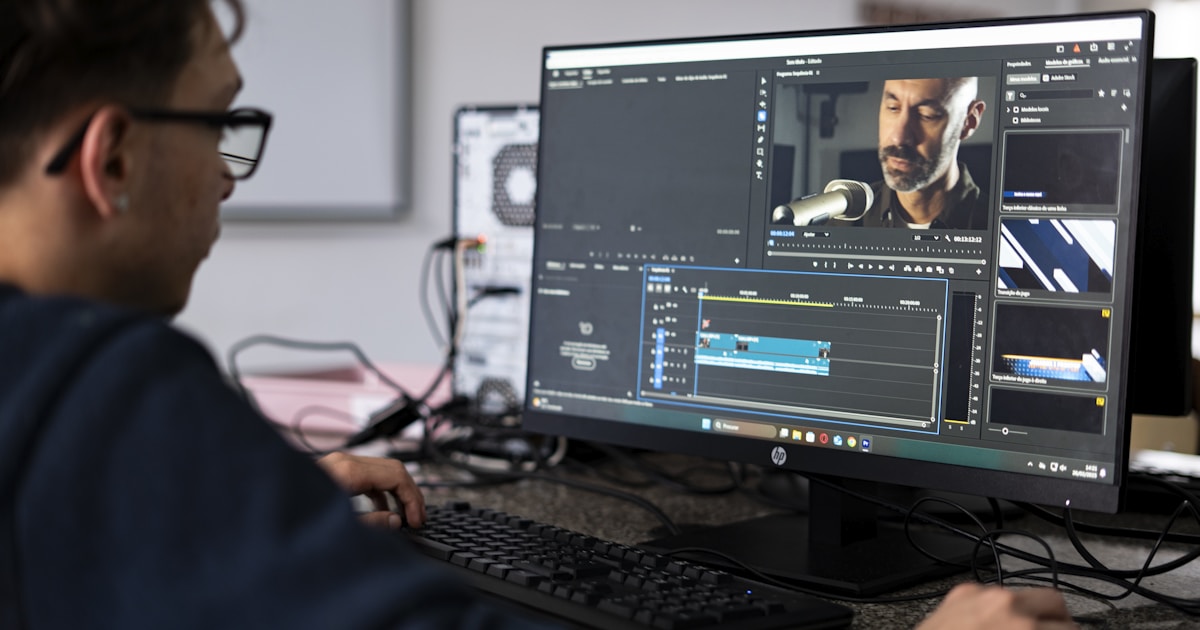
If your team produces video content but the editing bottleneck is slowing down your output, a done for you video editing service could be the structural fix you need. Rather than hiring a full-time editor or chasing freelancers through Upwork, you hand your raw footage to a dedicated production partner and get polished, brand-consistent video back on a predictable timeline. This guide covers exactly what DFY video editing means for B2B teams, how to evaluate your options, what realistic ROI looks like, and how to avoid the most common mistakes companies make when outsourcing video post-production.
What "Done for You" Actually Means in Video Editing
The phrase "done for you" gets used loosely in the marketing world, so it is worth being precise about what it means in a video editing context.
A done-for-you video editing service takes ownership of the entire post-production workflow. You provide the raw materials: footage, brand guidelines, music preferences, copy for captions, any graphics assets. The service handles everything from that point forward, including editing, colour grading, motion graphics, caption formatting, aspect ratio variants, and final export for each platform you need.
This is different from three things that companies often confuse it with:
Marketplace freelancers. When you post a job on Fiverr or Upwork, you are hiring an individual for a single project. You still manage the brief, revisions, quality control, and the inevitable knowledge transfer when that person is unavailable. You are doing the work of a project manager, just for less than agency rates.
Per-project production agencies. Traditional agencies quote each project separately. You re-negotiate scope every time, wait for contract paperwork, and start the relationship from scratch with each brief. This model is well-suited to a once-a-year brand film, but it breaks down when you need consistent weekly output.
In-house editing teams. An employee gives you the deepest brand integration over time, but at a cost. Salary is only 60 to 70 percent of the true cost of an employee when you factor in employer taxes, benefits, software licences, equipment, sick leave, and training. The moment that person is unavailable, your video pipeline stops.
A DFY video editing service sits in a distinct category. You pay a flat monthly retainer. A dedicated editor or small team is assigned to your account. They learn your brand once, and that knowledge compounds over time. You submit footage and get edited video back within an agreed turnaround window, typically 24 to 72 hours depending on complexity. There are no project-by-project negotiations and no staffing coverage gaps.
The result is a production infrastructure without the infrastructure overhead.
Who Actually Needs a DFY Video Editing Service

Not every company is the right fit. A founder recording three social clips a month does not need a retainer service. Here is the ideal customer profile, broken into four categories that consistently benefit most from outsourced video editing.
B2B SaaS Companies
SaaS marketing teams are producing video at a pace that makes per-project agencies impractical. A typical SaaS content programme in 2026 includes product explainers, demo recordings, tutorial clips, customer stories, LinkedIn thought leadership videos, webinar highlights, and short-form social content. That can easily amount to 20 or more deliverables per month.
According to recent industry data from Wyzowl, 81 percent of companies have a dedicated video marketing budget, and for many B2B teams, video accounts for 41 to 60 percent of their overall marketing spend. When video is that central to your go-to-market, managing it on a freelancer-by-freelancer basis creates unacceptable operational risk.
For SaaS companies specifically, read our deeper analysis on outsourcing video editing for SaaS companies to understand the workflow patterns that work best at scale.
Marketing and Creative Agencies
Agencies that offer video services to clients but do not want to build an in-house editing department use DFY editing as white-label infrastructure. You take on client video work, pass the raw footage to your white-label production partner, and deliver polished content under your own brand.
This model is especially powerful because the economics scale with client revenue. Rather than carrying a fixed salary line for an editor who may be under-utilised in slow months, you pay for production capacity you actually use.
B2B Founders and Thought Leaders
LinkedIn video content for B2B founders has become one of the highest-ROI awareness channels in 2026. A founder recording two or three talking-head videos per week needs someone to handle the edit, the captions, the thumbnail, and the aspect ratio variants for each platform. That is not a job for a C-level executive. It is a job for a dedicated service that turns around personal brand content in 24 hours or less.
Corporate Marketing Teams with Recurring Video Needs
Enterprise marketing teams with a steady flow of internal communications, training videos, event recaps, and campaign content benefit from a retainer model because the work never really stops. Rather than spinning up a procurement process for each project, they maintain an always-on production relationship that absorbs new briefs without friction.
What a Done For You Video Editing Service Includes
Scope varies by provider, but a professional done for you video production service at the B2B level typically includes the following deliverables and workflow components.
Core Editing Services
The foundation is the edit itself: trimming raw footage, sequencing clips, pacing cuts to match the intended tone, removing filler content, and assembling a coherent narrative. For talking-head or interview content, this includes noise reduction and basic audio correction.
Colour Grading and Visual Consistency
Colour grading ensures that every video you publish looks like it belongs to the same brand. This is particularly important for companies publishing multiple video types across multiple platforms. Inconsistent colour treatment makes content look amateur even when the underlying footage is excellent.
Motion Graphics and Lower Thirds
B2B video almost always requires on-screen text: speaker names, titles, key statistics, calls to action. A DFY service handles these elements within your brand template, so you are not formatting graphics manually for each video.
Captions and Subtitles
With most video consumed on muted feeds, accurate captions are non-negotiable. A professional service provides burned-in captions or SRT files formatted to platform specifications, with accuracy reviewed by a human editor rather than left to auto-generated subtitles alone.
Platform-Specific Exports
A single piece of content may need to be exported as a 16:9 YouTube cut, a 9:16 vertical for Reels and TikTok, and a 1:1 square for LinkedIn. A DFY service handles these variants without you needing to re-brief or pay additional project fees per format.
Thumbnail Creation
For YouTube and long-form content, thumbnails are part of the production deliverable. This includes basic graphic design, text overlay, and a consistent visual template that drives click-through rate.
Revision Cycles
Professional DFY services include a defined number of revision rounds in the monthly fee, typically one or two rounds. This is meaningfully different from a freelancer engagement where every change request re-opens scope negotiations.
DFY Video Editing vs. the Alternatives: Full Cost and Quality Comparison

This is the table most companies need before making a decision. The numbers below reflect realistic 2026 market rates for a B2B team producing between 10 and 20 videos per month.
| Factor | DFY Service (Retainer) | Per-Project Agency | Freelancer | In-House Editor |
|---|---|---|---|---|
| Monthly cost (10-20 videos) | $2,000 to $5,000 | $8,000 to $20,000+ | $1,500 to $4,000 (variable) | $5,500 to $9,000 (fully loaded) |
| Turnaround time | 24 to 72 hours | 5 to 14 days | 3 to 7 days | 1 to 3 days |
| Brand consistency | High (dedicated team) | Medium (varies per PM) | Low to medium | High |
| Scalability | High | Low (re-negotiate each time) | Medium (hire more freelancers) | Low (hire more staff) |
| Operational overhead | Very low | High | High | Very high |
| Quality control | Built-in (agency QC) | Built-in | Self-managed | Self-managed |
| Coverage during holidays/illness | Yes | Yes | No | No |
| Knowledge transfer risk | Low | High | Very high | Medium |
The fully loaded cost of an in-house editor in the US is typically $65,000 to $90,000 per year when salary, benefits, payroll taxes, equipment, software, and desk space are included. That is $5,400 to $7,500 per month for a single person who cannot cover themselves if they are sick, on leave, or burnt out.
A freelancer appears cheaper until you add the hours spent vetting candidates, managing briefs, chasing revisions, and re-onboarding when someone becomes unavailable. Industry analysis consistently puts that overhead at 5 to 20 hours per month in management time alone.
The retainer model beats both options on total cost of ownership for any team producing more than 8 to 10 videos per month. For a deeper breakdown of how subscription pricing compares at different volume levels, see our guide to video editing subscription pricing.
For teams specifically weighing the freelancer option, our comparison of video editing subscription vs. freelancer covers the decision in more detail, including the volume breakeven point.
How to Evaluate a DFY Video Editing Service
Not all services are built the same. Here is what to assess before committing to a monthly retainer.
Dedicated Editor vs. Shared Pool
Some services assign you a dedicated editor who works on your account consistently. Others route your work through a pool of available editors. The difference matters enormously for brand consistency and turnaround time predictability.
A dedicated editor who spends months on your account develops an intuition for your brand that no amount of brand guidelines can fully replicate. They learn which cuts you like, how much breathing room you prefer between sentences, when your audience needs a B-roll cutaway versus a talking-head hold. That institutional knowledge is compounding. A shared pool editor starts from scratch every time.
When evaluating services, ask directly: "Will I have the same editor on every project?" If the answer is vague, treat it as a red flag.
Turnaround Guarantees
A reputable service puts turnaround times in the contract, not just in the sales deck. For most B2B use cases, 48 hours for a standard edit is the benchmark. If a service cannot commit to this in writing, they likely do not have the production capacity to back it up.
Revision Policy
Understand exactly what counts as a revision and how many rounds are included. Some services define "revision" narrowly, meaning that a request to change the music track counts as a separate paid request. Others are more generous. Get this in writing before you sign.
B2B vs. Creator Focus
Many video editing subscription services were built for solo YouTube creators and influencers. Their workflows, turnaround times, and quality standards are calibrated for high-volume, lower-stakes content: gaming commentary, reaction videos, daily vlogs.
B2B production has different requirements. Corporate tone, accurate transcription, brand guideline compliance, stakeholder review cycles, and multi-platform delivery all require a service that has experience working with marketing teams rather than individual creators. Ask for case studies and client references from B2B accounts specifically.
A service like Pixel8 Production is built explicitly for B2B clients, with pricing and workflows designed around the needs of marketing teams, SaaS companies, and agencies rather than solo creators. That structural difference matters more than it might seem on the surface.
Communication and Project Management
How do you submit footage? How do you leave feedback? Where do deliverables land? The best services have a structured intake process: a client portal, a project brief template, and a clear feedback mechanism. Services that manage everything through email introduce unnecessary friction and create version control problems.
Ask to see the client portal or workflow tool before signing up. If it does not exist, that is a signal about the maturity of the operation.
Red Flags to Watch For
- No published client list or case studies
- Turnaround promises that seem implausible (same-day delivery for complex edits)
- Pricing that seems too low for the scope described (under $500/month for B2B-quality editing)
- No dedicated editor model
- Contracts with no service level guarantees
How the Onboarding and Workflow Works

A well-run done for you video editing service onboards you once and then runs on repeatable systems. Here is what a typical onboarding process looks like.
Week One: Brand Discovery
The service collects everything they need to understand your brand: your brand guidelines, example videos you like, example videos you do not like, your target audience, your tone of voice, your typical video formats, and the platforms you publish on. Some services also conduct a kick-off call with your editor to discuss preferences that do not fit neatly into a brief.
Week Two: Template Building
Before producing your first real video, the service builds the production templates they will use on every future project: your lower third design, your intro and outro animations, your colour grade preset, your caption style, and your music library shortlist. This one-time investment is what makes all future projects faster and more consistent.
Ongoing Workflow
Once onboarded, the cycle is simple. You record footage and upload it to the shared drive or client portal. You submit a brief (typically a form or template that takes five minutes to fill in). The editor produces the first cut within the agreed turnaround window. You review and leave timestamped feedback. The editor delivers the final version. Repeat.
The best services reduce the brief to a minimum: they already know your brand, your preferences, and your formats well enough that a new project brief is just "here is the footage, here is the title, here is the CTA." That level of efficiency takes two to three months to reach, but it is one of the most valuable aspects of a long-term retainer relationship.
For a broader overview of how subscription-based video editing services structure their delivery systems, see our guide to video editing subscription services.
ROI and Results: What Good Looks Like
The business case for a DFY video editing service is straightforward, but it is worth being specific about what you should expect to see.
Volume of Output
The most immediate result is an increase in video output without an increase in team headcount. Companies that move from a freelancer or in-house model to a DFY retainer typically see their monthly video output double within the first 90 days, simply because the bottleneck has been removed.
Industry data supports this: one case study of a business that outsourced its video editing saved 20 hours per week in production management time and doubled its content output in the same period. When content output doubles, every downstream metric that depends on content volume improves proportionally.
Speed to Publish
A 48-hour turnaround versus a 5-to-14-day agency cycle means your content reaches your audience faster. For campaign-tied content, product launch videos, or event recaps where timing matters, this speed differential is a direct commercial advantage.
Consistency and Brand Equity
Consistent visual treatment across all video content builds brand recognition over time. This is hard to quantify in a single quarter, but marketing leaders consistently report that a coordinated video brand presence improves ad performance, increases content credibility, and reduces the cognitive effort required for prospective buyers to understand what a company does.
Cost Per Video
At 15 videos per month on a $3,000 retainer, your cost per video is $200. That same volume through a per-project agency at typical B2B rates would cost $800 to $1,500 per video, or $12,000 to $22,500 per month. The economics are not close.
Retainer clients in the video production market typically pay 20 to 40 percent less per video than per-project clients, and that gap widens as volume increases.
Freeing Internal Capacity
The hidden ROI that most companies underestimate is the internal time that a DFY service frees up. When your marketing manager is not spending 15 hours per week managing freelancers, chasing deliverables, and re-briefing revisions, those 15 hours go back into strategy, campaign planning, and revenue-generating activities. That is a meaningful return that does not show up in a cost-per-video calculation.
How to Choose the Right Done For You Video Editing Service for Your Business

With those evaluation criteria in mind, here is a practical decision framework.
Step 1: Define Your Volume and Format Mix
Before you compare services, know what you actually need. How many videos per month? What formats: long-form, short-form, social clips, webinar edits, testimonials? What platforms? This information determines whether a given service's pricing tier is appropriate and whether their team has experience with your content types.
For companies with a strong short-form video requirement, our guide to short-form video editing services covers what to look for in a service built for Reels, Shorts, and TikTok formats specifically.
Step 2: Audit Your Current Workflow
Map out where your video production currently breaks down. Is it at the raw footage stage, the editing stage, the review and approval stage, or the publishing stage? A DFY service solves the editing and production stage. If your real problem is that your team cannot create enough raw footage, a service will not fix that. If your bottleneck is everything after the camera stops rolling, a DFY service is the right intervention.
Step 3: Set a Realistic Budget
For B2B-grade done for you video production, the realistic minimum for a quality service with dedicated editors is around $2,000 per month. Services priced below this for B2B volumes are almost always using shared editor pools, offshore-only teams with limited brand sensitivity, or are making quality trade-offs that will cost you more in revision cycles.
Pixel8 Production, for example, works with B2B clients at the $2,000 to $3,200 per month range and delivers dedicated editor assignments, 48-hour turnarounds, and a flat monthly rate that includes revision rounds. That pricing sits in the middle of the market and is calibrated for marketing teams that need quality and reliability, not just low cost per clip.
Step 4: Run a Paid Trial
The only way to properly evaluate a video editing service is to give them a real project. Any reputable service will offer a trial project or first-month arrangement that lets you assess quality, turnaround, communication, and revision responsiveness before committing to an annual retainer. If a service is unwilling to let you test the product, treat that as a disqualifying signal.
Step 5: Evaluate the First Month Honestly
At the end of the first month, ask these specific questions:
- Did every deliverable meet the promised turnaround?
- Did you need to explain your brand guidelines more than once?
- How many revision rounds did each video require?
- Was communication clear and proactive?
- Did you spend more or less time managing this than your previous approach?
If the answers are positive, you have found a service worth scaling with. If the answers are mixed, raise the specific issues with the account manager before deciding whether to continue.
Step 6: Look for a Long-Term Partner, Not a Vendor
The full value of a done-for-you video editing service compounds over time. An editor who has worked on your brand for twelve months produces better output in less time than an editor in month one. The templates are more refined, the brand knowledge is deeper, and the communication is more efficient. The services that deliver the most ROI are the ones you build a genuine production relationship with, not the ones you swap out whenever a cheaper option appears.
For companies that want a dedicated editor as their primary model rather than a team-based approach, our comparison of dedicated video editor vs. in-house hire covers the trade-offs in depth.
For companies producing client testimonial content specifically, Pixel8 Production's approach to video testimonial editing shows how a dedicated service handles interview footage, B-roll sourcing guidance, and customer story formatting.
Common Mistakes Companies Make When Switching to a DFY Video Service
Even teams that choose the right service can undermine the result during the transition. These are the mistakes that consistently reduce ROI in the first 90 days.
Skipping the Brand Discovery Phase
Some companies want to skip onboarding and jump straight to submitting footage. This almost always results in a first month of mediocre output that does not reflect the brand. The time invested in brand discovery, usually two to four hours in the first week, is recovered many times over in reduced revision cycles across every subsequent project. Treat onboarding as a capital investment, not an administrative delay.
Providing Inadequate Footage Briefs
A DFY service can only work with what you give them. If you submit footage without context, the editor has to make assumptions about pacing, tone, which sections to cut, and what the call to action should be. A good service provides a brief template that takes five minutes to complete. Teams that skip the brief and just drop footage into the portal are creating unnecessary revision cycles that slow down turnaround and erode the cost advantage of the retainer model.
Treating the Revision Process as a Design Tool
Revisions exist to correct errors and misalignments, not to explore creative directions. If your team uses the revision cycle to experiment with different music tracks, try alternative pacing approaches, or test different CTA placements, you will burn through revision rounds quickly and push turnaround times well beyond the 48-hour standard. Creative direction belongs in the brief, not in revision round two.
Under-briefing on Platform Requirements
A video editor produces what you ask for. If you need a 9:16 vertical cut for Reels in addition to the 16:9 YouTube version, you need to specify this in the original brief. Teams that come back after delivery asking for platform variants that were not in scope create unnecessary back-and-forth and, at services that charge for additional formats, unnecessary cost. Build a standard brief that includes all required formats as a default item.
Choosing a Service Based Solely on Price
The cheapest DFY video editing service is rarely the cheapest option when you account for revision cycles, missed turnaround commitments, and the management time required to compensate for quality gaps. A service that delivers the right output on the first cut at $2,500 per month is less expensive in total than a service that delivers substandard output at $1,200 per month if you spend 10 hours per month correcting and re-briefing. Total cost of ownership includes your time, not just the invoice.
Measuring Success Too Early
The first month of a DFY video editing relationship is the worst the output will ever be. The editor is still learning your brand, the templates are freshly built, and the brief format is still being refined. Teams that cancel after one month because the output is not yet at the level they expected are making a decision at the worst possible point. A fair evaluation requires at least 60 to 90 days of output, after which the compounding benefits of an established relationship become measurable.
The B2B Case for Outsourcing Video Post-Production
Here is the strategic argument, stated plainly.
Video is now a primary channel for B2B demand generation, sales enablement, and customer education. According to 2026 data from Wyzowl, 93 percent of marketers consider video a crucial part of their overall strategy. B2B buyers increasingly expect video content at every stage of the funnel: awareness videos on LinkedIn, product demos on landing pages, customer testimonials in sales sequences, and onboarding tutorials inside the product.
Producing that content volume in-house, at quality, on a consistent schedule, is beyond the realistic capacity of most B2B marketing teams. The alternatives, including hiring full-time editors or managing a freelancer pool, come with overhead costs and operational risks that most teams do not want to absorb.
The outsourced video editing service model exists precisely because the production economics at volume strongly favour specialisation. A dedicated editing service runs the same production system across dozens of clients, which means the processes, tools, quality checks, and brand management workflows are mature and stress-tested in a way that a single in-house hire could not replicate.
For most B2B teams, the question is not whether to outsource video editing. The question is how to choose the right partner and structure the relationship for maximum output at minimum overhead.
The video editing subscription services guide covers subscription and retainer options in more detail if you want to compare service models before narrowing to a specific provider.
Where to go from here
Frequently asked questions
What is a done for you video editing service?
A done-for-you video editing service handles the complete post-production process on your behalf. You provide raw footage and a brief. The service returns finished, branded video ready to publish. This includes editing, colour grading, captions, motion graphics, and platform-specific exports. The model works on a monthly retainer rather than a per-project billing structure, giving you predictable costs and consistent output.
How much does a done for you video editing service cost?
B2B-quality done-for-you video editing typically starts around $2,000 per month and ranges to $5,000 or more depending on volume and complexity. Services priced below $1,000 per month for B2B use cases are generally built for solo creators and solo YouTube channels rather than marketing teams. Per-project agencies delivering comparable quality charge $800 to $1,500 per video, making a retainer model far more cost-effective at volumes above 8 to 10 videos per month.
What is the difference between a DFY video editing service and a freelancer?
A DFY video editing service provides a complete production workflow with project management, quality control, revision cycles, and consistent team assignment. A freelancer is an individual who works independently, with no backup coverage, no built-in quality control layer, and no guaranteed availability. The DFY model removes the management overhead that comes with running a freelancer relationship, which typically adds 5 to 20 hours of coordination work per month.
How long does it take to get videos back?
Most professional DFY video editing services deliver a standard edit within 24 to 72 hours of footage submission. Complex projects with motion graphics, multi-camera editing, or significant B-roll integration may take 48 to 96 hours. Turnaround time should be stated in writing in the service agreement. Anything slower than 72 hours for a standard business video is below the current market standard.
Do I need to send raw footage or finished recordings?
You send raw footage: the unedited recording from your camera, screen capture tool, or phone. The service handles everything from that point. Most services also accept footage recorded on smartphones, provided the resolution and audio quality meet a minimum standard. If your footage quality is a concern, a good service will flag this during onboarding rather than after the fact.
What types of videos can a DFY service edit?
A full-service B2B video editing provider handles a wide range of formats: talking-head interviews, webinar recordings, product demos, explainer videos, customer testimonials, event recaps, social media clips, short-form vertical video, podcast video, and animated explainers. Not all services cover every format. Confirm that the service has demonstrated experience in your specific content types before committing.
How do I maintain brand consistency when outsourcing video editing?
Brand consistency starts with thorough onboarding. You provide your brand guidelines, example videos, graphic assets, music preferences, and any templates in use. A good service builds production templates based on this input that are applied consistently to every project. A dedicated editor model reinforces consistency further because the same person works on your account each time. After two to three months, a quality service produces consistently branded output without needing to be reminded of guidelines on every brief.
Is there a minimum contract length?
Most professional DFY video editing services require a one-month minimum, with some requiring a three-month or six-month commitment. Longer contracts typically come with lower monthly rates. For a first engagement, a month-to-month arrangement or a structured trial is reasonable to request. Avoid services that require twelve-month commitments without a trial period, as this is a sign that the service is not confident in client retention through quality alone.
How is a video editing retainer different from a per-project agency?
A video editing retainer is an ongoing relationship at a fixed monthly cost. You get priority scheduling, consistent team assignment, and no re-negotiation of scope for each project. A per-project agency quotes each engagement individually, typically with a longer lead time for kickoff, separate contracts per project, and no accumulated brand knowledge between projects. For teams with consistent monthly video output, a retainer delivers faster turnaround, lower cost per video, and significantly less procurement overhead.
What should I look for in a B2B video editing service?
The key criteria for B2B use cases are: dedicated editor assignment (not a shared pool), written turnaround guarantees, B2B-specific client references, a structured project portal rather than email-based communication, a clear revision policy, and pricing in a range consistent with B2B production quality. Pixel8 Production meets all of these criteria and operates specifically as a B2B-native service, meaning the workflows, turnaround commitments, and account management processes are designed around marketing team needs rather than creator content volumes.

Prakhar Mehta
Pixel8 is a done-for-you video editing subscription, giving SaaS companies, agencies, and founders a dedicated editing team with 48-hour turnaround.
Ready to stop doing this yourself?
Get a dedicated video editing team. 48-hour turnaround, unlimited revisions, month-to-month.