How to Outsource Video Editing: A Practical Guide
Learn how to outsource video editing the right way. Compare freelancers, agencies, and subscriptions, and avoid the mistakes that waste time and budget.
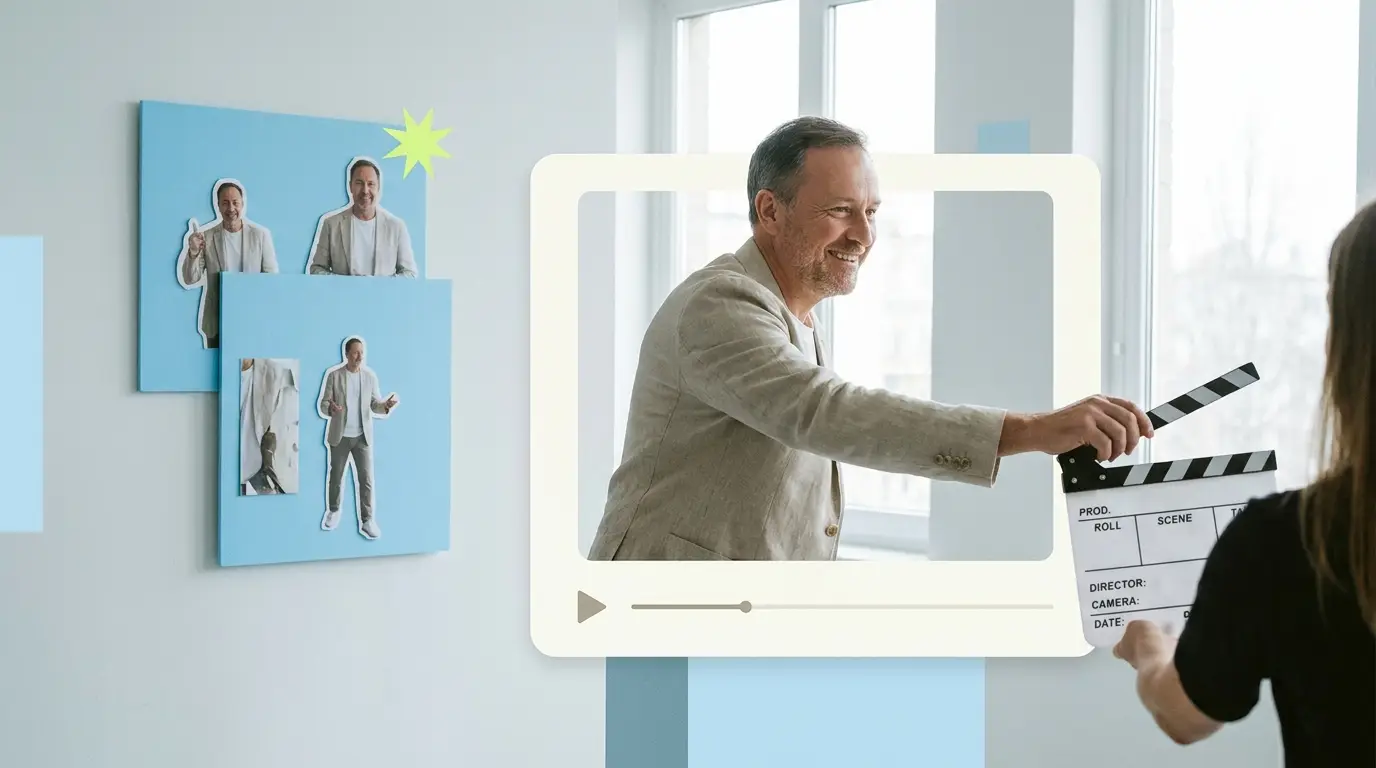
Learning how to outsource video editing is straightforward. Getting it right is not. Done well, it frees your team to focus on strategy, filming, and distribution. Done poorly, it creates a back-and-forth loop that eats more time than doing it yourself.
This guide is for B2B marketing teams, founders, and agencies outsourcing video editing for the first time or frustrated with their current setup. We cover the three main outsourcing models, a step-by-step process, what to include in a brief, realistic costs, and the mistakes worth avoiding before you sign anything.
Three models for outsourcing video editing
Before you start searching for an editor, you need to know which type of service actually fits your situation. If you are specifically considering offshore partners, our ranking of the top video editing agencies in India covers that market and how to avoid the cheap-outsourcing trap. There are three main models, and they are not interchangeable.
Freelancers
A freelance editor works project by project, usually sourced through platforms like Upwork or Fiverr. You hire them for a specific deliverable, pay per video, and the relationship ends when the project does.
Best for: Teams that produce video occasionally (fewer than two or three per month), one-off projects, or businesses that want to test outsourcing before committing to anything longer term.
Pros: Low barrier to entry. No ongoing commitment. Wide range of styles and price points.
Cons: Inconsistent quality across projects. No institutional memory of your brand. Availability varies. Each new project often requires re-briefing from scratch.
Agency or studio
A video production agency handles editing as part of a broader production service. You typically get a dedicated account manager, access to a team, and a structured project workflow. You pay per project or retainer.
Best for: High-stakes campaigns, brand films, or situations where production and post-production need to be managed together.
Pros: Full-service. Professional project management. High production quality.
Cons: Expensive for ongoing content needs. Long lead times. Not built for teams that need a constant flow of shorter assets like social clips, webinar cuts, or product demos.
Subscription service
A video editing subscription gives you a fixed monthly rate for ongoing editing work. Some services assign you a dedicated editor; others use a team or pool model. You submit requests, get edits back within a set turnaround window, and revise from there.
Best for: B2B marketing teams producing four or more videos per month, companies with a consistent content calendar, and founders who want predictable costs without the overhead of a full-time hire.
Pros: Predictable pricing. Consistent style once the editor knows your brand. Fast turnaround. No recruiting or managing a hire.
Cons: Requires upfront work to set style expectations. Less suited for large-scale production projects that need on-set coordination.
For a deeper comparison of these models, see our guide on video editing subscription services.
How to outsource video editing: step by step

Step 1: Define your content volume and output types
Start by auditing what you actually produce. How many videos per month? What types: talking head interviews, screen recordings, webinar recordings, social clips, product demos, testimonials? How long is each output?
This shapes every decision that follows. A team producing two product demos per month has different needs than a marketing team turning a weekly webinar into ten short-form clips. Be honest about your volume now, and what you expect it to look like in six months.
Step 2: Choose the right model
Use the output from Step 1 to match yourself to a model.
- One to three videos per month: start with a freelancer
- Four or more videos per month with consistent formats: subscription service
- Large campaign or brand film: agency
If you are unsure, a subscription service is usually the safer choice for B2B teams because it scales without the admin overhead of hiring and briefing new freelancers repeatedly.
Our comparison piece on video editing subscription vs. freelancer breaks this down in more detail if you want to pressure-test the decision.
Step 3: Evaluate turnaround, revision policy, and editor model
Not all outsourcing providers work the same way. Three things to clarify before you commit:
Turnaround time: What is the standard delivery window? For most B2B teams, 24 to 48 hours per deliverable is the practical threshold. Anything longer creates bottlenecks in your content schedule.
Revision policy: Are revisions unlimited, or capped? Capped revisions might seem fine until you are on revision four of a complicated edit and suddenly facing an extra charge.
Dedicated vs. pool model: A dedicated editor learns your brand, your tone, and your formatting preferences over time. A pool model means a different editor each time and constant re-briefing. For B2B content where brand consistency matters, a dedicated editor is almost always worth it.
Step 4: Write a clear brief
This is where most outsourcing relationships fail. Editors are not mind readers. A good brief includes:
- The raw footage being handed over (format, length, file location)
- The intended output format and dimensions (16:9 for YouTube, 9:16 for Reels, etc.)
- A style reference (a past video you liked, a competitor's format, a style guide doc)
- Any must-have elements (intro/outro, lower thirds, music preferences, captions)
- The deadline
- The context (what is this video for? Who is watching it?)
The more specific you are in the brief, the fewer revision rounds you will need.
Step 5: Start with a test project
Do not sign a six-month contract based on a portfolio alone. Ask every provider for a paid test project first: one video, your actual footage, your actual brief. This tells you how well they interpret instructions, how their first draft compares to your expectations, and what the revision process actually feels like.
This one step will save you months of frustration.
Step 6: Build a feedback loop
Once you have chosen a provider, invest time in the first two to four weeks giving detailed feedback. Not just "this looks good" or "can you change the music" but why. Explaining the reasoning builds shared context that pays off in every subsequent project.
Use a tool like Frame.io for timestamped comments or keep a shared feedback doc. The goal is to make each round shorter than the last.
What to include in a video editing brief
A reliable brief covers these elements every time:
- Project type: YouTube video, social clip, webinar cut, product demo, testimonial
- Raw footage: File links, total duration, number of clips
- Output specs: Resolution, aspect ratio, file format, target platform
- Length target: Approximate finished length or a range
- Style reference: Link to a video you want the edit to feel like
- Required elements: Captions, logo, lower thirds, music, transitions, color grade
- Deadline: Hard deadline for first draft, revision window
- Context: What is this video for? Where will it be published? Who is the audience?
A brief template means each new request takes five minutes instead of thirty.
What does outsourcing video editing cost?

Prices vary significantly depending on the model and the complexity of the work. Here is a realistic breakdown:
Freelancers (per video): $50 to $300 for basic editing on short-form content. Longer or more complex projects can run $300 to $800 per video. Rates vary widely based on platform and editor experience.
Subscription services (per month): Entry-level services start around $495 to $1,000 per month for limited output. Mid-range services with dedicated editors and faster turnaround typically run $1,500 to $3,000 per month.
Agencies (per project): $500 to $5,000 or more per project depending on length and complexity. For context, ZipRecruiter data puts a full-time U.S. video editor at $55,000 to $62,000 base, making outsourcing more cost-efficient.
According to Wyzowl's annual video marketing report, 91% of businesses use video as a marketing tool, with time and cost as the primary barriers. Outsourcing addresses both.
The right question is not "what is cheapest" but "what is the real cost per video at my volume?" For B2B teams producing regular content, a subscription model almost always has a lower effective cost per video than freelancers once you factor in briefing time and revision rounds.
How Pixel8 Production fits the outsourcing model
Pixel8 Production is a B2B video editing subscription built for marketing teams and founders who need consistent, high-quality output without the overhead of an in-house hire.
Here is what the model looks like in practice:
- Dedicated editor: You work with the same editor on every project. They learn your brand, your formatting, and your preferences over time.
- 48-hour turnaround: Standard delivery is within 48 hours of submission.
- Unlimited revisions: No caps, no per-revision charges.
- Pricing: $2,000 to $3,200 per month depending on output volume and complexity.
- B2B focus: Built for teams producing recurring formats like interview cuts, product demos, webinar recaps, LinkedIn videos, and social clips.
Pixel8 is the right fit if your team is producing four or more videos per month and needs a reliable, brand-consistent editing partner rather than a new freelancer for every project.
If you are comparing this against keeping editing in-house, see our breakdown of dedicated video editor vs. in-house hire. And if you are a SaaS company evaluating options, we have a specific guide on outsourcing video editing for SaaS companies.
Common outsourcing mistakes to avoid

No style guide or reference
Handing over footage without a style reference is the single biggest cause of revision spirals. If you do not show an editor what "good" looks like, you will spend three or four rounds converging on something you could have described in the brief. Build a one-page style guide before your first project.
Unclear deadlines
"As soon as possible" is not a deadline. Editors with multiple clients prioritize work with concrete due dates. Always give a specific date and time or your project may slip to the bottom of the queue.
Skipping the test project
Portfolios show best-case work. A paid test project with your actual footage and brief is the only reliable signal. If a provider refuses a test project, that is useful information.
Choosing on price alone
A $75-per-video freelancer who requires four revision rounds often costs more in real terms than a higher-cost service that delivers clean first drafts. Calculate cost per video including your team's time.
No feedback system
Informal Slack messages create friction. Use a dedicated review tool or shared doc. Structured feedback shortens revision cycles and helps your editor improve.
Bottom line
Outsourcing video editing works well when you choose the right model, write a clear brief from the start, and invest in early feedback. It fails when teams treat it as a hands-off transaction and expect quality without giving editors the context they need.
For B2B teams with a consistent content calendar, a subscription service with a dedicated editor is the most efficient path. It removes recruiting overhead, builds brand consistency, and scales without the unpredictability of hiring new freelancers.
See how Pixel8 Production compares to other video editing services or review the video editing subscription pricing breakdown to understand what different tiers include.
Where to go from here
Frequently asked questions
How long does it take to outsource video editing?
Setup time varies by provider. With a freelancer on Upwork or Fiverr, you can have your first draft back within 24 to 72 hours of posting a job and selecting someone. With a subscription service like Pixel8, onboarding typically takes a few days, and the first project is usually delivered within 48 hours of submission. Agencies may have a longer onboarding timeline, especially for larger campaign work.
What types of videos can I outsource?
Almost any type: talking head interviews, webinar recordings, product demos, screen recordings, social media clips, YouTube videos, testimonials, event highlights, and internal training videos. The main exception is highly technical animations or motion graphics work that requires specialist software skills beyond standard editing.
Do I need to provide a script or storyboard?
Not always, but the more context you provide the better the output. For interview-style content, a general direction on what topics to emphasize is usually enough. For more structured content like product demos or explainer videos, a rough outline or script helps the editor know what to cut and in what order.
What is the difference between a dedicated editor and a pool model?
A dedicated editor is assigned to your account and works on all of your projects. They build familiarity with your brand, your formatting preferences, and your feedback style over time. A pool model assigns whichever editor is available when you submit a request, which means re-briefing regularly and less consistency across projects. For B2B content, a dedicated editor almost always produces better results after the first few weeks.
How do I protect my raw footage and brand assets?
Before sharing anything, confirm the provider has a clear data handling and confidentiality policy. Most professional services sign NDAs or include confidentiality terms in their contract. For file sharing, use a cloud storage service with access controls (Google Drive, Dropbox, or Frame.io) rather than attaching raw files to emails.
How many revisions should I expect on a typical project?
For a well-briefed project with a clear style reference, one to two rounds of revisions is typical. If you are finding yourself on round four or five consistently, the issue is usually the brief, not the editor. Investing time upfront in a clearer brief will reduce revision rounds significantly.
Can I outsource just part of the editing process?
Yes. Some teams handle the rough cut themselves and outsource color grading, sound design, captions, or motion graphics. Others send raw footage and want a finished file. Most professional services can handle either approach. Be specific in your brief about what you are handing over and what you need back.
Is outsourcing video editing right for a small team or solo founder?
It depends on your output volume. If you are producing one video per month, a freelancer per project makes more sense than a subscription. If you are producing four or more videos monthly and want consistency, a subscription service becomes cost-effective. The key question is whether you are spending more time managing the editing process than you are on the work that actually drives revenue.

Prakhar Mehta
Pixel8 is a done-for-you video editing subscription, giving SaaS companies, agencies, and founders a dedicated editing team with 48-hour turnaround.
Ready to stop doing this yourself?
Get a dedicated video editing team. 48-hour turnaround, unlimited revisions, month-to-month.