Video Editing for Corporate Communications
Video editing for corporate communications must be polished and on-brand. Learn how a dedicated subscription service fits your approval workflow and budget.
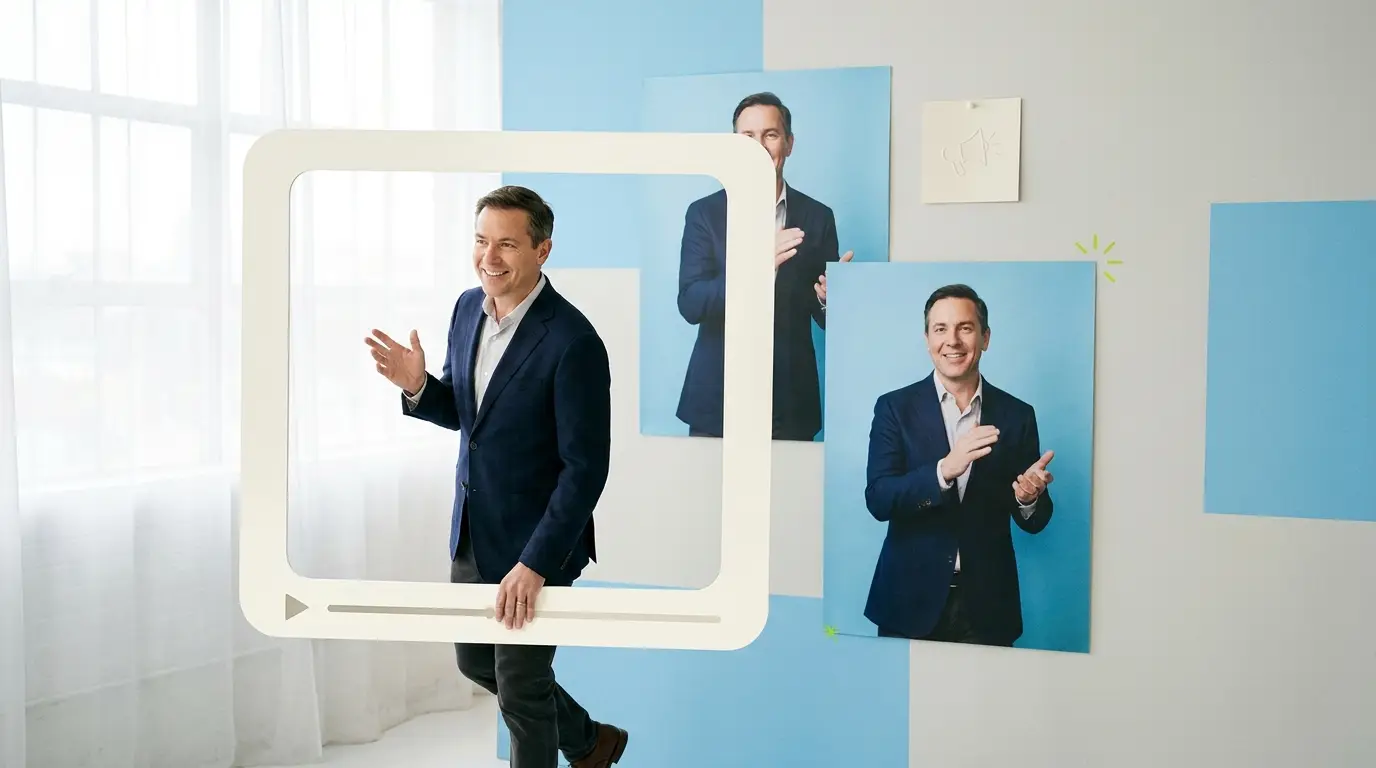
Video editing for corporate communications has become a core capability for modern teams. From CEO town halls and all-hands recordings to investor updates and ESG reports, companies increasingly rely on video to reach employees, shareholders, and the public with clarity and speed. Wyzowl's annual state of video marketing report consistently shows that over 90% of businesses use video as a marketing tool, and internal communications teams are catching up fast with similar adoption rates for employee-facing content.
The challenge for most corporate communications teams is production capacity. Budget pressure keeps headcount lean, and CorpComm rarely has a dedicated video editor on staff. Freelancers can fill gaps but rarely deliver the brand consistency a public company requires. Agencies are thorough but too slow and expensive for recurring content. The result: polished video that executives and stakeholders expect ends up delayed, inconsistently branded, or skipped entirely. A subscription-based editing service built for teams with consistent monthly volume solves exactly this problem. Our corporate video editing service guide covers how that works across internal comms, training, and brand video.
Types of video corporate communications teams produce
Corporate communications sits at the intersection of internal alignment and external brand narrative. The video content it owns spans a wider range than most teams realize.
CEO and executive message videos
All-hands meetings, town halls, quarterly business reviews, and earnings call recap videos all fall under this category. These videos carry significant reputational weight. The CEO speaking to 5,000 employees or a CFO addressing analysts on a recorded update needs clean audio, proper color correction, lower thirds with name and title, and tight pacing that respects viewers' time. Errors in these videos are noticed.
Internal communications and onboarding videos

HR and CorpComm often co-own onboarding content, policy updates, benefits explanations, and change management announcements. These videos need to look professional enough to build credibility but also need closed captions for accessibility and compliance. According to the International Association of Business Communicators (IABC), effective internal communications directly supports organizational performance, and video is one of the highest-retention formats for employee messaging.
Investor relations and earnings recap videos

Public companies and those preparing for IPOs or investor rounds produce quarterly and annual video content for shareholders and analysts. These videos carry regulatory sensitivity. Timing, accuracy of data shown on screen, and compliance review are non-negotiable. A polished investor video with accurate lower thirds, synchronized slides, and clean cuts signals organizational credibility.
ESG and CSR brand narrative videos

Environmental, social, and governance content has moved from optional to expected for mid-market and enterprise companies. ESG reports increasingly include video components for external audiences. These videos need a consistent brand voice, professional production quality, and often require subtitles for global audiences.
Crisis communications and rapid-response video statements
When something goes wrong, the corporate communications team often needs a recorded statement published within hours. These videos need to look calm, professional, and authoritative under time pressure. A pre-existing relationship with a dedicated editor who knows your brand is essential here. You cannot brief a new freelancer on your brand standards during a crisis.
What professional editing adds to corporate video
Raw footage from a corporate recording or conference room setup rarely meets the standard that a leadership communication should carry. Professional editing adds several layers of value.
Brand consistency means every video uses the same intro, outro, color palette, and font treatment. Viewers who see 12 videos over a year develop a sense of brand identity through visual consistency.
Lower thirds and title cards give executive names, titles, and dates proper treatment. These seem minor but matter enormously for investor and media audiences.
Closed captions are both an accessibility requirement and an engagement tool. Many employees watch internal videos without audio. Captions keep them informed and reduce the rate of re-watch requests.
Pacing and cuts matter especially in executive content. Long pauses, repeated phrases, and camera hesitations that read as human in a live setting look unprofessional in a recorded video. A good editor trims these without losing the speaker's natural cadence.
Audio polish includes noise reduction, level normalization, and removing distracting background sounds from conference room recordings. This alone moves a video from "watchable" to "professional."
The workflow challenge: approval cycles in corporate video
Corporate communications operates inside some of the most structured approval processes in any industry. A CEO message video might need sign-off from communications leadership, legal, investor relations, and the executive's own office. An ESG video might go through three rounds of stakeholder review. A crisis statement might need legal clearance within two hours.
This means the editing turnaround time matters as much as the quality. A 48-hour editing turnaround gives a CorpComm team room to receive a first cut, route it through their internal review cycle, collect feedback, and still hit their publication window. Agencies that take one to two weeks per project simply do not fit these workflows.
A dedicated editor who already knows your brand, your executive lineup, and your approval patterns can process feedback faster than someone who is seeing your content for the first time. Multi-stakeholder revision cycles, where legal, communications, and an executive's assistant are all leaving comments, require an editor with a clear, documented revision process rather than an ad-hoc freelance arrangement.
For public companies, investor relations videos carry additional sensitivity. Earnings content may be subject to Reg FD and disclosure requirements. Your editing partner should understand that certain content cannot be shared externally and handle it with appropriate confidentiality.
How much does corporate video editing cost
Understanding your options across pricing models helps CorpComm leaders make the case internally for a sustainable production budget.
Freelance editors charge $75 to $300 per video for basic corporate editing work. For straightforward recordings, this seems cost-effective. The problems show up in scale and consistency: a team producing 8 to 10 videos per month quickly runs into scheduling conflicts, inconsistent quality across different freelancers, and no accountability for brand standards.
Corporate video agencies charge $1,000 to $10,000 or more per project. These fees include pre-production and often a dedicated producer, which makes sense for an annual brand film or major campaign. For recurring monthly video content, the cost and lead time make agencies impractical.
Video editing subscription services run from $495 to $3,000 per month depending on volume and turnaround guarantees. This model fits teams with consistent monthly output, since the monthly cost covers unlimited or high-volume submissions rather than charging per video. A dedicated editor within a subscription model also builds institutional knowledge of your brand over time. See the video editing subscription services guide for a full breakdown of what these services include.
In-house video editors cost $55,000 to $80,000 per year in base salary according to ZipRecruiter salary data, before benefits, software licenses, and equipment. For teams producing enough volume to justify full-time headcount, this makes sense. For most CorpComm teams producing 6 to 15 videos per month, a subscription service delivers comparable capacity at a fraction of the fully-loaded cost. The dedicated video editor vs in-house hire comparison covers this calculation in detail.
What Pixel8 Production offers corporate communications teams
Pixel8 Production runs a video editing subscription built for B2B teams with consistent monthly video volume. For corporate communications teams, the key elements are:
Dedicated editor. You work with the same editor every month. They learn your executive lineup, your brand standards, your intro and outro templates, and your approval preferences. This matters when you are managing 10 videos per month across multiple stakeholders.
48-hour turnaround. First cuts are delivered within 48 hours of footage submission. For teams running weekly internal communications or monthly investor content, this turnaround fits inside standard approval cycles.
Unlimited revisions. Multi-stakeholder feedback rounds are standard in corporate communications. Legal wants one change, the executive's office wants another, communications wants a third. Pixel8's revision policy accommodates this without per-revision charges.
Structured submission and revision workflow. Footage is submitted through a clear system. Feedback is collected and consolidated before the revision pass. This removes the chaos of ad-hoc email threads during an approval cycle.
Pricing at $2,000 to $3,200 per month. Plans at this level cover the volume and turnaround requirements that a CorpComm team running regular video production needs.
For teams evaluating whether this model fits their output, the corporate video production subscription page covers what is included and how the onboarding process works.
What to look for in a video editing service for corporate communications
Not every subscription editing service is built for corporate work. Here are five criteria to evaluate before signing:
1. Professional polish standards. Review sample work from corporate or B2B clients. The editing standard for a YouTube creator is not the same as for an executive communications video. Ask specifically for samples of CEO messages, investor content, or internal comms videos.
2. Confidentiality and data handling. Corporate footage, especially earnings content or crisis statements, is sensitive. Ask about their security practices, NDA policies, and how raw footage is stored and deleted after delivery.
3. Dedicated editor, not a rotating pool. A pool-based service assigns whoever is available. For corporate communications, you need an editor who builds brand knowledge over time. Ask whether you get a named, dedicated editor.
4. Turnaround that fits approval cycles. A 5-day turnaround may work for marketing content but will break a CorpComm approval cycle. Confirm the turnaround guarantee in writing and ask how it applies to revision rounds.
5. Revision policy for multi-stakeholder feedback. Ask directly: how do revisions work when feedback comes from three different people? Services without a consolidated revision process create friction in corporate approval workflows.
For teams thinking through the broader mix of B2B video they produce, b2b video content types that convert covers the strategic picture alongside the production side.
Bottom line
Corporate communications teams are producing more video than ever, and the standard for what looks professional has risen alongside that volume. The mix of executive messaging, investor content, internal communications, and ESG reporting requires consistent brand treatment, reliable turnaround, and an editor who understands the sensitivity of the material.
A subscription editing service at $2,000 to $3,200 per month gives CorpComm leaders a production partner who fits inside their approval cycles, scales with monthly volume, and builds brand knowledge over time. That combination is something freelancers and agencies cannot reliably deliver.
If your team is producing six or more corporate videos per month and struggling with consistency, turnaround, or budget predictability, executive thought leadership video for LinkedIn and the corporate video production subscription page are good next reads for understanding how a subscription editing model fits the broader communications workflow.
Where to go from here
Frequently asked questions
What types of corporate video can Pixel8 Production edit?
Pixel8 edits the full range of corporate communications video: CEO and executive message videos, all-hands recordings, investor relations updates, ESG and CSR content, onboarding and HR videos, and rapid-response communications. If your team records it, Pixel8 can edit it to a professional standard.
How does a 48-hour turnaround work with corporate approval cycles?
You submit footage on day one. A first cut is delivered within 48 hours. You then route it through your internal review process, collect consolidated feedback, and submit the revision request. Pixel8 returns the revised version within another 48 hours. Most corporate approval cycles, even those involving legal or executive review, fit within this cadence without rushing.
Is executive and investor relations video content kept confidential?
Yes. Pixel8 operates under NDA and handles all footage with strict confidentiality. Earnings content, crisis statements, and pre-announcement communications are not shared externally, and raw footage is deleted from Pixel8 systems after delivery. Specific data handling terms can be confirmed before signing.
How does pricing compare to hiring a freelancer for each video?
At $2,000 to $3,200 per month, Pixel8 covers unlimited editing volume within your plan. A freelancer charging $150 to $300 per video becomes more expensive than a subscription once your team exceeds 10 to 15 videos per month. The subscription also delivers consistency that freelancers cannot guarantee across multiple videos from different editors.
Can Pixel8 handle multi-stakeholder feedback rounds without extra charges?
Yes. Unlimited revisions are included. For corporate teams where legal, communications leadership, and an executive's office may each submit separate rounds of changes, Pixel8's workflow collects and processes feedback without per-revision fees.
What format should we submit raw footage in?
Pixel8 accepts all standard video formats including MP4, MOV, and MXF files. For conference room or town hall recordings, even lower-quality source footage can be significantly improved through audio cleanup, color correction, and professional editing. The submission process includes a checklist for what to send with each project.
Does Pixel8 create lower thirds, title cards, and branded templates?
Yes. Pixel8 builds out branded lower thirds, intro and outro templates, and title card treatments during the onboarding process. These are applied consistently across every video, so each piece of content reinforces the same visual identity. Template updates can be requested as part of your plan.
How is Pixel8 different from a corporate video agency?
Agencies charge per project and typically take one to two weeks per video with pre-production meetings and multiple rounds of scoping. Pixel8 operates as an ongoing subscription partner. You submit footage and get a first cut back within 48 hours without a new brief or scope conversation each time. For teams producing regular monthly content, this saves both time and cost. The video editing subscription pricing page shows how the numbers compare.
What if we need a video edited faster than 48 hours in a crisis situation?
Rush turnaround can be discussed on a case-by-case basis. Because you are working with a dedicated editor who already knows your brand and your executives, the edit itself is faster than it would be with a new freelancer. Crisis communications situations can often be accommodated with a direct request at the time of submission.

Prakhar Mehta
Pixel8 is a done-for-you video editing subscription, giving SaaS companies, agencies, and founders a dedicated editing team with 48-hour turnaround.
Ready to stop doing this yourself?
Get a dedicated video editing team. 48-hour turnaround, unlimited revisions, month-to-month.