Video Editing for Personal Brands
Video editing for personal brands made simple: how busy founders, execs, and creators get consistent, on-brand clips without editing anything themselves.
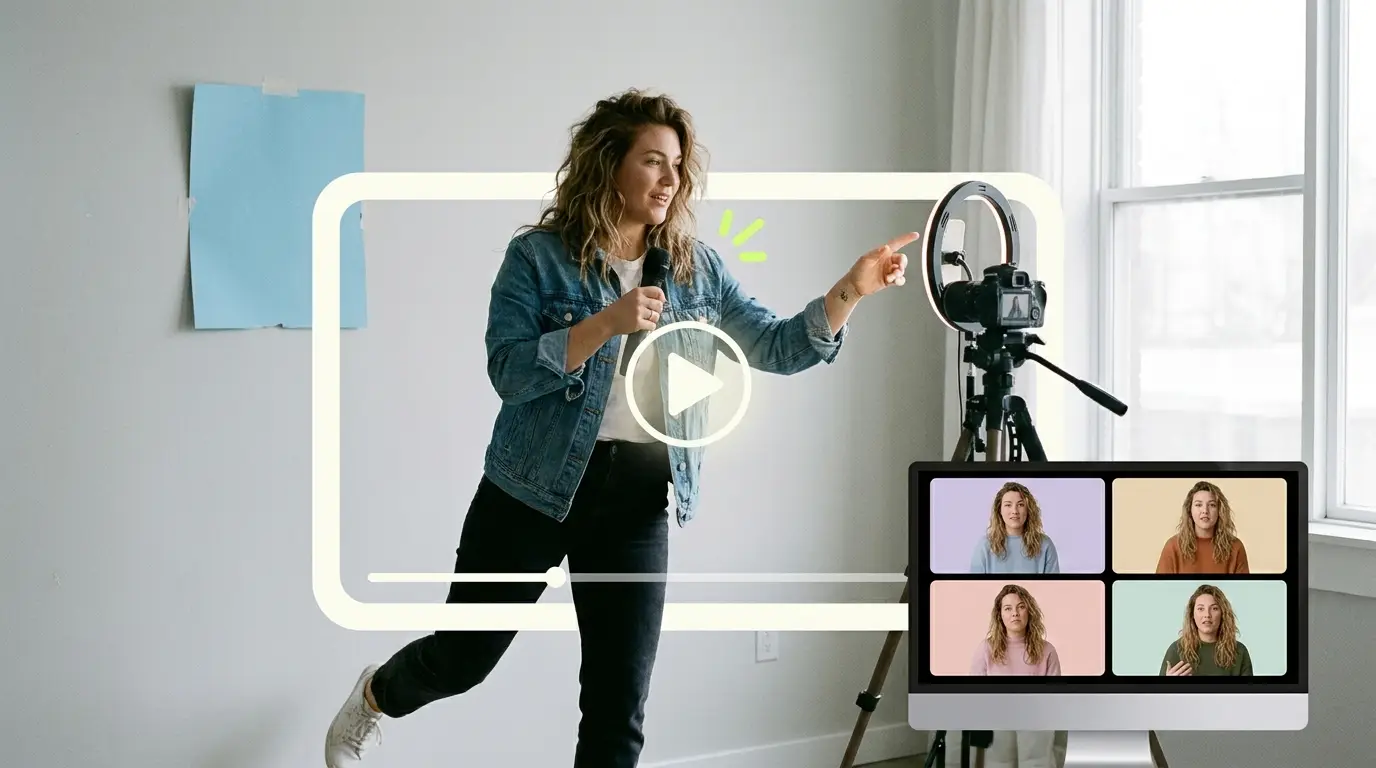
Video editing for personal brands is the quiet bottleneck behind almost every founder, executive, and creator who says they want to post more but never does. You have the ideas, and you can record a hot take on your phone. What stops you is the part after recording: the cutting, captioning, sound balancing, and reformatting that turns raw footage into something people actually watch. This guide covers how busy people build an authority-driving video presence without becoming editors, what to look for in help, how one recording becomes a week of content, and what it really costs.
The case for showing up on video is hard to argue with. According to Wyzowl, 91% of businesses use video as a marketing tool, and 82% of people say a video convinced them to buy a product or service. For a personal brand, that translation is direct: video is how you build trust at scale with people who will never meet you in person.
Why personal brands run on video now
Text posts still work, but video is what makes people feel like they know you. A founder sharing a thirty-second take on a hiring mistake carries more weight than the same idea typed out, because viewers hear the tone and see the conviction. That is the whole point of a personal brand: turning your judgment into something people recognize and follow.
The platforms reward it too. LinkedIn, Instagram, TikTok, and YouTube Shorts all push video harder than static content, and they reward consistency over polish. Three decent clips a week beats one perfect clip a month. HubSpot's research on video marketing trends shows short-form continuing to deliver the strongest return of any format.
The catch is that consistency is an editing problem, not an ideas problem. Most people who stall out have plenty to say. They stall because the editing pile grows faster than they clear it.
What to look for in personal brand video editing

Not all editing help suits personal brands. Agencies that cut polished brand films often struggle with the fast, casual, high-volume rhythm personal content needs. Here is what matters.
On-brand consistency. Clips should look like they came from the same person every time: same caption style, font, colour treatment, intro feel. Viewers recognize a consistent style before they recognize your face. An editor who reinvents the look every week works against you.
Speed. A hot take posted four days late is a cold take. You need turnaround in days, not weeks. A done-for-you video editing service built around fast cycles beats a premium shop taking two weeks per deliverable.
The talking-head format done well. Most personal brand content is you, talking, to a camera. That sounds simple, but good talking-head video editing is its own craft: tightening pauses, removing filler words, adding b-roll or text at the right beat, and keeping energy high without making it feel frantic. Editors who only know cinematic montage often make talking-head footage feel slow.
Captions and reformatting by default. Most short-form video is watched on mute, so burned-in captions are not optional. Your editor should reframe a horizontal recording into vertical for Reels and Shorts without being asked.
A dedicated person who learns your voice. One editor who knows your preferences beats a marketplace handing you a different freelancer each time. After a few rounds they stop needing instructions and start anticipating what you want.
How good does it need to look? Quality by stage
A common mistake is waiting until production quality feels professional before publishing. The standard that actually matters shifts with your audience size.
Early, under 5,000 followers. Authenticity outperforms production. A clean background, window light, and audio that does not echo are enough. The editing job is functional: remove long pauses, trim filler words, add captions, cut to length. People who do not know you yet are judging your ideas, not your budget.
Growth, 5,000 to 50,000. Consistency becomes the constraint. Your audience starts expecting a recognizable format: the same framing, caption style, intro pacing, and music bed every time. This is the point where a documented style applied to every edit starts paying for itself.
Authority, above 50,000 or any executive at a recognized company. Production quality becomes a trust signal. Sloppy editing on a keynote clip or media appearance can undercut a reputation built over years. The cost of a bad edit at this stage is asymmetric, which is why the work usually stops being something you do yourself.
How to brief your editor

Edit quality tracks brief quality. An editor working without direction defaults to technically correct choices that may not serve you. A complete brief covers five things.
Platform and format. Say where it is going and in what orientation. A 9:16 cut for Reels and a 16:9 cut for YouTube call for different decisions.
Audience. Describe who is watching. An editor who knows your viewers are CFOs at mid-market companies makes different pacing and title-card calls than one assuming a general audience.
Tone. Give three to five adjectives for how it should feel, then link two or three reference videos with notes on what works.
Specifics. Captions on or off. Intro music or none. Lower third with your name and title. Call to action in the last five seconds. Watermark placement. The more specific here, the fewer revision rounds later.
Deadline. State your publish date so the team can flag sequencing conflicts early.
Document this once and it stops being a per-video task. That one document is what makes a dedicated editor compound in value instead of resetting with every project.
The repurposing engine: one recording, many clips
This is the single most important habit for a personal brand, and it is where good editing pays for itself.
You do not need to record every day. You record once and slice it into many pieces. A single thirty-minute conversation, podcast appearance, or sit-down session can produce a week or two of content:
- Five to ten short-form clips for LinkedIn, Reels, TikTok, and Shorts
- One or two longer talking-head pieces for YouTube
- Audiogram-style clips with captions for feeds that favor them
- Quote graphics and text posts pulled from the strongest lines
The skill is knowing which sixty seconds of a thirty-minute recording are worth cutting. A strong short-form video editing service does not chop footage into equal pieces. It finds the moments where you said something sharp and builds each clip around that beat, with an opening that stops the scroll.
For executives, this is how you build authority on LinkedIn without living on the platform. One filmed session a month, edited into a steady drip of clips, can carry your entire presence. We cover that workflow in our guide to executive thought leadership video on LinkedIn.
The math is what makes it work. If editing is handled, the only time you spend is on the recording. One hour of talking becomes twenty assets. That ratio separates people who post daily from people who mean to.
The real cost: DIY versus freelance versus subscription

Here is the honest breakdown of your options, because cost is usually the deciding factor.
Doing it yourself. The software is cheap or free. The cost is your time. Editing one polished short-form clip with captions, b-roll, and clean audio takes a beginner two to four hours, and the quality ceiling stays low until you have spent months learning. DIY also collapses first when you get busy, which is exactly when consistency matters most.
Hiring an in-house editor. A full-time video editor in the US runs roughly $55,000 to $75,000 a year according to ZipRecruiter salary data, before benefits and software. For a single personal brand that is more capacity than you need at a cost you cannot justify.
Freelancers. Per-video editing typically runs $75 to $250 per clip. This works until volume climbs. At ten clips a week the per-video model gets expensive fast, and you carry the management burden: briefing, revisions, chasing files, and replacing editors who disappear. Quality drifts as you cycle through people.
Agencies and project work. Traditional agencies charge $500 to $5,000 or more per project. The output is strong, but the model is built for campaigns, not the steady rhythm a personal brand needs. You pay campaign prices for content that should feel casual and frequent.
Subscription editing. A flat monthly fee sits between freelance and agency. You send recordings and get a steady stream of clips back. For anyone posting consistently this usually delivers the lowest cost per finished video, since you are not paying per asset or carrying management overhead. The general market runs $500 to $3,000 per month depending on volume and turnaround.
If you want a side-by-side view of the formats and providers, our comparison of the best video editing services breaks down where each model fits.
How turnaround shapes your whole strategy
Turnaround is not a detail. It decides what kind of content you can make.
If editing takes two weeks, you are locked into evergreen content: ideas that stay relevant whenever they post. That is fine, but you give up the most engaging category there is, which is timely reaction. Turnaround in the range of 48 hours opens that door, letting you record a reaction today and post it tomorrow while the conversation is still hot.
This is also why unlimited revisions matter more than they sound. Building a recognizable style takes a lot of small adjustments early on. If every revision costs money, you settle for clips that are close enough instead of dialling in the look you actually want.
What Pixel8 Production offers
Pixel8 Production is a done-for-you B2B video editing subscription built for exactly this kind of high-volume, on-brand personal content.
You get a dedicated editor who learns your style, so clips stay consistent without you re-explaining your preferences. Turnaround is 48 hours, fast enough to support timely reactions rather than only evergreen content, and revisions are unlimited so you can dial the look in early.
Pricing is a flat $2,000 to $3,200 per month with no per-video or project fees, and a $900 trial if you want to test the service first. For someone recording a session or two a month and publishing several clips a week, that flat rate usually beats freelance on cost per finished video, without the burden of briefing and chasing people.
Bottom line
Video editing for personal brands is not about becoming a great editor. It is about removing the one bottleneck that stops most people from showing up consistently. Record once, repurpose into many clips, keep the look on-brand, and turn it around fast enough to react while topics are still hot. Whether you get there with a freelancer, an agency, or a subscription, the goal is the same: a steady, recognizable presence that builds authority while you spend your time on the work only you can do.
Where to go from here
Frequently asked questions
How much does video editing for personal brands cost?
It depends on the model. DIY costs your time. Freelancers run $75 to $250 per video. In-house editors cost $55,000 to $75,000 a year. Agencies charge $500 to $5,000 or more per project. Subscription services range from $500 to $3,000 per month. Pixel8 Production is a flat $2,000 to $3,200 per month with a dedicated editor and unlimited revisions. A $900 trial is available to test the service before committing to a monthly plan.
How many clips can I get from one recording?
A single thirty-minute recording can typically produce five to ten short-form clips, one or two longer talking-head pieces, plus audiograms and quote graphics. The exact number depends on how much usable, sharp material is in the recording.
What is the best video format for building a personal brand?
Talking-head and short-form video carry most of the weight. They are personal, fast to produce from a single recording, and favored by every major platform, especially LinkedIn, Instagram Reels, TikTok, and YouTube Shorts.
How fast should turnaround be?
Aim for 48 hours if you want to post timely reactions and not just evergreen content. Two-week turnaround locks you into content that stays relevant regardless of timing, which limits the most engaging category of posts.
Should I hire a freelancer or use a subscription service?
Freelancers work well at low volume. Once you are publishing several clips a week, a subscription service usually costs less per finished video and removes the management burden of briefing and replacing editors. A subscription also gives you one consistent editor instead of a rotating cast.
Do I need expensive equipment to start?
No. A recent phone and decent natural light are enough to start. Audio matters more than camera quality, so a basic external microphone is the single best upgrade. Good editing does more for the finished result than expensive gear.
How do I keep my clips looking consistent?
Work with a dedicated editor who learns your style and use the same caption style, fonts, and color treatment across every clip. Consistency is what makes viewers recognize your content in a crowded feed, often before they recognize your face.
What is the difference between personal brand video and corporate video?
Corporate video communicates a company's value proposition, culture, or product with institutional polish. Personal brand video foregrounds one person's voice and judgment. The editing differs accordingly: personal brand content prioritizes pace, conversational energy, and an immediate hook over formality. Applying corporate production style to personal content usually lands as neither authentic nor institutional.
How long does it take to see results?
Measurable follower growth typically starts within 60 to 90 days of a consistent weekly schedule. Inbound inquiries where prospects reference your videos generally take three to six months to show up at any real volume. Personal brand video compounds: the returns accelerate as the library grows and older clips keep accumulating views.
What should I actually measure?
View counts are visible but rarely diagnostic. Follower velocity tells you whether the program is working. Watch time and completion rate tell you whether the editing is serving the content, since drop-off in the first ten seconds is a hook problem and drop-off after the midpoint is a pacing problem. Share and save rate signals quality through deliberate behaviour. Inbound inquiry quality is the lagging indicator that matters most.

Prakhar Mehta
Pixel8 is a done-for-you video editing subscription, giving SaaS companies, agencies, and founders a dedicated editing team with 48-hour turnaround.
Ready to stop doing this yourself?
Get a dedicated video editing team. 48-hour turnaround, unlimited revisions, month-to-month.