Video Editing for Government Agencies: Full Guide
Video editing for government agencies covers public information, training, and accessibility-compliant content. See what it costs and how to choose a service.
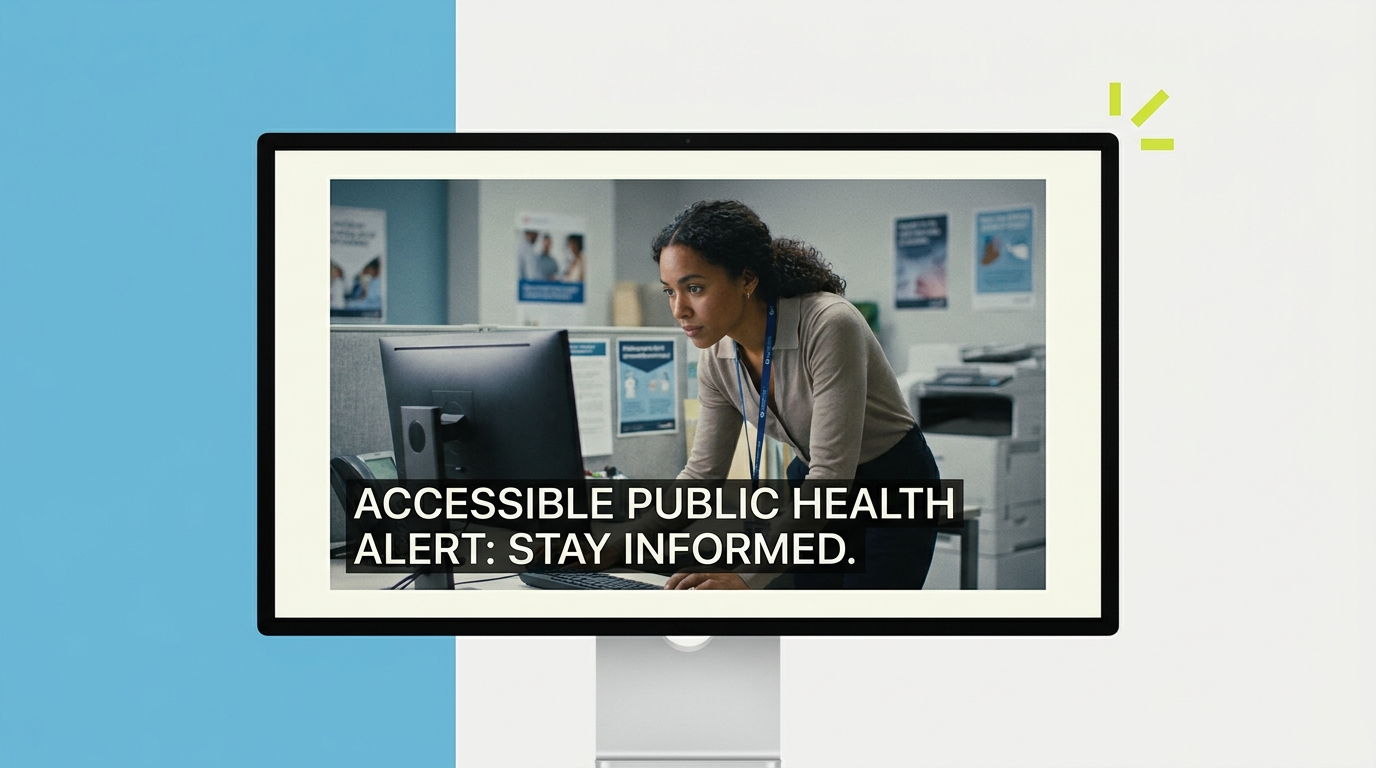
Video editing for government agencies serves a distinct mission: communicating clearly with the public, training staff, and meeting accessibility standards that the private sector often treats as optional. Federal, state, and local agencies produce a wide range of recordable content, including public service announcements, program explainers, public meetings, training modules, and emergency communications. The editing work behind that content carries requirements most commercial video does not, particularly around accessibility, accuracy, and a tone of trustworthy authority. This guide covers what professional video editing for government agencies involves, the main content types, what it costs, and how to choose a service equipped for public sector work.
What video editing for government agencies involves
Government video editing differs from commercial work in ways that shape every stage of production.
Accessibility compliance is not optional. Public sector content generally must meet standards such as Section 508 and WCAG, which means accurate closed captions, audio descriptions where needed, and readable on-screen text. An editor working on government content has to build these requirements in from the start rather than adding them as an afterthought. Our video captioning subtitles service overview covers the captioning standards that public sector video depends on.
Accuracy and clarity outrank flash. Government communication exists to inform, not to sell, so the editorial priority is making complex programs, policies, and procedures understandable to a general audience. That means clean structure, clear lower-thirds, explanatory graphics, and pacing that respects comprehension over excitement. An editor who reaches for aggressive commercial techniques will produce content that feels off-tone for a public agency.
Tone of trustworthy authority matters throughout. Public sector video represents an institution that citizens rely on, so the editing has to feel credible, measured, and professional. According to Wyzowl, 91% of businesses use video as a marketing tool, and government agencies face a parallel reality: the public increasingly expects information in video form, and the quality of that video shapes whether people trust and act on it.
Content types government agencies use video editing for

Public service announcements communicate health, safety, and program information to the public. Clear, well-edited PSAs with strong captions and accessible design reach citizens across channels and meet compliance requirements.
Program and service explainers make government programs understandable, walking citizens through eligibility, application steps, and benefits. These reduce call-center load and improve program uptake by answering questions before they are asked.
Training and onboarding modules prepare staff on procedures, compliance, and systems. Well-edited training video with chapter navigation and clear demonstrations improves retention and standardizes how a workforce is trained across locations.
Public meeting and hearing recaps condense long sessions into accessible summaries, improving transparency for citizens who cannot attend or watch hours of footage.
Emergency and public safety communications deliver time-critical information clearly. Fast, accurate editing matters most here, where confusion has real consequences.
Recruitment video helps agencies attract qualified candidates by showing the mission, the work environment, and the value of public service, which is increasingly important as the public sector competes with private employers for talent.
How much government video editing costs
Government video editing pricing depends on content type, accessibility requirements, and volume.
For per-project work, a single explainer or PSA with full captioning and accessible design typically runs $1,000 to $5,000 depending on length and graphic complexity. Training modules are often priced per finished minute, commonly $75 to $200 per minute given the accessibility and structure requirements.
For ongoing needs, subscription-style services provide more predictable budgeting. Done-for-you editing services run $2,000 to $3,200 per month and cover a steady flow of explainers, training content, and public information video for a flat fee. For agencies producing regular content across multiple programs, the predictable cost suits public sector budgeting cycles. Our video editing subscription pricing breakdown explains how those plans are structured.
An in-house editor is the other route, costing $55,000 to $75,000 per year per ZipRecruiter, plus equipment, software, and benefits. Larger agencies with constant production may justify dedicated staff, but procurement timelines, headcount limits, and specialized accessibility expertise lead many agencies to contract an editing service instead. For a framework on this choice, see video editing agency vs subscription.
What to look for in a government video editing service

Accessibility expertise is the most important criterion. Confirm the service understands Section 508 and WCAG requirements and routinely delivers accurate closed captions and accessible on-screen design. A service without this experience will create compliance risk, not reduce it.
Public sector or institutional experience is worth verifying. An editor who has worked with government, education, healthcare, or nonprofit content understands the measured tone and accuracy standards that public communication requires. Ask for relevant portfolio examples rather than commercial brand work.
Reliability and process matter for agencies bound by procurement and documentation requirements. A service with clear timelines, revision processes, and the ability to handle review cycles fits public sector workflows better than an informal arrangement. Our video editing turnaround time guide covers what realistic timelines look like, which helps when planning around approval chains.
Video as a public communication channel
Citizens increasingly expect to find government information in the same formats they use everywhere else, and that means video. An agency that publishes clear, accessible program explainers and public information video meets people where they already are and reduces the friction of accessing services.
HubSpot research on video marketing shows that consistent, clear video communication builds audience trust and engagement over time. For government agencies, that trust is the entire objective: video that is accurate, accessible, and professionally produced strengthens the relationship between an agency and the public it serves.
The practical path for most agencies is to standardize a video workflow, capturing content, sending it to an editor or service that understands compliance, and publishing on a consistent cadence across the agency's channels. Treating video as a core communication function rather than an occasional project is how public sector organizations turn it into a dependable way to inform, train, and serve.
Building public trust through consistent communication

For a government agency, the ultimate goal of video is not engagement metrics; it is trust. Citizens act on information from sources they find credible, and credibility is built through clear, accurate, accessible communication delivered consistently over time. A single polished video does little, but a steady stream of explainers, updates, and public information video establishes an agency as a reliable source that the public turns to rather than tunes out.
Consistency also reduces the cost of every other channel an agency runs. When citizens can find a clear video explaining how to apply for a program, the call center fields fewer questions, caseworkers spend less time on repetitive explanations, and the program reaches more of the people it is meant to serve. Well-produced video pays for itself by deflecting load from more expensive support channels, a return that is easy to overlook when video is treated as a communications nicety rather than an operational tool.
The agencies that realize this value treat video as a standing function with a repeatable process: capture, edit to accessibility standards, review, publish. The editing step is where most public sector video falls down, either because it is handled by untrained staff or because compliance is bolted on at the end rather than built in. A service or team experienced with public sector requirements removes that risk, delivering content that is accurate, accessible, and ready for the review chains agencies operate within. For agencies weighing whether to build that capability internally or contract it, our guide to how to outsource video editing walks through what to look for in a partner and how to structure the relationship around public sector constraints.
Citizens increasingly expect their government to communicate in the formats they use everywhere else. Meeting that expectation with professional, accessible video is not a luxury; it is part of serving the public well in a digital age, and the agencies that invest in it build a measurably stronger relationship with the communities they serve.
It also helps to recognize that public sector video carries a standard of accountability that commercial content does not. An agency's video may be scrutinized by oversight bodies, journalists, and the public, which means accuracy, accessibility, and professionalism are not optional polish but baseline requirements. A video with inaccurate information, missing captions, or a tone that feels careless reflects on the institution in ways a private brand rarely has to worry about. This is precisely why the editing partner matters so much for government work: a service that understands these stakes builds compliance and accuracy into the process rather than treating them as afterthoughts, and it works within the review structures agencies depend on. The agencies that communicate well through video are the ones that have made it a disciplined, repeatable function with the right expertise behind it, rather than an occasional scramble handled by whoever is available. That discipline is what lets an agency publish confidently and consistently, knowing each piece meets the standard the public has every right to expect. Treating video as core public infrastructure, resourced and produced accordingly, is how a modern agency earns and keeps the trust that makes all of its communication effective.
Where to go from here
Frequently asked questions
What video editing do government agencies need most?
The most common needs are public service announcements, program and service explainers, staff training modules, public meeting recaps, and recruitment video. All of it must meet accessibility standards, so captioning and accessible design are central to every piece.
Why is accessibility so important for government video?
Public sector content generally must comply with standards like Section 508 and WCAG, which require accurate captions, accessible on-screen text, and audio descriptions where needed. Editing must build these in from the start, both to meet legal requirements and to serve all citizens.
How much does government video editing cost?
Per-project explainers and PSAs with full accessibility typically run $1,000 to $5,000; training modules often cost $75 to $200 per finished minute. Ongoing done-for-you subscription services run $2,000 to $3,200 per month for steady output across programs. A $900 trial is available to test the service before committing to a monthly plan.
Should an agency hire an editor or use a service?
A service often fits better given procurement constraints, headcount limits, and the need for specialized accessibility expertise, at a lower cost than a $55,000 to $75,000 per year hire. Large agencies with constant production may justify dedicated in-house staff.
How does video help citizens access government services?
Clear program explainers walk citizens through eligibility and application steps, answering questions before they reach a call center. This improves program uptake, reduces support load, and meets people in the video formats they already use elsewhere.
What tone should government video have?
A measured, trustworthy, authoritative tone that prioritizes clarity over flash. Public communication exists to inform, not to sell, so editing should make complex programs understandable with clean structure and explanatory graphics, avoiding aggressive commercial techniques.
Can a service handle the review and approval cycles agencies require?
Yes, a service experienced with institutional clients works within structured review and revision processes. Confirm their turnaround and revision policy upfront so it fits your agency's approval chain and documentation requirements.

Prakhar Mehta
Pixel8 is a done-for-you video editing subscription, giving SaaS companies, agencies, and founders a dedicated editing team with 48-hour turnaround.
Ready to stop doing this yourself?
Get a dedicated video editing team. 48-hour turnaround, unlimited revisions, month-to-month.