UGC Video Editing Service: Costs and How It Works
A UGC video editing service turns raw creator clips into polished ads. See what a ugc video editing service costs, formats, turnaround, and how to scale.
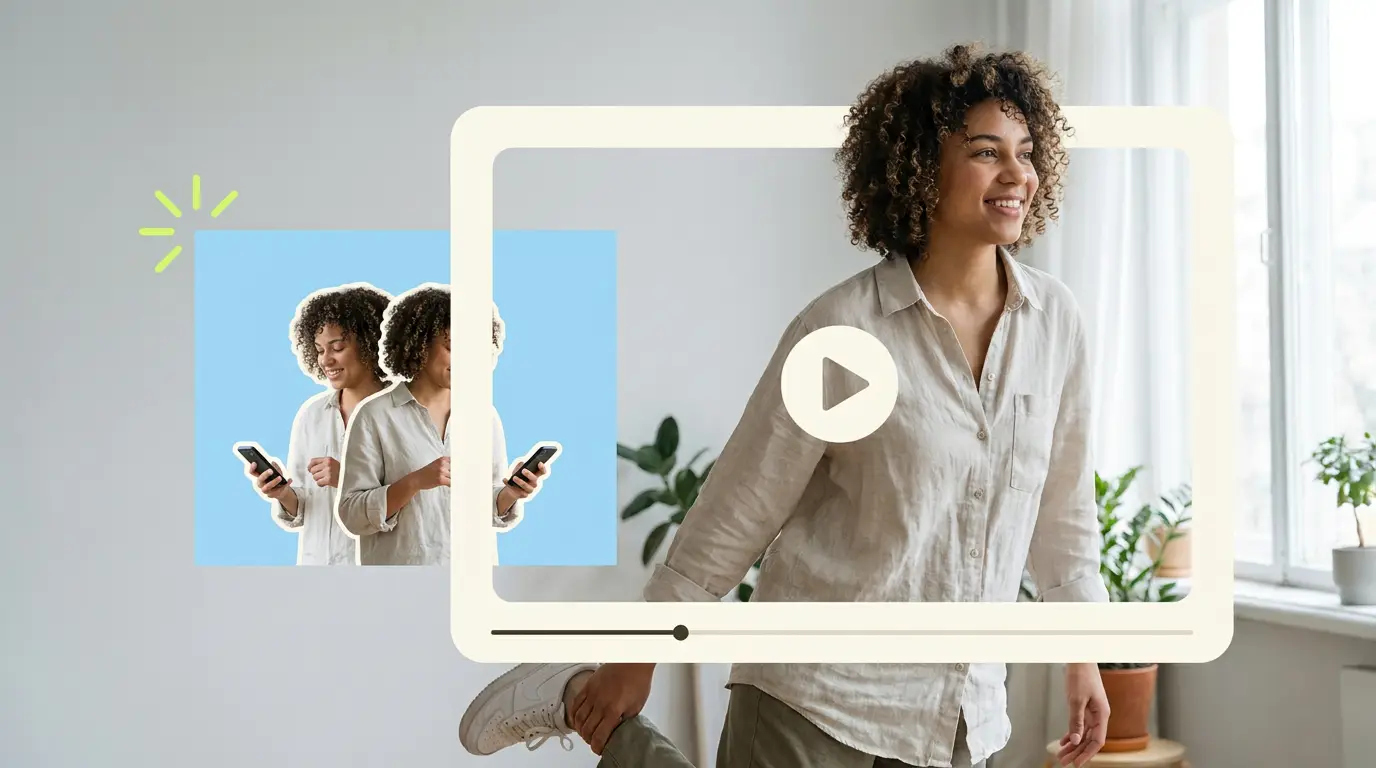
A UGC video editing service takes the raw, unpolished clips your creators record on their phones and turns them into finished ads ready to run on TikTok, Instagram Reels, YouTube Shorts, and paid social. If you are sourcing user-generated content at any kind of volume, a UGC video editing service is the part of the workflow that decides whether those clips actually convert or sit unused in a Google Drive folder. Raw creator footage is cheap to get and slow to ship. The editing is where most brands get stuck.
This guide covers what a UGC video editing service does, why brands running paid social need editing at volume, what it costs, how freelance compares to a subscription model for ongoing work, and the formats and turnaround you should expect.
What a UGC video editing service actually does
User-generated content is raw by design. A creator films a 90-second talking-head clip, a product unboxing, or a quick demo on their phone. What you receive is unstructured: long takes, filler words, dead air, inconsistent audio, and no hook. None of it is ad-ready.
A UGC video editing service handles the work between raw footage and a finished, conversion-focused ad:
- Cutting the best moments from long takes and removing filler
- Adding a strong hook in the first one to three seconds
- Burning in captions and subtitles for sound-off viewing
- Reformatting to vertical (9:16) and other aspect ratios
- Color correction, audio cleanup, and pacing
- Adding b-roll, text overlays, product shots, and calls to action
- Cutting multiple variations of the same clip for ad testing
That last point matters more than people expect. One creator clip is rarely one ad. A good editor produces three, five, or ten variations, different hooks, different captions, different CTAs, so your media buyer can test which version wins. This is closely related to broader short-form video editing work, but UGC has its own conventions: the authentic, handheld, creator-led look has to survive the edit, not get polished into a corporate ad.
Why brands need UGC editing at volume
The reason this matters is simple. Video drives buying decisions. According to Wyzowl, 91% of businesses use video as a marketing tool, and 82% of people say a video has convinced them to buy a product or service. UGC specifically performs well because it looks like a recommendation from a real person rather than a brand broadcast.
But paid social burns through creative fast. Ad platforms reward fresh creative, and creative fatigue sets in within days on a scaling campaign. A media buyer running TikTok or Meta ads can chew through dozens of variations a week. If you are only shipping two or three finished UGC ads a month, you are starving the account.
So the bottleneck is never sourcing the footage. Creators are easy to find and relatively cheap. The bottleneck is editing throughput: turning a steady stream of raw clips into a steady stream of tested, ready-to-run ads. That is the volume problem a UGC video editing service exists to solve. It is the same logic behind any serious B2B content type that converts: the format works, but only if you can produce it consistently.
What a UGC video editing service costs
Costs vary widely depending on how you buy. Here is the honest range across the main options.
Freelance editors
Freelance UGC editors typically charge $75 to $250 per video, depending on length, complexity, number of variations, and the editor's experience. A simple caption-and-trim job sits at the low end. A fully produced ad with b-roll, motion graphics, and five hook variations sits at the high end.
Freelance works for low volume. The math turns against you fast at scale. At $150 a video and 30 videos a month, you are already at $4,500, and you are still managing scheduling, briefs, revisions, and availability yourself.
Agencies

A traditional video agency or UGC production house charges $500 to $5,000 or more per project. Agencies often bundle creator sourcing with editing, which is convenient but expensive, and project-based pricing makes high-volume, ongoing work unpredictable. You are also rarely the agency's priority client.
In-house editor

Hiring brings the work in-house but adds real cost. A full-time video editor runs roughly $55,000 to $75,000 per year in salary according to ZipRecruiter, before benefits, software, and equipment. One editor also caps your output at one person's capacity, which breaks the moment a campaign scales or that person takes a holiday.
Subscription editing

A video editing subscription charges a flat monthly fee for ongoing editing, usually with a dedicated editor and a fixed turnaround. Market rates for these services land in the $500 to $3,000 per month range depending on volume and turnaround. For a brand shipping UGC ads every week, this is usually the most predictable model, because the cost does not climb with each new variation. For a deeper breakdown, see our guide to video editing subscription pricing and how to think about video editing cost per month for a business.
Freelance vs subscription for high-volume UGC
For one-off projects, freelance is fine. For ongoing, high-volume UGC editing, the comparison breaks down across a few dimensions.
Cost predictability is the big one. Freelance scales linearly: more videos, more invoices. A subscription is flat, so a month where you ship 40 variations costs the same as a month where you ship 15. If your paid social is scaling, that flat cost protects your budget.
Speed and consistency matter just as much. A freelancer juggling five clients cannot guarantee a 48-hour turnaround on your fifteenth ad variation this week. A dedicated subscription editor who knows your brand, your hooks, and your caption style does not need re-briefing every time, so output stays consistent and fast.
Revisions are the hidden cost with freelance and agencies. Per-project pricing often caps revisions or bills extra for them, which is a problem with UGC, where you frequently want small tweaks to the hook or CTA for testing. Unlimited revisions remove that friction entirely. We cover this trade-off in detail in our breakdown of video editing subscription vs freelancer, and if you are weighing the move, the guide on how to outsource video editing walks through the handoff process.
The short version: freelance wins on flexibility for sporadic, low-volume needs. Subscription wins on cost, speed, and consistency once UGC becomes a steady part of your marketing.
Formats and turnaround you should expect
UGC editing has specific output requirements, and a real service should handle all of them without you having to spell out the basics every time.
Vertical is the default. Ads run on TikTok, Reels, and Shorts, so 9:16 is the primary format, with 1:1 and 4:5 for feed placements and 16:9 when a clip gets repurposed for YouTube or a landing page. A clip that gets cut into multiple aspect ratios stretches one creator session across several placements, which is the core idea behind a B2B video content repurposing service.
Hooks come first. The opening one to three seconds decide whether a viewer keeps watching. A competent editor will test multiple hook variations from the same footage rather than committing to one.
Captions are non-negotiable. Most social video is watched without sound, so burned-in captions, styled to match the platform, are standard on every UGC ad, not an add-on.
On turnaround, freelancers and agencies vary from days to weeks depending on their queue. A subscription service with a fixed turnaround, often 48 hours per request, keeps your testing cycle tight, which is exactly what a scaling ad account needs.
How a subscription editor handles ongoing UGC volume
A subscription model fits the rhythm of UGC ad production because the work is continuous, not one-off. The workflow usually looks like this:
You drop raw creator clips into a shared folder and submit a request describing the hooks, captions, variations, and formats you want. A dedicated editor, who already knows your brand from previous work, picks it up. You get the first cut back within the turnaround window, request any revisions, and the finished ad variations come back ready to upload to your ad manager. Then you do it again next week.
Because the editor is dedicated and the revisions are unlimited, the back-and-forth that slows down freelance work mostly disappears. You are not re-explaining your caption style or hook preferences on every job. Over a few weeks, the editor builds an understanding of what converts for your brand, and the output gets sharper. This is the done-for-you video editing model: you handle the footage and the strategy, the service handles production. If you want to compare providers, our roundup of the best video editing services compared lays out the options.
The other advantage is that volume does not break the system. Whether you submit five requests or twenty-five in a month, the flat fee holds, and a service built for throughput has the editing capacity to absorb spikes around a launch or a new campaign.
What Pixel8 Production offers
Pixel8 Production is a done-for-you video editing subscription built for brands and B2B teams running UGC and social at volume. You get a dedicated editor who learns your brand, a 48-hour turnaround on requests, and unlimited revisions, all for a flat $2,000 to $3,200 per month with no per-project fees.
For UGC specifically, that means you can send raw creator clips and get back finished, conversion-focused ads: vertical formatting, strong hooks, burned-in captions, multiple variations for testing, and the authentic creator look kept intact. Because the pricing is flat and revisions are unlimited, your cost stays the same whether you ship ten ad variations a month or forty, which is the predictability a scaling paid-social budget needs. The dedicated-editor setup also means you are not re-briefing a new freelancer every week, so output stays consistent and fast.
It is built for B2B SaaS companies, agencies, founders, and brands who treat UGC as an ongoing channel rather than a one-time project, and who want production handled so they can focus on creative strategy and media buying.
Bottom line
UGC works as an ad format, but only if you can produce it consistently. Sourcing creator footage is the easy part. Editing it into a steady stream of hook-tested, caption-ready, vertical ads is the bottleneck that decides whether your paid social actually scales.
Freelance editing fits low, sporadic volume. For ongoing UGC at scale, a subscription model gives you flat, predictable cost, fast turnaround, unlimited revisions, and a dedicated editor who learns what converts for your brand. If UGC is a permanent channel in your marketing rather than a one-off experiment, that is the model that keeps up. Pixel8 Production delivers it for a flat $2,000 to $3,200 per month, so your editing throughput matches your ad volume instead of capping it.
Where to go from here
Frequently asked questions
What is a UGC video editing service?
A UGC video editing service turns raw, unpolished clips filmed by creators into finished, ready-to-run ads. That includes trimming long takes, adding hooks and captions, reformatting to vertical, and cutting multiple variations for testing. It is the production step between sourcing creator footage and actually running it as a paid social ad.
How much does UGC video editing cost?
It depends on how you buy. Freelance editors charge roughly $75 to $250 per video, agencies charge $500 to $5,000 or more per project, and subscription services run about $500 to $3,000 per month for ongoing work. Pixel8 Production charges a flat $2,000 to $3,200 per month with unlimited revisions and no per-project fees. A $900 trial is available to test the service before committing to a monthly plan.
Is a subscription better than a freelancer for UGC?
For sporadic, low-volume needs, a freelancer is flexible and fine. For ongoing, high-volume UGC editing, a subscription usually wins on cost predictability, speed, and consistency, because the flat fee does not climb with each new variation and a dedicated editor does not need re-briefing every time.
What formats does a UGC video editing service deliver?
Vertical (9:16) is the default for TikTok, Reels, and Shorts, with 1:1 and 4:5 for feed placements and 16:9 for YouTube or landing pages. Most services also burn in captions for sound-off viewing and can cut one clip into several aspect ratios so it works across multiple placements.
How fast is the turnaround on UGC edits?
It varies by provider. Freelancers and agencies range from a few days to a few weeks depending on their queue. A subscription service with a fixed turnaround, often 48 hours per request, keeps your testing cycle tight, which matters when you are running and refreshing paid social creative every week.
Why do brands need so many UGC variations?
Ad platforms reward fresh creative, and creative fatigue sets in fast on a scaling campaign. A media buyer needs multiple hooks, captions, and CTAs to test which version converts best. One creator clip can become five or ten ad variations, which is why editing throughput, not footage, is usually the bottleneck.
Can a UGC editing service keep the authentic creator look?
Yes, and a good one will. The point of UGC is that it feels like a real person's recommendation, not a polished brand ad. A skilled editor cleans up pacing, audio, and structure while keeping the handheld, creator-led feel intact, because over-polishing UGC usually kills the performance that made it worth running.
Do I still need to source creators if I use an editing service?
Usually yes. Most editing services, including Pixel8, handle the editing rather than creator sourcing. You bring the raw clips from your creators, and the service turns them into finished ads. Some agencies bundle sourcing and editing together, but that convenience comes at a higher and less predictable cost.

Prakhar Mehta
Pixel8 is a done-for-you video editing subscription, giving SaaS companies, agencies, and founders a dedicated editing team with 48-hour turnaround.
Ready to stop doing this yourself?
Get a dedicated video editing team. 48-hour turnaround, unlimited revisions, month-to-month.