Final Cut Pro vs Video Editing Service
Final Cut Pro vs video editing service: compare Apple's one-time Mac editor against a done-for-you team to find the right fit for your business video.
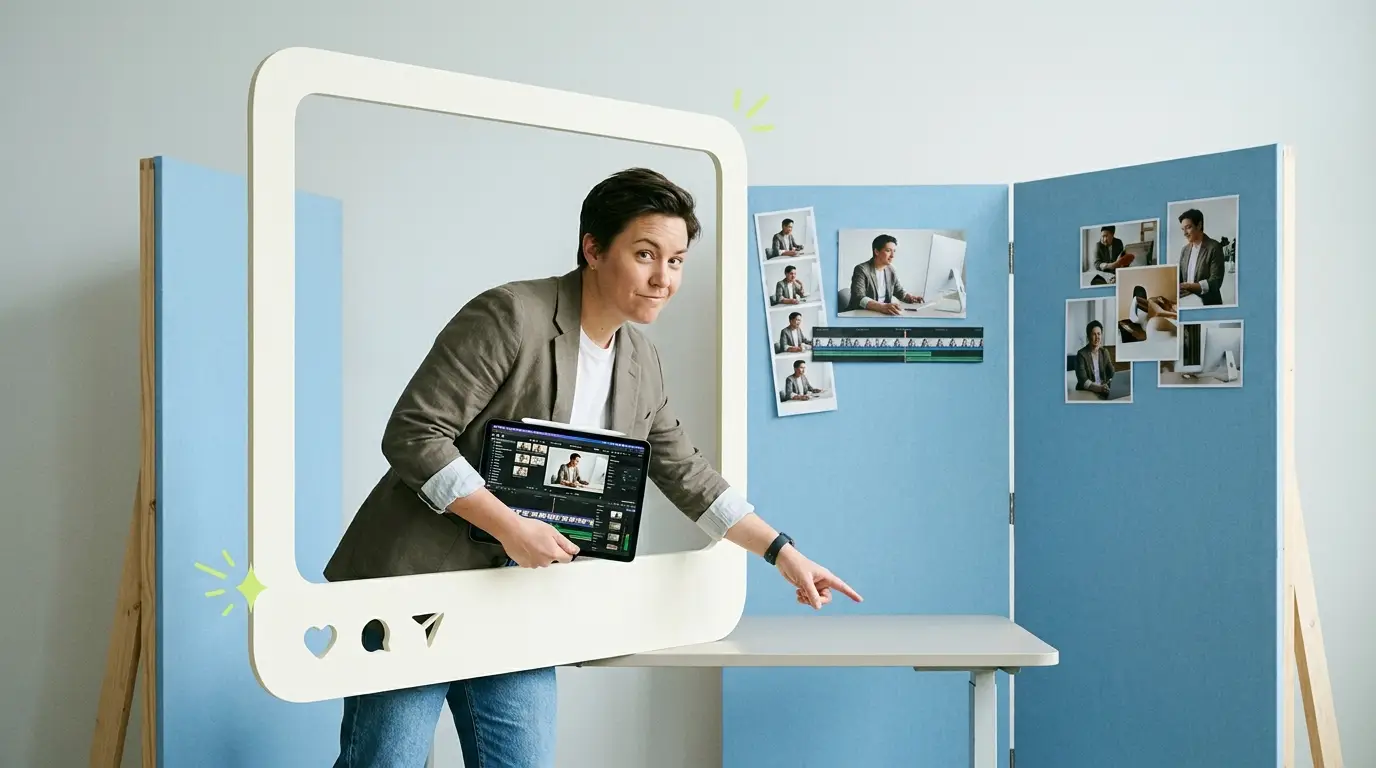
The choice between Final Cut Pro vs video editing service usually comes down to one honest question: do you want to edit, or do you want edited video? Final Cut Pro is Apple's professional editing application for Mac, sold as a one-time purchase. A video editing service is a team that takes your raw footage and hands back finished work. Both produce great video. They just ask very different things of you, and picking the wrong one wastes either your money or your time.
This guide breaks down the real trade-offs so you can choose with clear eyes. We will treat Final Cut Pro factually, look at the true cost of doing it yourself, and explain when handing the work to a service makes more sense. Video is not a nice-to-have anymore. 91% of businesses use video as a marketing tool, so the only question is how you produce it.
What Final Cut Pro actually is
Final Cut Pro is Apple's professional non-linear video editor. It runs only on Mac, and Apple sells it as a one-time purchase rather than a recurring subscription. That pricing model is one of its biggest draws: you pay once and own the software, with free updates rolling out over time.
The application itself is genuinely powerful. It uses a magnetic timeline that keeps clips from colliding, supports multicam editing, color grading, motion graphics through integration with Apple's other tools, and takes heavy advantage of Apple silicon for fast rendering and export. For someone who already works on a Mac and wants deep control over every cut, transition, and color choice, it is an excellent tool.
The catch is not the software. It is everything around the software.
The hidden cost of editing it yourself
When people compare Final Cut Pro against a service, they tend to compare the one-time software price against a monthly fee and conclude the software is cheaper. That math ignores the three real costs of in-house editing.
Hardware
Final Cut Pro is Mac-only, and it rewards capable hardware. Editing 4K footage smoothly, running color grades, and exporting quickly all want a reasonably current Mac with enough memory and storage. If you do not already own a suitable machine, that is a real upfront expense that belongs in the comparison. Raw video files are large, so external storage and backups add to it.
The learning curve

Final Cut Pro is approachable compared to some professional editors, but approachable is not instant. Getting from "I installed it" to "I can produce polished, on-brand video on a deadline" takes weeks of practice. You learn the timeline, audio mixing, color correction, titling, and export settings. Every hour spent learning the tool is an hour not spent running your business.
Your time, every single video

This is the cost that quietly dominates everything. Editing is slow. A short, clean marketing video can take several hours to cut well. Longer or more complex pieces take far longer. That time recurs for every video you make, forever. If your hourly value to the business is high, self-editing is often the most expensive option on the table once you price your own hours honestly.
None of this means Final Cut Pro is a bad choice. It means the sticker price is only a fraction of the true cost.
When Final Cut Pro is the right call
Final Cut Pro wins cleanly in a few situations, and it is worth being fair about them.
You should lean toward Final Cut Pro if you already work on a Mac, you genuinely enjoy editing or want to build the skill, and you have time to spend on it. It is also the better choice when you need tight creative control and fast iteration: when the idea in your head changes mid-edit and you want to try ten versions immediately, owning the tool and the timeline is faster than briefing someone else.
It also makes sense at low volume with flexible deadlines. If you publish one video a month and nobody is waiting on it, the time cost is manageable and the one-time purchase pays off over years. Solo creators, founders who like being hands-on, and small teams with an editing-inclined person all fit this profile well.
If that sounds like you, Final Cut Pro is a smart, durable investment. The rest of this article is for everyone whose honest answer is "I just want the finished video."
What a done-for-you video editing service does
A video editing service flips the model. You record or gather footage, send it over with a brief, and receive an edited, export-ready video back. No software to learn, no Mac to buy, no timeline to wrestle. The cost is predictable and the output is consistent.
Services come in a few shapes, and they sit at very different price points. We cover the full picture in our guide to the best video editing services compared, but here is the short version.
Freelancers typically charge per video, often $75 to $250 for straightforward edits, scaling up with complexity. Agencies work per project and can run anywhere from $500 to $5,000 or more depending on scope and polish. Across the market, businesses tend to pay somewhere in the $500 to $3,000 range for ongoing, professional editing depending on volume and quality. The newer model is the subscription, where you pay a flat monthly fee for a steady stream of edited video. We break down how those plans work in our video editing subscription services guide.
The reason businesses move toward services is rarely that editing is impossible to learn. It is that the return is better when the founder or marketing lead spends their hours on strategy and the editing happens in the background. Video clearly pays off, with HubSpot research showing how central it has become to marketing, and 82% of people say a video convinced them to buy a product or service. The faster you publish consistently, the faster that effect compounds.
Comparing the two models honestly
It helps to put the two side by side on the dimensions that actually matter to a business.
On upfront cost, Final Cut Pro wins. One purchase, and you own it. A service has no software cost but charges ongoing fees.
On ongoing cost, it depends entirely on your time. If your hours are cheap or free, self-editing is cheaper. If your hours are valuable, a service often costs less in real terms once you price the time you would otherwise spend.
On speed to first video, a service usually wins, because there is no learning curve. With Final Cut Pro you spend the early weeks getting competent before your output looks professional.
On creative control, Final Cut Pro wins. Nobody knows your intent better than you, and an owned timeline is the fastest path to a specific vision.
On consistency at volume, a service wins. A dedicated editor produces a steady, on-brand stream of video without burning out the founder.
On scalability, a service wins again. Going from two videos a month to twenty does not require you to clone yourself or buy more machines.
There is also a middle path worth naming: hiring. We compare that route in detail in our breakdown of a dedicated video editor vs in-house hire, but the headline is that a full-time editor is a serious commitment. A salaried in-house video editor runs roughly $55,000 to $75,000 per year before benefits, equipment, and management overhead. For most businesses that is more capacity, and more cost, than they need.
How to decide
Run yourself through three quick questions.
First, do you own a capable Mac and want to edit? If yes, Final Cut Pro is a strong, low-recurring-cost option. If you are not on a Mac at all, the decision is largely made for you.
Second, what is an hour of your time worth to the business? Multiply that by the hours each video takes, every month, for a year. If that number dwarfs a service fee, the service is the rational choice even before you account for the hassle.
Third, how consistent do you need to be? Sporadic, flexible video suits self-editing. A reliable weekly or daily publishing cadence is where services and subscriptions pull ahead, because consistency is exactly what they are built to deliver.
If you decide outsourcing is the right move, our walkthrough on how to outsource video editing covers briefing, file handoff, and getting the quality you want from the first batch.
What Pixel8 Production offers
Pixel8 Production is a done-for-you B2B video editing subscription built for businesses that want output without managing software, hardware, or hiring. Instead of you learning Final Cut Pro and spending your evenings in a timeline, you send footage and get back finished video.
Every plan comes with a dedicated editor who learns your brand, style, and preferences, so the work gets more on-target over time rather than starting from scratch with each project. Turnaround is fast, with a 48-hour standard, and revisions are unlimited, so you keep refining a cut until it is right without watching a meter or paying per change.
Pricing is a flat $2,000 to $3,200 per month depending on volume and scope. Compared to the all-in cost of a capable Mac plus your own time on every edit, or the $55,000 to $75,000 a year of an in-house hire, it sits in a practical middle for companies that need steady, professional video. You can read more about how the model works in our overview of a done-for-you video editing service.
The point is not that Pixel8 beats Final Cut Pro at editing. The point is that it removes editing from your plate entirely, which is the right trade for a lot of busy teams.
Bottom line
Final Cut Pro vs video editing service is not really a contest between good and bad tools. It is a decision about where you want to spend your time. Final Cut Pro is the right answer for Mac-based editors who want control, enjoy the craft, and can afford the hours: it is powerful, owned outright, and excellent at low volume. A video editing service is the right answer for businesses that want consistent, professional video without buying hardware, learning software, or burning their own most valuable hours. Price your time honestly, weigh your need for consistency, and the choice usually makes itself.
Where to go from here
Frequently asked questions
Is Final Cut Pro a subscription or a one-time purchase?
Final Cut Pro is sold by Apple as a one-time purchase, not a recurring subscription. You pay once, own the software, and receive free updates over time. This differs from some other professional editors that charge a monthly or annual fee.
Does Final Cut Pro work on Windows?
No. Final Cut Pro is a Mac-only application built by Apple. If you do not use a Mac, you cannot run it, which makes a cross-platform tool or a video editing service the more practical route.
Is Final Cut Pro cheaper than a video editing service?
On software cost alone, yes, because it is a single purchase. But the honest comparison includes Mac hardware, the time to learn the tool, and the hours you spend editing every video. Once you price your own time, a service can cost less in real terms.
How long does it take to learn Final Cut Pro?
Final Cut Pro is considered approachable for a professional editor, but producing polished, on-brand video on a deadline still takes weeks of practice. You need to learn the timeline, audio, color, titles, and export settings before output looks consistently professional.
How much does a video editing service cost?
It varies by model. Freelancers often charge $75 to $250 per video, agencies run $500 to $5,000 or more per project, and ongoing professional editing across the market generally lands in the $500 to $3,000 range. Pixel8 Production is a flat $2,000 to $3,200 per month. A $900 trial is available to test the service before committing to a monthly plan.
When should I edit videos myself instead of outsourcing?
Edit yourself when you already own a capable Mac, enjoy editing or want the skill, need tight creative control, and produce video at low volume with flexible deadlines. In that situation Final Cut Pro's one-time cost pays off over the years.
Can a video editing service match the control I get in Final Cut Pro?
A good service gets very close through clear briefs and unlimited revisions, but you trade some hands-on immediacy for not having to do the work. With a dedicated editor who learns your style, the output gets closer to your vision with each project.
Should I hire an in-house editor instead?
Only if your volume justifies it. A full-time editor costs roughly $55,000 to $75,000 a year plus equipment and management. Most businesses get the consistency they want from a subscription service for less, without the overhead of an employee.

Prakhar Mehta
Pixel8 is a done-for-you video editing subscription, giving SaaS companies, agencies, and founders a dedicated editing team with 48-hour turnaround.
Ready to stop doing this yourself?
Get a dedicated video editing team. 48-hour turnaround, unlimited revisions, month-to-month.