Documentary Video Editing Service: A Full Guide
A documentary video editing service shapes footage and interviews into a compelling story. See what it includes, what it costs, and how to choose an editor.
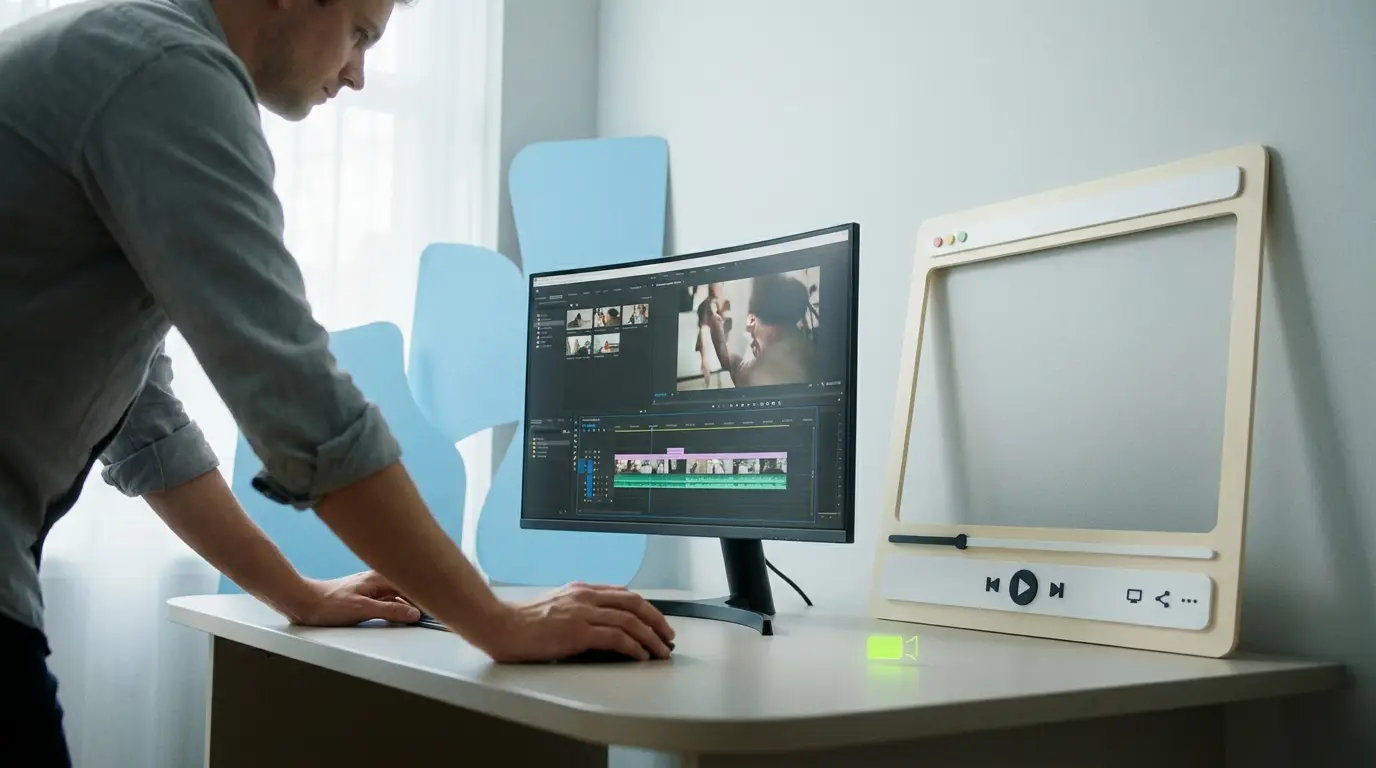
A documentary video editing service shapes hours of footage, interviews, and b-roll into a compelling story that holds an audience. Documentary editing is among the most demanding forms of the craft: the story is found in the edit, not handed to the editor, and the difference between a pile of footage and a moving film is almost entirely editorial. As brands increasingly use documentary-style storytelling for marketing, the demand for skilled documentary editing has grown well beyond filmmakers. This guide covers what documentary video editing involves, what it includes, what it costs, and how to choose the right editor.
What documentary video editing involves
Documentary video editing shapes large volumes of footage, interviews, b-roll, archival material, into a structured, compelling narrative. Whether for a film, a brand documentary, or a docu-style marketing piece, the work is fundamentally about finding and telling a story from raw material, not assembling a predetermined script.
The defining trait is story-finding. In documentary, the editor is a storyteller: the narrative emerges from the footage in the edit, through choices about structure, what to include, how to sequence interviews and b-roll, and where the emotional beats fall. An editor who understands documentary can find a compelling story in hours of material, which is the heart of the craft.
The other defining trait is emotional pacing. A documentary holds an audience through emotional rhythm, building tension, delivering payoffs, balancing information with feeling. The editing has to pace a long-form piece so it never drags and the story lands, which takes real editorial judgment beyond technical skill. Wyzowl reports that 85% of people say they have been convinced to buy a product or service by watching a video.
What documentary video editing includes

Story structuring shapes the narrative from raw footage, deciding the arc, sequence, and what to include, the core of documentary editing.
Interview editing shapes hours of interviews into the clear, compelling spine of the story without making them feel cut up. Our talking head video editing service overview covers interview editing.
B-roll and archival integration weaves supporting footage, imagery, and archival material around the narrative to illustrate and deepen it.
Emotional pacing and rhythm build tension and payoff so a long piece holds the audience, the editorial judgment that separates strong documentaries.
Motion graphics and titles add context, lower-thirds, maps, data, and titles that support the story. Our motion graphics animation service overview covers this craft.
Short cutdowns and trailers adapt the documentary into trailers and social clips that drive an audience to the full piece. Our short form video editing service overview covers this.
How much it costs
For project-based work, documentary editing is typically priced by the project given its scope, often running from a few thousand dollars for a short brand documentary to much more for a long-form film, depending on footage volume and complexity. The editing is labor-intensive, since shaping a story from hours of material takes significant time.
For brands producing documentary-style content on an ongoing basis, alongside other video, a dedicated subscription can be more economical for the surrounding content. Done-for-you services run $2,000 to $3,200 per month and cover docu-style pieces and supporting content for a flat fee. Our video editing agency vs subscription guide weighs the models.
Hiring an in-house editor is an option for teams with constant volume, but an in-house video editor costs $55,000 to $75,000 per year before benefits per ZipRecruiter, plus equipment and software. For most companies a service delivers the same quality without the overhead of a full-time hire.
What to look for

Prioritize story-finding ability. Documentary lives on finding a compelling narrative in raw footage, so confirm the editor is a genuine storyteller, not just a technician. Review documentaries or docu-style pieces they have edited and whether the stories held you.
Look for emotional pacing skill. A documentary has to hold an audience through emotional rhythm, so confirm the editor can pace a long piece with tension and payoff. This judgment is what separates strong documentary editors.
Confirm experience with interview-heavy footage. Most documentaries are built on interviews, so confirm the editor can shape hours of interviews into a clear, compelling spine. Our how to outsource video editing guide covers choosing the right partner.
Why the documentary is made in the edit
Documentary is the form where the editor's role is largest, because unlike scripted video, the story does not exist until the edit creates it. The footage arrives as raw material, hours of interviews, b-roll, and moments, with no predetermined narrative, and the editor finds the story within it: the arc, the structure, the emotional throughline. Two editors handed the same footage will produce entirely different films, which is how completely documentary lives in the edit.
This is why story-finding and emotional pacing are the defining skills, far more than technical polish. A documentary succeeds or fails on whether it tells a compelling, well-paced story, and that is an editorial achievement: the choices about what to include, how to sequence, where to build tension and deliver payoff. An editor with these instincts turns raw footage into a film that moves people; one without them produces a competent but lifeless assembly.
The practical implication, especially for brands now using documentary-style storytelling, is that the editor is the most important creative decision. A brand or filmmaker who captures rich footage and hands it to an editor who genuinely understands documentary gets a story that resonates, while the same footage given to a technical editor without story instincts yields something flat. The footage is the raw material; the documentary is made in the edit. Sprout Social reports that 27% of LinkedIn users prefer short-form video, the most of any content type on the platform.
The bottom line on documentary editing

A documentary video editing service shapes hours of footage and interviews into a compelling, well-paced story, which in documentary is almost entirely an editorial achievement, the story is found in the edit. Story-finding and emotional pacing are the defining skills, far more than technical polish, which makes the editor the decisive creative choice. For brands producing docu-style content alongside other video, a dedicated subscription economically covers the surrounding work, while the flagship film rewards a genuine documentary editor.
Why documentary editing is the hardest, highest-impact edit
Documentary editing concentrates more creative responsibility in the editor than any other format, and that is precisely why it is both the hardest to do well and the most transformative when it is. In scripted work, the story is decided before editing begins; in documentary, the editor is handed possibility, not a plan, and must discover the film inside it. That discovery, which thread to follow, which moments reveal character, where the emotional turns belong, is authorship, and it is why a great documentary editor is closer to a co-director than a technician.
This has a practical consequence for anyone commissioning documentary-style work, including brands. The footage you gather sets the ceiling, but the editor determines how close you get to it, and the gap between a competent assembly and a film that genuinely moves people is enormous and entirely editorial. Underinvesting in the edit while overspending on the shoot is the most common and costly mistake, because beautiful footage cut without story instinct produces something that looks expensive and feels empty.
It also explains why documentary editing rewards patience and the right collaborator more than speed. Finding a story in hours of material is iterative; the first structure is rarely the best, and the strongest films emerge through successive passes as the editor tests what the material can become. A brand or filmmaker who gives a skilled documentary editor the footage and the room to find the story gets a piece with the rare power to make an audience feel something, which is exactly what documentary-style storytelling is for and why it has become such a sought-after marketing form.
Where to go from here
Frequently asked questions
What does a documentary video editing service do?
A documentary video editing service shapes large volumes of footage, interviews, b-roll, and archival material into a structured, compelling narrative. The work is about finding and telling a story from raw material, whether for a film, a brand documentary, or docu-style marketing.
How much does documentary editing cost?
Documentary editing is usually priced by project given its scope, from a few thousand dollars for a short brand documentary to much more for a long-form film, depending on footage volume and complexity. Ongoing docu-style content can be covered by a $2,000 to $3,200 per month subscription. A $900 trial is available to test the service before committing to a monthly plan.
Why is editing so important in documentary?
Because the story does not exist until the edit creates it. Documentary footage arrives with no predetermined narrative, and the editor finds the story within it, the arc, structure, and emotional throughline. Two editors with the same footage produce entirely different films.
What makes a good documentary editor?
Story-finding ability, the instinct to find a compelling narrative in raw footage, and emotional pacing, the judgment to build tension and payoff so a long piece holds an audience. These editorial skills matter far more than technical polish in documentary.
Can brands use documentary-style editing?
Yes, and increasingly do. Documentary-style storytelling has become a powerful marketing approach, using real footage and interviews to tell authentic brand and customer stories. It requires the same story-finding and pacing skills as traditional documentary editing.
How long does documentary editing take?
It is labor-intensive, since shaping a story from hours of footage takes significant time, often weeks or more depending on length and footage volume. The story-finding and structuring work is what makes documentary editing more time-consuming than scripted video.
What footage is needed for a documentary?
Typically interviews that form the narrative spine, plus b-roll, supporting footage, and sometimes archival material that illustrate and deepen the story. The richer and more varied the footage, the more a skilled editor has to work with in finding and telling the story.
How much footage does a documentary edit involve?
Often many hours, sometimes dozens, of interviews, b-roll, and supporting material that the editor reviews to find the story. The large volume of raw material relative to the finished runtime is part of why documentary editing is labor-intensive and why story-finding skill matters so much.
How long does documentary editing take?
It varies widely with length and footage volume, from weeks for a short brand documentary to months for a long-form film. The story-finding and structuring work, often involving several passes as the narrative takes shape, is what makes it more time-consuming than scripted editing of similar length.
Can documentary-style editing work for marketing?
Yes, and it has become a popular and effective approach. Brands use documentary-style editing to tell authentic customer, founder, and mission stories that feel real rather than promotional. It requires the same story-finding and emotional-pacing skills as traditional documentary, applied to a brand's footage and interviews.
What is the editor's role versus the director's in documentary?
Unusually large. Because the story is discovered in the edit rather than scripted in advance, the documentary editor makes core narrative decisions, what to include, how to sequence, where the emotional beats fall, that in other formats belong to the director. A strong documentary editor functions almost as a co-author of the film.

Prakhar Mehta
Pixel8 is a done-for-you video editing subscription, giving SaaS companies, agencies, and founders a dedicated editing team with 48-hour turnaround.
Ready to stop doing this yourself?
Get a dedicated video editing team. 48-hour turnaround, unlimited revisions, month-to-month.