Internal Communications Video Production: A Guide
A guide to internal communications video: how companies use video for all-hands, updates, and training, what it includes, what it costs, and how to do it.
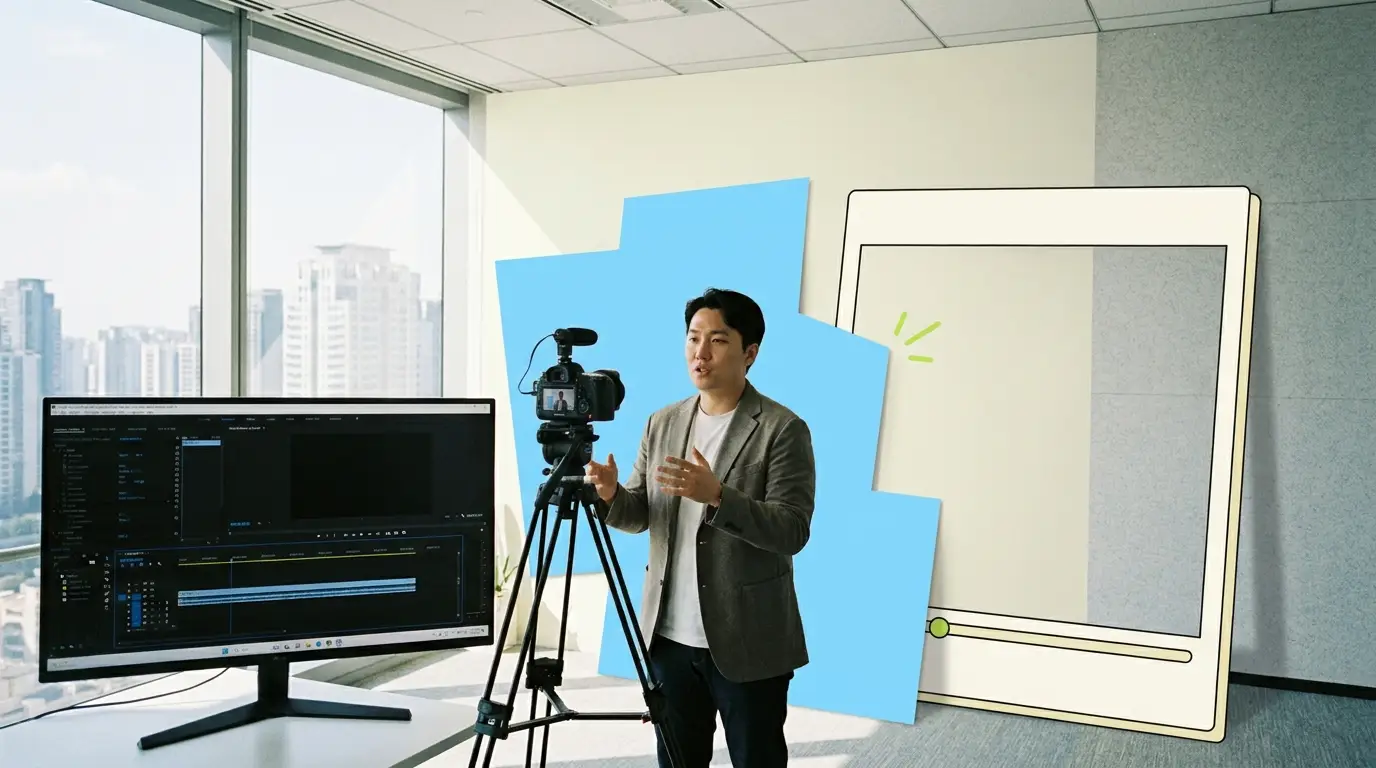
Internal communications video has quietly become one of the most effective tools a company has for keeping a distributed, busy workforce informed and connected. As teams spread across locations and time zones, a written memo gets skimmed or ignored, while a short, well-produced video gets watched and remembered. Internal communications video production covers the all-hands recaps, leadership updates, training, and culture content that keep a company aligned. This guide covers what it involves, what it includes, what it costs, and how to produce it well.
What internal communications video involves
Internal communications video production creates the video a company uses to inform and align its own people: all-hands recaps, executive and leadership updates, change and announcement videos, training, and culture content. The audience is internal, but the production standards still matter, because polish signals that the message is important.
The defining trait is clarity and authenticity together. Internal video has to communicate clearly, often complex or sensitive information, while feeling genuine rather than corporate and stiff. The editing has to make leaders feel approachable and messages easy to absorb, which is a different skill from polished external marketing.
The other defining trait is volume and recurrence. Internal communication is ongoing, with regular all-hands, recurring updates, and a steady need for training and announcement content, so the production model has to support frequent, efficient output rather than occasional one-off films. HubSpot reports that 93% of marketers consider video a crucial part of their overall strategy.
What internal communications video includes

All-hands and town hall recaps turn long meetings into tight, watchable summaries for those who missed them or want a refresher, extending the reach of a single event.
Leadership and executive updates put a face and voice to important messages, building trust and clarity in a way written memos cannot. Our video testimonial editing service overview covers editing people speaking on camera.
Change and announcement videos communicate reorganizations, new policies, or major news clearly and consistently across the whole company.
Training and onboarding videos bring new hires up to speed and teach processes at scale, a high-value internal use. Our saas video onboarding editing service overview covers onboarding video craft.
Culture and recognition videos celebrate wins, people, and milestones, strengthening connection across a distributed team.
Repurposed clips turn long internal sessions into short, shareable highlights, extending their value. Our video content repurposing service b2b overview covers turning one session into many clips.
How much it costs
For project-based work, a polished internal video, such as an executive message or training piece, typically runs $2,000 to $10,000 or more from a production company depending on complexity. Editing recurring content like all-hands recaps from existing footage costs less per piece.
For companies with ongoing internal communication needs, a dedicated subscription is far more economical than commissioning each piece separately. Done-for-you services run $2,000 to $3,200 per month and cover a steady flow of recaps, updates, training, and culture content for a flat fee, which matches the recurring nature of internal communication. Our video editing agency vs subscription guide weighs the models.
Hiring an in-house editor is an option for teams with constant volume, but an in-house video editor costs $55,000 to $75,000 per year before benefits per ZipRecruiter, plus equipment and software. For most companies a service delivers the same quality without the overhead of a full-time hire.
What to look for

Look for clarity with authenticity. Internal video has to communicate clearly while feeling genuine, not stiff and corporate. Confirm the partner can make leaders feel approachable and messages easy to absorb, which differs from polished external marketing.
Prioritize a steady, efficient cadence. Internal communication is recurring, so confirm the partner can handle regular all-hands recaps, updates, and training efficiently rather than treating each as a slow project. Our video editing turnaround time guide covers expectations.
Consider confidentiality and consistency. Internal content can be sensitive and benefits from a consistent partner who understands the company. A dedicated partner who learns your brand and context fits better than rotating vendors. Our done for you video editing service overview covers ongoing relationships.
Why video beats memos for internal communication
A distributed, busy workforce simply does not absorb written communication the way leaders hope. Long memos get skimmed, important updates get lost in inboxes, and nuance disappears in text. A short, well-produced video, by contrast, gets watched, conveys tone and intent, and is remembered, which is why internal communications video has become so valuable as teams have spread across locations and time zones.
The advantage is especially clear for leadership and change communication. Seeing and hearing a leader explain a decision builds trust and clarity that no memo can match, and a consistent cadence of internal video keeps a distributed company feeling connected and aligned. The production quality matters here too, because polish signals that the message and the audience are important.
The practical implication is to treat internal video as a standing communication channel, not an occasional production. Build a regular rhythm of all-hands recaps, leadership updates, training, and culture content, and produce it efficiently. A dedicated video partner makes that cadence sustainable, turning internal communication from skimmed memos into messages people actually absorb. Wistia reports that 57% of teams spend more time creating videos than promoting them.
The bottom line on internal communications video

Internal communications video keeps a distributed workforce informed and connected in a way written memos cannot, conveying tone, building trust, and getting watched where text gets skimmed. The keys are clarity with authenticity and a steady, efficient cadence, since internal communication is recurring. For that ongoing need, a dedicated subscription is the most economical model, producing all-hands recaps, leadership updates, training, and culture content for a predictable monthly cost and turning internal messaging into something your people actually absorb.
Making internal video a sustainable habit
Internal communications video delivers its value through consistency, which means the real challenge is not making one good all-hands recap but building a rhythm that lasts. A leadership update that appears once and then vanishes does little, while a steady cadence of recaps, updates, and culture content trains employees to expect and watch internal video, which is when it starts genuinely keeping a distributed company aligned. Sustainability, not spectacle, is what makes the channel work.
That sustainability depends on keeping production light enough to maintain. Internal video does not need the polish of external marketing; it needs to be clear, authentic, and reliably produced. A model where existing footage, recorded all-hands, leadership messages filmed in a few minutes, is edited efficiently into watchable pieces is far more durable than an elaborate approach that consumes time the team cannot spare and quietly gets abandoned after a few editions.
Consistency also builds something subtler: trust. When leaders show up regularly on video, speaking candidly about wins and challenges, employees come to read that openness as a feature of the culture rather than a special event. That steady visibility does more for alignment and morale than an occasional highly produced town hall, because it becomes part of how the company communicates rather than a rare interruption to it.
For a company deciding how to resource internal video, the practical takeaway is to design for a cadence it can actually keep. Choose formats that are quick to produce, lean on footage the company already generates, and prioritize regularity over production value. A dedicated partner handling the editing makes the rhythm effortless, turning internal communication into a habit employees rely on rather than a project that fizzles out.
Where to go from here
Frequently asked questions
What is internal communications video production?
Internal communications video production creates the video a company uses to inform and align its own people: all-hands recaps, leadership updates, change and announcement videos, training, and culture content. The audience is internal, but production quality still signals the message matters.
How much does internal communications video cost?
A polished internal video like an executive message or training piece runs $2,000 to $10,000 or more from a production company. Editing recurring content from existing footage costs less. A dedicated subscription covering ongoing needs runs $2,000 to $3,200 per month. A $900 trial is available to test the service before committing to a monthly plan.
Why use video for internal communication instead of memos?
A distributed, busy workforce skims written memos but watches short videos. Video conveys tone and intent, builds trust when leaders speak directly, and is remembered, which keeps a spread-out company aligned far better than text.
What internal videos are most valuable?
All-hands recaps, leadership and change updates, and training are typically the highest-value internal videos, because they carry important or complex information that benefits most from the clarity and trust video provides.
How often should a company produce internal videos?
Internal communication is recurring, so a steady cadence works best: regular all-hands recaps, periodic leadership updates, and ongoing training and culture content. The frequency depends on company size and pace, but consistency is what builds the habit of watching.
Can internal videos be made from existing footage?
Yes. All-hands recaps and highlight clips are often edited from recordings of the events themselves, which is an economical way to extend the reach of meetings a company already holds.
Should internal video be as polished as external marketing?
It should be clear and professional, since polish signals the message matters, but it also has to feel authentic rather than stiff. The goal is approachable and clear, not glossy in the way external brand marketing aims to be.
How polished should internal videos be?
Clear and professional, since polish signals the message matters, but authentic rather than glossy. The goal is approachable and easy to absorb, not the high production of external marketing. Over-producing internal video can make it feel like corporate spin, which undercuts the trust it is meant to build.
Can internal videos be made from existing recordings?
Yes. All-hands recaps and highlight clips are often edited from recordings of the events themselves, which is an economical way to extend the reach of meetings a company already holds to those who missed them or want a refresher.
How often should a company publish internal videos?
On a steady cadence that builds the habit of watching: regular all-hands recaps, periodic leadership updates, and ongoing training and culture content. The exact frequency depends on company size and pace, but consistency matters more than any single elaborate production.
What internal videos give a company the most value?
All-hands recaps, leadership and change updates, and training typically deliver the most, because they carry the important or complex information that benefits most from the clarity and trust video provides. A recap turns a long meeting into something the whole company can absorb, a leadership update builds confidence during change, and training scales knowledge to every new hire. Together they form the backbone of an internal video program, and because each recurs, they reward a steady, sustainable production rhythm rather than occasional one-off efforts.

Prakhar Mehta
Pixel8 is a done-for-you video editing subscription, giving SaaS companies, agencies, and founders a dedicated editing team with 48-hour turnaround.
Ready to stop doing this yourself?
Get a dedicated video editing team. 48-hour turnaround, unlimited revisions, month-to-month.