Motion Graphics Service & Agency for B2B Brands
A motion graphics service adds animated logos, kinetic typography, and data viz to B2B video. See what it delivers, what it costs, and how to buy it right.
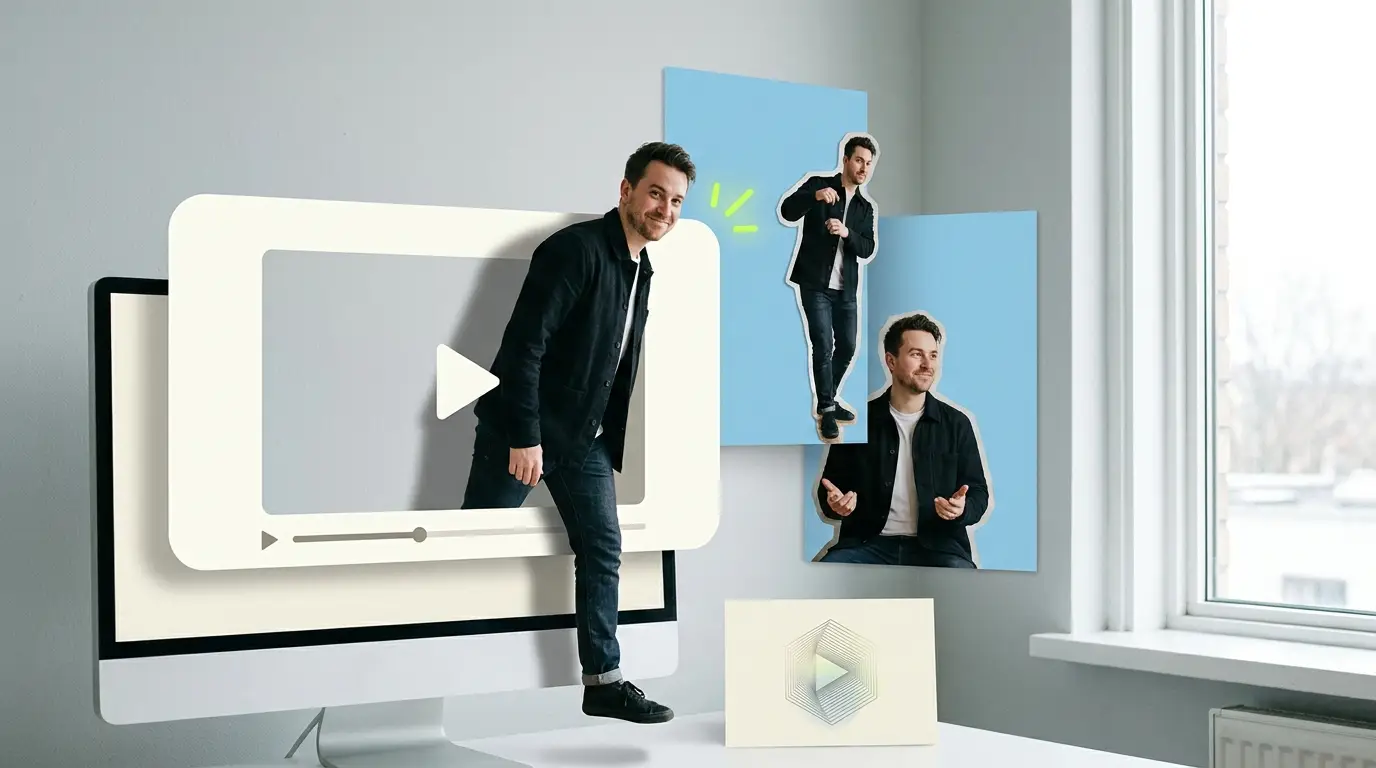
A motion graphics agency, or motion graphics service, is the team that produces the animated visual layer on top of your B2B video: the animated logo at the open, the lower thirds that name a speaker, the kinetic typography that drives a point home, and the data visualizations that make a chart move. For most B2B brands, motion graphics are not a separate deliverable. They are the polish that turns a raw screen recording or interview into something that looks like it came from a company worth buying from. This guide covers what a motion graphics service actually delivers, where these elements fit in B2B video, what they cost, and how the buying models compare.
Video keeps earning its budget. According to Wyzowl, 91% of businesses use video as a marketing tool, and 82% say a video convinced them to buy a product or service. Motion graphics are a big part of why those videos work. They guide attention, reinforce branding, and make abstract ideas concrete.
What a motion graphics service delivers
Motion graphics covers a wide span of work, but for B2B the deliverables cluster into a handful of recurring elements.
Animated logos and brand stings. A two to three second animated version of your logo that opens or closes a video. It sets tone immediately and signals production quality. Once built, the same sting gets reused across every video, so it is a one time investment with ongoing payoff.
Lower thirds and title cards. These are the name and title graphics that appear when a person speaks, plus section dividers and end cards with a call to action. They are small, but consistent lower thirds across a content library make a brand look organized and intentional.
Kinetic typography. Animated text that emphasizes key phrases, statistics, or quotes. In a B2B context, kinetic typography is how you make a dense value proposition land. Instead of a founder saying "we cut onboarding time by 60%," the number animates on screen at the exact moment they say it.
Explainer animation. Fully animated sequences that show how a product or process works, often without any live footage at all. Explainer animation is the heaviest motion graphics deliverable and the most expensive, but it is also the clearest way to explain something that has no obvious thing to film, like an API or a data pipeline.
Data visualization. Animated charts, graphs, and dashboards that show growth, comparisons, or results. For B2B SaaS and professional services, animated data viz is often the most persuasive few seconds in a whole video, because it turns a claim into evidence.
Where motion graphics fit in B2B video

Motion graphics are rarely the whole video. They are layered into formats you are probably already producing.
In a product demo, motion graphics add callouts, zoom highlights, and animated cursors that direct the viewer to the exact button or field that matters. The same recording becomes far easier to follow. We cover this in more depth in our guide to SaaS product demo video best practices.
In an explainer video, motion graphics carry the entire story, especially for products that are hard to film. If your offering lives inside a database or a back end workflow, animation is often the only way to show it. Our breakdown of how to outsource explainer video production for SaaS walks through that decision.
In founder talking head and interview content, motion graphics handle the supporting layer: lower thirds, animated stats, and B roll style graphics that keep a long monologue visually alive. This is where kinetic typography earns its keep, since it breaks up a single speaker with movement.
In social clips and ads, motion graphics do the heavy lifting because most people watch with sound off. Animated captions, bold typographic hits, and a strong end card are what make a silent clip still make sense. If you are mapping which formats to invest in, our piece on B2B video content types that convert lays out where motion graphics matter most.
What a motion graphics service costs
Pricing depends heavily on which deliverable you mean. A simple set of lower thirds is cheap. A 90 second fully animated explainer is not. Across the general market, motion graphics work runs roughly $500 to $3,000 for individual deliverables, with full custom explainer animation climbing well beyond that. The cost drivers are complexity, length, and how much original illustration or 3D the project needs.
Here is the rough shape of the market by buying model.
Freelance motion designers charge $75 to $250 per video for lighter work like adding lower thirds and simple kinetic text to existing footage. A dedicated freelance animator building custom explainer sequences will quote per project and land much higher. Freelancers are flexible and affordable for one off needs, but availability is unpredictable and quality varies widely.
Agencies and studios charge $500 to $5,000 or more per project for motion graphics, and custom explainer animation often sits at the top of that range or above. You get polish, art direction, and a team that can handle complex work. The tradeoff is cost, longer timelines, and per project pricing that adds up fast if you need motion graphics every week.
In house hires make sense at scale. A full time video editor or motion designer costs $55,000 to $75,000 per year in salary according to ZipRecruiter data on video editor salaries, before benefits, software, and equipment. That is worth it only if you have a steady, high volume pipeline to keep that person busy.
Subscription editing services bundle motion graphics into a flat monthly rate. Instead of paying per deliverable, you pay one fee and get ongoing output that includes the motion graphics layer. For B2B brands publishing regularly, this is usually the most predictable model, and it is the one we will focus on below.
Freelance vs studio vs subscription

The right model depends on how often you need motion graphics, not just what one project costs.
If you need motion graphics once or twice a year, a freelancer or studio is the obvious fit. You scope the project, pay for it, and move on. There is no reason to commit to anything ongoing for occasional work.
If you need a single large flagship piece, like a hero explainer for your homepage, a studio is worth the premium. That kind of project benefits from a full creative team and is not something you want to cut corners on.
If you are publishing video consistently, weekly demos, founder clips, social cuts, and the occasional explainer, the per project models become expensive and slow. Every new video means a new quote, a new brief, and a new wait. This is where a subscription model changes the math. You compare options in detail in our roundup of the best video editing services compared, and the structural differences are covered in our video editing subscription services guide.
The reason subscription wins for ongoing work is consistency. A dedicated editor learns your brand once, builds your animated logo and lower third templates once, and then reuses them across everything. Your motion graphics stay consistent because the same person is producing them every week, not a rotating cast of freelancers each starting from scratch. HubSpot's research, which finds that video remains a top performing content format, only matters if you can actually keep producing it. Consistency of output is the whole game.
How a subscription editor includes motion graphics
A common misconception is that subscription video editing means basic cuts only, and that anything animated costs extra. With the right service, motion graphics are part of the standard output, not an upsell.
In practice, that means a dedicated editor who builds your branded template kit early in the engagement: animated logo sting, lower thirds, title cards, caption styles, and a data viz approach that matches your brand. After that foundation is in place, every video you send back gets those elements applied as a matter of course. Need an animated stat in this week's founder clip? It is included. Want kinetic typography on your three best quotes from a webinar? Included. Need callouts and zoom highlights on a product demo? Included.
The model works because the heavy lifting happens once. Building the template kit is the expensive part. Applying it to ongoing content is fast, which is why a flat monthly fee can cover unlimited revisions and a steady stream of motion graphics without per deliverable charges. For how this pricing typically works, see our guide to video editing subscription pricing.
The limit is full custom explainer animation. A from scratch 90 second animated explainer with original illustration is still specialist work, and most subscription services either scope it as a larger project or point you to a studio. But for the day to day motion graphics that make up the bulk of B2B video, animated logos, lower thirds, kinetic typography, callouts, and data viz, a subscription editor covers it as part of the normal turnaround.
What Pixel8 Production offers

Pixel8 Production is a done for you B2B video editing subscription. You send raw footage, screen recordings, and interviews, and a dedicated editor returns finished video with the motion graphics layer already applied: animated logo stings, branded lower thirds, kinetic typography, demo callouts, and animated data viz.
The structure is built for consistent output. You get a dedicated editor who learns your brand and reuses your template kit, a 48 hour turnaround on most work, unlimited revisions so you can refine the animation until it is right, and no per project fees. Pricing is a flat $2,000 to $3,200 per month, which covers ongoing video including motion graphics, not a per deliverable charge that climbs with every animated element.
For B2B SaaS companies, agencies, founders, and professional services teams publishing video regularly, that flat rate replaces both the unpredictability of freelancers and the per project cost of studios, while keeping your motion graphics consistent across everything you ship. If you want the full picture of how the model works, our done for you video editing service overview explains it end to end.
Bottom line
Motion graphics are the animated layer that makes B2B video look professional: logos, lower thirds, kinetic typography, callouts, and data viz. How you buy that work should match how often you need it. Occasional projects suit freelancers and studios, but if you are publishing video consistently, a subscription editor that includes motion graphics in its standard output is the more predictable and consistent choice. Pixel8 Production delivers exactly that, a dedicated editor producing branded motion graphics on a 48 hour turnaround for a flat $2,000 to $3,200 per month, with unlimited revisions and no per project fees.
Where to go from here
Frequently asked questions
What is a motion graphics service?
A motion graphics service is the team or system that produces the animated visual elements in your video, including animated logos, lower thirds, kinetic typography, explainer animation, and data visualization. It can be a freelancer, a studio, an in house hire, or a subscription editor. The goal is to add a polished animated layer that guides attention and reinforces your brand.
What does a motion graphics service typically include?
Common deliverables are animated logo stings, lower thirds and title cards, kinetic typography that emphasizes key phrases or stats, callouts and zoom highlights for product demos, and animated data visualization. Heavier work like full custom explainer animation is usually scoped separately. Most B2B brands need the lighter elements far more often than full explainers.
How much does a motion graphics service cost?
Across the general market, motion graphics deliverables run roughly $500 to $3,000, with full custom explainer animation costing more. Freelancers charge $75 to $250 per video for lighter work, agencies charge $500 to $5,000 or more per project, and a full time hire costs $55,000 to $75,000 per year in salary. Subscription services bundle motion graphics into a flat monthly fee.
Is freelance, studio, or subscription better for motion graphics?
It depends on frequency. For occasional needs, a freelancer is cheapest and a studio is best for a single flagship piece. For ongoing weekly video, a subscription model is usually more predictable and more consistent, because a dedicated editor reuses your branded templates across everything instead of rebuilding each time.
Do subscription video editing services include motion graphics?
Yes, with the right service motion graphics are part of the standard output rather than an upsell. A dedicated editor builds your branded template kit once, then applies animated logos, lower thirds, kinetic typography, and data viz to ongoing videos as a matter of course. The usual exception is full custom explainer animation, which is often scoped as a larger project.
Can motion graphics work without any filmed footage?
Yes. Explainer animation and animated data visualization are built entirely from graphics, with no camera footage required. This is especially useful for B2B products that are hard to film, like APIs, data pipelines, or back end workflows, where animation is often the clearest way to show how something works.
How long does motion graphics work take?
Lighter motion graphics like lower thirds, kinetic typography, and demo callouts can be applied quickly, often within a couple of days when a template kit already exists. Pixel8 returns most work on a 48 hour turnaround. Full custom explainer animation takes longer because it involves original illustration and a from scratch build, so it is usually scoped as its own project.

Prakhar Mehta
Pixel8 is a done-for-you video editing subscription, giving SaaS companies, agencies, and founders a dedicated editing team with 48-hour turnaround.
Ready to stop doing this yourself?
Get a dedicated video editing team. 48-hour turnaround, unlimited revisions, month-to-month.