Event Recap Video Editing: A B2B Service Guide
Event recap video editing turns one conference into months of content. See the workflow, turnaround pressure, costs, and why a subscription editor wins.
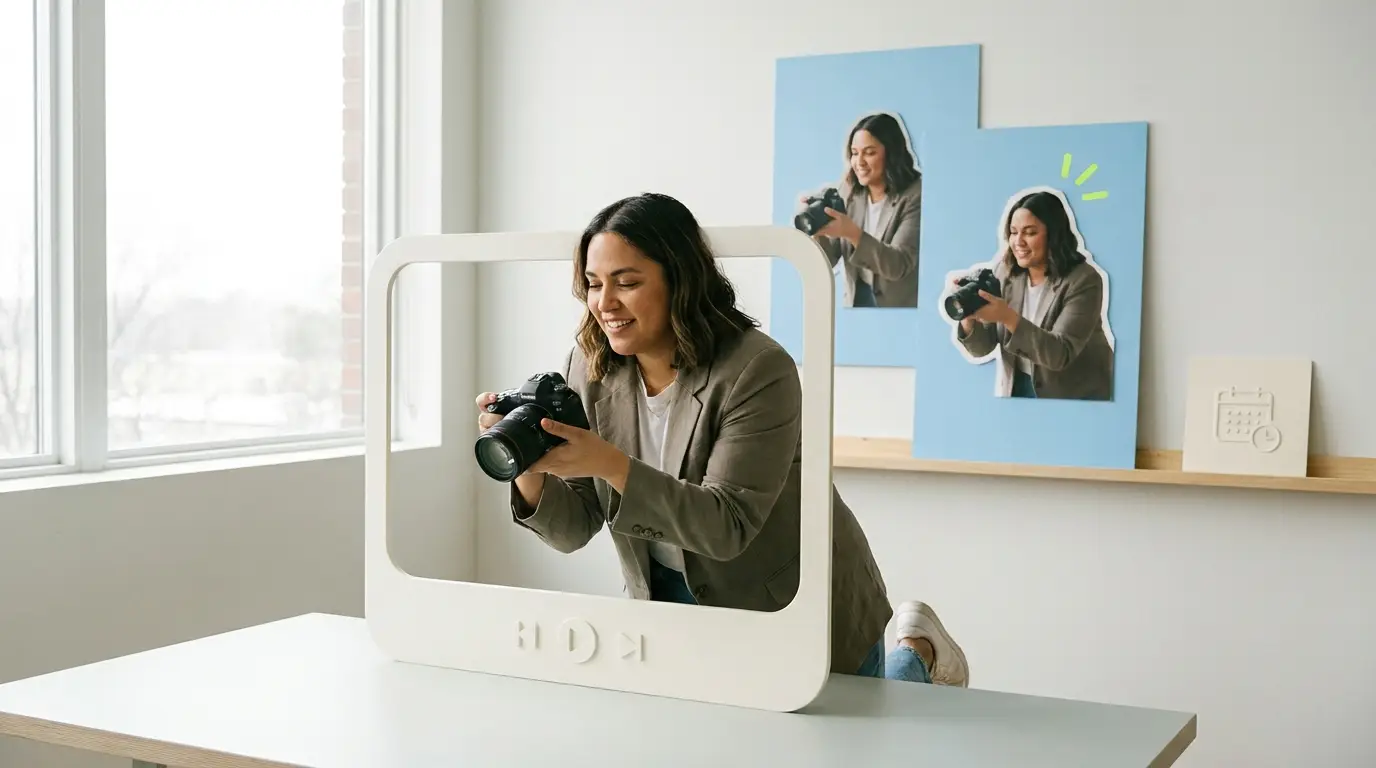
You spent six figures on a conference booth, a keynote slot, and a week of your team's time. Then the event ends, everyone flies home, and the footage sits on a hard drive. Event recap video editing is the discipline that stops that from happening. Done well, it takes the raw capture from a single event and turns it into months of content: a highlight reel for the homepage, speaker clips for thought leadership, a sizzle reel for next year's promotion, and dozens of social cuts. One event, a content calendar's worth of assets.
This guide covers how that workflow actually runs, why the days right after an event create so much pressure, what the editing costs, and why a subscription editor tends to handle event footage volume better than a one-off agency.
Why one event is worth months of content
Most B2B teams treat an event as a single moment. The smarter move is to treat the footage as raw material that feeds your channels for a quarter or more. Video already carries the demand. According to Wyzowl, 91% of businesses use video as a marketing tool, and 82% say a video convinced them to buy a product or service. Event footage is some of the most credible video you will ever capture, because it shows real people, real reactions, and real conversations rather than a staged set.
A single multi-day conference can produce several distinct deliverables:
- A two to three minute highlight reel that captures the energy and key moments
- Individual speaker clips and panel pull-quotes for LinkedIn and your blog
- A 30 to 60 second sizzle reel built to sell tickets or sponsorships next year
- Short-form vertical cuts for Reels, TikTok, and Shorts
- Customer and attendee testimonial snippets for your sales team
- B-roll packages you can reuse in future ads and explainer videos
That is one capture feeding six content streams. The constraint is rarely the footage. It is the editing capacity to cut all of it before the moment goes cold.
The event recap editing workflow

Good event recap video editing follows a repeatable sequence. Understanding it helps you brief an editor properly and spot where projects fall apart.
1. Ingest and organize
The first job after an event is dealing with volume. A two-camera shoot across three days can easily produce 500 GB or more of footage, plus audio from lapel mics, board feeds from the AV team, and phone clips from your staff. An editor sorts this into a clean project, syncs audio to video, and logs the usable moments. This stage is unglamorous and it is where a lot of time goes. Skip it and every later step slows down.
2. Select the story beats
A highlight reel is not a chronological dump. It is a short story: arrival and anticipation, the keynote payoff, the energy of the crowd, a few standout quotes, and a closing call to action. The editor pulls the strongest 90 seconds of moments out of hours of footage. This selection work is the real craft, and it is what separates a recap people share from one they skip.
3. Build the spine
With beats chosen, the editor assembles a rough cut: the structure, the pacing, the music bed, and the rhythm of cuts to the beat. For B2B, pacing matters more than flash. You want it to feel energetic but credible, not like a music video.
4. Polish and layer
Color correction, audio mixing, lower-thirds for speaker names, captions, brand graphics, and motion titles all go on in this pass. Captions are not optional. Most social video plays on mute, so on-screen text is how the message lands.
5. Cut down and repurpose
Once the hero reel is approved, the same project gets sliced into the smaller assets: the vertical social cuts, the standalone speaker clips, the sizzle for next year. This is where the multiplier kicks in, and it is the part most one-off engagements quietly drop because it falls outside the original scope. If repurposing matters to you, our guide on a B2B video content repurposing service walks through how to turn one shoot into a full calendar.
The turnaround problem nobody warns you about
Event content has a short shelf life. The energy and relevance peak in the first 72 hours after the doors close, while attendees are still posting and the hashtag is still active. Post a polished recap two weeks later and it lands as an afterthought.
This creates a brutal squeeze. The week after a big event is also when your team is most exhausted and most behind on everything else. You have follow-up emails, lead handoffs, and a backlog that built up while you were on the floor. Editing a multi-day recap is the last thing anyone has bandwidth for, yet it is the thing with the tightest deadline.
This is where most workflows break. A freelancer you found before the event might be booked now. An agency needs a scoping call, a quote, and a contract before anyone touches your footage, and that alone can eat the entire 72-hour window. By the time the edit lands, the moment has passed and the recap gets a fraction of the engagement it could have.
The teams that win at event content solve this before the event, not after. They have editing capacity already committed so the footage moves into production the day it lands. A done-for-you video editing service with a fixed turnaround is built for exactly this, because the relationship and the workflow already exist when the deadline hits.
What event recap video editing costs

Pricing for event editing spans a wide range, and the model you choose matters as much as the rate. Here is the honest picture of the market.
Hiring in-house
A full-time video editor in the United States runs roughly $55,000 to $75,000 per year according to ZipRecruiter, before benefits, software, and equipment. That makes sense if you produce video constantly. For a company that runs three or four events a year plus regular content, a single full-time hire often cannot cover the post-event spikes anyway, since the work is lumpy by nature.
Hiring freelancers
Freelance editors typically charge $75 to $250 per video, depending on length and complexity. That works for a one-off clip. The problem with event work is volume and timing: you do not need one video, you need fifteen, all at once, right after the event. Coordinating multiple freelancers under deadline pressure becomes its own job, and your best freelancer is often unavailable in exactly the window you need them.
Hiring an agency per project
A production agency might charge $500 to $5,000 or more per project for event recap editing. The output can be excellent, but the per-project model punishes the exact behavior you want, which is cutting more and more assets out of the same footage. Every additional deliverable is a new line item. The general market for editing services runs from about $500 to $3,000 depending on scope, and event packages tend to sit at the higher end.
The subscription model
A video editing subscription replaces the per-project math with a flat monthly rate and a dedicated editor who already knows your brand. Pixel8 Production charges $2,000 to $3,200 per month for unlimited editing with a 48-hour turnaround and unlimited revisions, with no per-project fees. For event-heavy teams, the economics are simple: the more assets you cut from each event, the lower your effective cost per video. We break the model down further in our video editing subscription services guide.
Why a subscription editor handles event volume better
The case for subscription over one-off comes down to three things that event footage exposes.
First, capacity on demand. Event content arrives in bursts. You need a lot of editing in a short window, then quiet for weeks. A subscription gives you a dedicated editor whose job is to absorb those bursts without a new contract or a scoping call each time. The 48-hour turnaround means your highlight reel can be live while the hashtag is still trending.
Second, the repurposing multiplier. Because there are no per-project fees, asking for ten more social cuts costs nothing extra. That changes behavior. Instead of rationing deliverables to control cost, you cut everything the footage can support. Pairing event recaps with a short-form video editing service means every keynote becomes a dozen vertical clips, not one.
Third, brand consistency. A dedicated editor learns your fonts, your music taste, your pacing, and your lower-third style. By the third event, briefing takes minutes because they already know what you want. An agency that rotates editors each project never builds that muscle memory.
This is the same logic that makes subscription editing work for recurring formats like webinars. If your events include virtual sessions, our webinar video editing service for B2B guide covers the same multiplier applied to recorded talks. And if you are weighing providers, the best video editing services compared breakdown puts the models side by side.
What Pixel8 Production offers

Pixel8 Production is a done-for-you B2B video editing subscription built for teams that produce video regularly, including event content. The structure is deliberately simple:
- A flat rate of $2,000 to $3,200 per month with no per-project fees
- A dedicated editor who learns your brand and stays with your account
- A 48-hour turnaround on most edits, which is what makes hitting the post-event window realistic
- Unlimited revisions, so the highlight reel gets to where you want it without scope arguments
- Unlimited editing volume, which is what makes the repurposing multiplier actually pay off
For event recap work specifically, this means you commit before the event and your footage moves straight into production the moment it lands. There is no quote, no contract, no scramble to find a free editor while the clock runs. The relationship is already there, and the editor already knows your look.
Our ideal clients are B2B SaaS companies, agencies, founders, and professional-services firms that run events and want to squeeze every asset out of the footage rather than settling for one recap and a folder of unused clips. The HubSpot data backs the demand for video across the funnel, and you can review the broader trend in HubSpot's video marketing statistics.
Bottom line
Event recap video editing is not a single deliverable. It is a multiplier that turns one conference into a quarter of content, if you have the editing capacity to cut it before the moment passes. The footage is rarely the bottleneck. Turnaround and per-project pricing are. One-off agencies and freelancers struggle with the post-event burst because the relationship has to be built from scratch under deadline pressure, and every extra asset costs more. A subscription editor flips that: capacity is already committed, the turnaround is fixed, and cutting more assets costs nothing extra. For B2B teams that run events and want every dollar of footage working for months, that is the model that holds up. Pixel8 Production delivers it at $2,000 to $3,200 per month, with a dedicated editor and a 48-hour turnaround built for exactly the moment the doors close.
Where to go from here
Frequently asked questions
How long does event recap video editing take?
A polished two to three minute highlight reel typically takes a few days of focused editing once footage is organized, depending on volume. The bigger constraint is the post-event window, since event content performs best within the first 72 hours. With Pixel8's 48-hour turnaround, the hero reel can be live while attendees are still posting, with social cuts following close behind.
How many videos can I get from one event?
A single multi-day conference can yield a highlight reel, individual speaker and panel clips, a sizzle reel for next year, testimonial snippets, and a stack of vertical social cuts. Ten to twenty deliverables from one capture is realistic. The limiting factor is editing capacity, which is why teams that win at event content secure that capacity before the event.
What does event recap video editing cost?
The market runs roughly $500 to $3,000 depending on scope, with agency event packages often at the higher end and freelancers charging $75 to $250 per video. A subscription like Pixel8 is a flat $2,000 to $3,200 per month for unlimited editing, which lowers your effective cost per video as you cut more assets from the same footage. A $900 trial is available to test the service before committing to a monthly plan.
Should I hire an in-house editor for events?
A full-time editor costs $55,000 to $75,000 per year before software and benefits, which suits companies producing video constantly. Event work is lumpy, with big spikes after each event and quiet stretches between, so a single hire often cannot cover the post-event crunch anyway. A subscription absorbs those bursts without the fixed overhead.
Why is a subscription better than an agency for event footage?
Agencies charge per project, so every extra social cut or speaker clip is a new line item, which discourages the repurposing that makes event footage valuable. A subscription has no per-project fees, so you cut everything the footage supports. You also keep a dedicated editor who learns your brand, instead of a rotating team starting fresh each event.
What do you need from me to start an event recap?
The footage, any brand assets like logos and fonts, your music preference, and a short brief on the goal and key moments. A quick list of must-include speakers or quotes helps the editor prioritize. With a subscription relationship already in place, you can upload footage the moment the event ends and editing begins immediately.
Do you do vertical social cuts as well as the main reel?
Yes, and that is where the value compounds. Each keynote or panel can become a dozen vertical clips for Reels, TikTok, and Shorts, all sourced from the same footage. Because subscription pricing has no per-project fees, requesting more social cuts costs nothing extra, so you get the full multiplier from every event.

Prakhar Mehta
Pixel8 is a done-for-you video editing subscription, giving SaaS companies, agencies, and founders a dedicated editing team with 48-hour turnaround.
Ready to stop doing this yourself?
Get a dedicated video editing team. 48-hour turnaround, unlimited revisions, month-to-month.