Adobe Premiere Pro vs Video Editing Service
Adobe Premiere Pro vs a video editing agency: compare cost, learning curve, and time so you can decide whether to edit in-house or hire a done-for-you team.
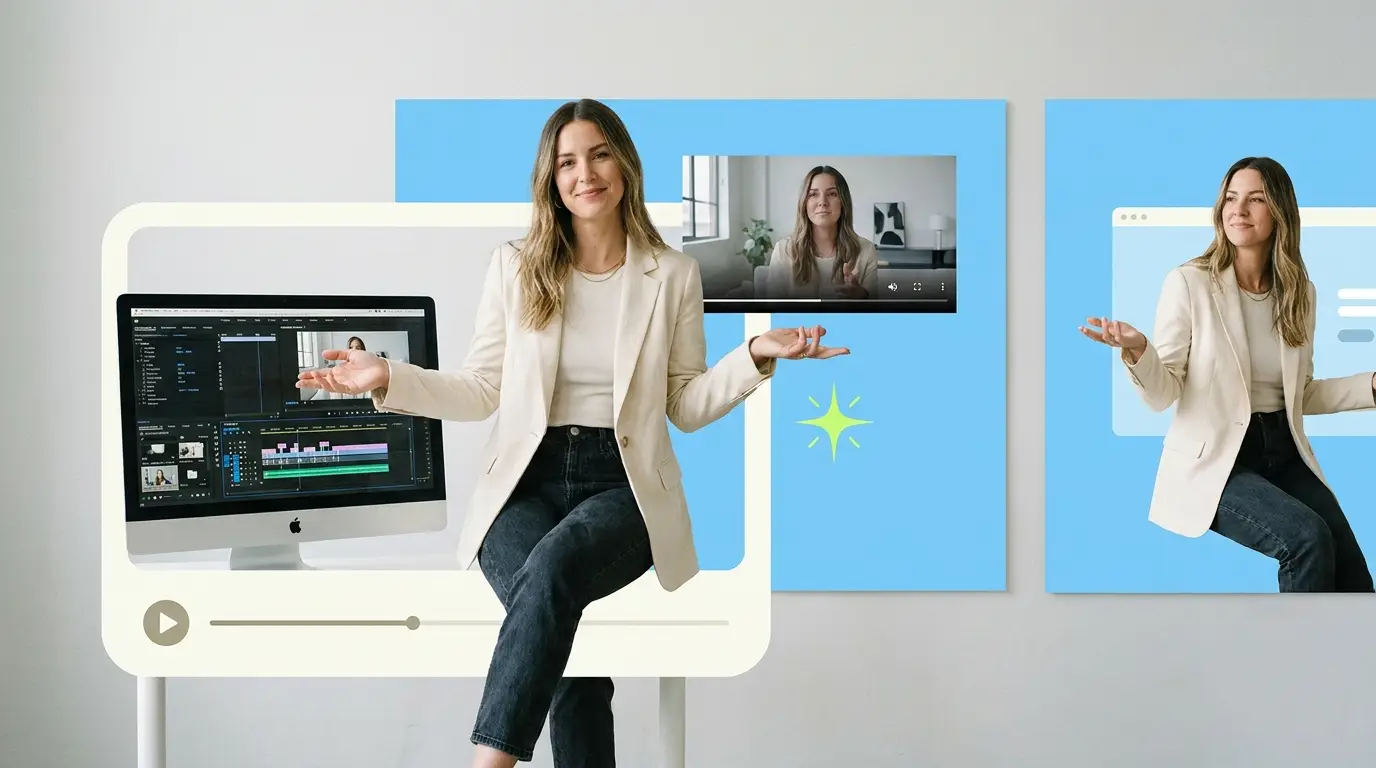
If you are weighing Adobe Premiere Pro vs video editing service, you are really deciding between two different jobs. One job is becoming a competent editor yourself, learning a professional Creative Cloud application and committing your own hours to every project. The other job is handing finished requirements to a team and receiving polished video back. Both produce good work. They just ask very different things of you, your budget, and your calendar. This guide breaks down the real costs, the learning curve, and the time math so you can pick the path that fits how your business actually runs.
The stakes are higher than they used to be. According to Wyzowl, 91% of businesses use video as a marketing tool, and 82% of people say a video has convinced them to buy a product or service. Video is no longer optional. The only open question is how you produce it.
What Adobe Premiere Pro actually is
Adobe Premiere Pro is professional, timeline-based editing software sold as a Creative Cloud subscription. It is the tool a large share of working editors use every day, and it is genuinely capable. You get multi-track timelines, color grading, audio mixing, motion graphics through tight integration with After Effects, and support for nearly every codec and camera format you will encounter.
When you buy Premiere Pro, you are buying capability, not finished video. The software sits on your machine and waits. It does nothing until a person who knows how to use it sits down and does the work. That person is either you, someone on your team, or a contractor you pay separately. The subscription is only the entry ticket.
Pricing for Premiere Pro is a recurring Creative Cloud subscription, billed monthly or annually, and Adobe adjusts its plans over time. Rather than quote a figure that may be stale by the time you read this, check Adobe directly for the current rate. The important point is that the software fee is the smallest line item in the real cost of editing in-house. The big costs are time and skill.
What a done-for-you video editing service is

A video editing service is a team that takes your raw footage and your brief, then returns edited video on a schedule. You do not touch the software. You do not learn the software. You describe what you want, send the files, and review the result.
Services come in a few shapes. Freelancers charge per project, agencies charge per project on larger engagements, and subscription services charge a flat monthly fee for ongoing output. We cover the differences in detail in our video editing subscription services guide, and if you are comparing specific providers, our roundup of the best video editing services compared is a good next stop.
The trade is simple. You give up some direct creative control and you pay for labor. In exchange, you skip the learning curve, the software cost, and the hours you would otherwise spend in a timeline.
The cost comparison nobody shows you upfront
The Premiere Pro subscription looks cheap on its own. That number is misleading because it ignores the most expensive ingredient: the editor.
If you hire someone in-house to run Premiere Pro, you are looking at a salary. A full-time video editor in the United States typically earns between $55,000 and $75,000 per year, based on ZipRecruiter salary data, before you add benefits, payroll taxes, equipment, and the software subscription itself. That is the true cost of "editing in-house" once you account for the human.
If you do the editing yourself, the salary line disappears but your time does not. Every hour you spend learning Premiere Pro and grinding through edits is an hour you are not selling, building, or running the business. For a founder or marketer, that opportunity cost is often the largest expense of all, even though it never shows up on an invoice.
On the service side, the market spreads across a wide band. Freelance editors commonly charge $75 to $250 per video. Agencies bill $500 to $5,000 or more per project depending on scope. Subscription services land in the middle with predictable monthly pricing, generally somewhere in the $500 to $3,000 range depending on volume and turnaround. We walk through how to think about these numbers in how to outsource video editing.
So the honest comparison is not "software fee vs service fee." It is "software fee plus your time or a salary" vs "a predictable service fee." Once you frame it that way, the math changes for most businesses.
The learning curve is real

Premiere Pro is powerful, which is exactly why it takes time to learn. Getting from "I installed it" to "I can cut a clean, on-brand video without fighting the interface" is a journey measured in weeks, not hours. You will spend time learning the timeline, keyboard shortcuts, color correction, audio leveling, export settings, and the dozens of small decisions that separate amateur video from professional video.
That investment pays off if editing becomes a regular part of your job. A skilled in-house editor who lives in Premiere Pro every day gets fast and gets good, and that speed compounds. The software rewards mastery.
It pays off poorly if you only need a handful of videos a month. Spending forty hours learning software to produce four videos is a bad trade. You will still be slow, your output will look like a beginner's for a while, and you will dread the work. For occasional or moderate volume, the learning curve is a cost without a matching return.
A service removes the learning curve entirely. The editor on the other end already mastered the software years ago. You get their fluency on day one without paying for your own.
Time: the cost that hides on your calendar
Editing is slow even when you are good at it. A polished few-minute video can take hours of timeline work once you include selecting takes, syncing audio, color, captions, music, and revisions. Multiply that by your monthly volume and you start to see why time is the deciding factor for so many businesses.
If you edit yourself, that time comes straight out of your week. If you hire in-house, you are paying a salary to cover those hours. If you use a service, the hours happen on someone else's clock and you only pay the flat fee.
Turnaround matters too, and we compare fast turnaround video editing across every model. When you edit in-house, your video ships when you find the time. When a backlog hits or someone goes on vacation, projects stall. A good service commits to a turnaround window so your content keeps moving regardless of how busy your week gets. According to HubSpot, consistent video output is tied to better marketing performance, and consistency is exactly what breaks down when editing competes with everything else on your plate.
When Adobe Premiere Pro is the right call

Premiere Pro wins in clear situations.
You already have the skills. If you or someone on your team is already a capable editor, the software is the obvious tool and you should keep using it. There is no learning curve to pay down.
You want full creative control. When you need to control every frame, every transition, and every color decision yourself, nothing beats having your own hands on the timeline. Complex, highly creative, or brand-defining work often justifies in-house editing.
You produce high volume with a dedicated person. If video is core to your business and you are shipping constantly, a full-time editor in Premiere Pro can be more economical than paying per project, and you keep institutional knowledge in-house. We compare these two paths directly in dedicated video editor vs in-house hire.
You have time and you enjoy it. Some founders genuinely like editing. If the work energizes you rather than draining you, that changes the calculus.
When a video editing service is the right call
A service wins in a different and very common set of situations.
You want output, not a new skill. If your goal is finished video and you have no interest in becoming an editor, paying for the result is the rational choice.
Your time is worth more elsewhere. If your hours are better spent on sales, product, or strategy, handing off editing protects your most valuable resource.
You need consistency without overhead. A service gives you reliable output on a schedule without hiring, training, or managing a person, and without the salary commitment. Our guide on the done-for-you video editing service model explains how this works in practice.
Your volume is steady but does not fill a full-time role. This is the awkward middle that catches many businesses. You need more video than a freelancer can handle reliably, but not enough to justify a $55,000 to $75,000 salary. A subscription service fits this gap cleanly.
What Pixel8 Production offers
Pixel8 Production is a done-for-you B2B video editing subscription built for businesses that want professional output without the learning curve or the hiring overhead.
For $2,000 to $3,200 per month, you get a dedicated editor who learns your brand and your preferences, a 48-hour turnaround on most edits, and unlimited revisions so you keep refining until the video is right. There is no software to buy, no skill to learn, and no salary to commit to. You send footage and a brief, and finished video comes back.
The model is designed for the steady-volume business that has outgrown freelancers but does not want to manage a full-time hire. Instead of paying per project and watching costs swing month to month, you get a predictable fee and a partner who already knows how your videos should look. That dedicated relationship is the difference between a transaction and a workflow.
Adobe Premiere Pro vs a service: a quick side by side
Software cost: Premiere Pro is a recurring Creative Cloud subscription. A service has no software cost to you.
Labor cost: Premiere Pro requires your time or an editor's salary. A service includes labor in the fee.
Learning curve: Premiere Pro takes weeks to learn well. A service requires none.
Creative control: Premiere Pro gives you total hands-on control. A service gives you control through your brief and revisions.
Turnaround: Premiere Pro ships when you have time. A service commits to a schedule.
Best for: Premiere Pro fits skilled in-house teams and high-volume creative work. A service fits businesses that want consistent output without the time sink.
Bottom line
Adobe Premiere Pro and a done-for-you video editing service are both good answers to different questions. Premiere Pro wins when you already have the skills, want full creative control, or run enough volume to keep a dedicated editor busy. A service wins when you want professional output without the learning curve, the software cost, and the time sink, especially at the steady-but-not-full-time volume that catches so many growing businesses. Add up your real costs, including your own time, and the right choice usually becomes obvious. If that points you toward a service, Pixel8 Production offers a dedicated editor, a 48-hour turnaround, and unlimited revisions for $2,000 to $3,200 per month.
Where to go from here
Frequently asked questions
Is Adobe Premiere Pro hard to learn?
It is professional software with real depth, so reaching a polished, confident level usually takes weeks of practice, not hours. Basic cuts are quick to pick up, but color, audio, captions, and clean exports take longer. If you only need a few videos a month, the time invested rarely pays off.
How much does Adobe Premiere Pro cost?
It is sold as a recurring Creative Cloud subscription billed monthly or annually, and Adobe updates its pricing over time. Check Adobe directly for the current rate. Remember that the subscription is only the entry cost. The real expense of editing in-house is the time or salary of the person using it.
Should you learn Premiere or hire a video editing agency?
If editing is not your core job, a video editing agency or subscription is usually the better use of time. Premiere is powerful but has a steep learning curve and every video still costs you hours; an agency model means you send footage and get finished video back. For a business with steady video needs, buying the outcome beats mastering the software.
Is a video editing service cheaper than Adobe Premiere Pro?
It depends on what you count. The Premiere Pro subscription alone is cheaper than any service. But once you add the cost of your time or an editor's salary of $55,000 to $75,000 per year, a service is often cheaper in total for businesses that do not edit full-time.
What does a video editing service cost?
Pricing varies by model. Freelancers charge $75 to $250 per video, agencies charge $500 to $5,000 or more per project, and subscription services generally run in the $500 to $3,000 range per month. Pixel8 Production sits at $2,000 to $3,200 per month for a dedicated editor with unlimited revisions. A $900 trial is available to test the service before committing to a monthly plan.
Can I switch from doing it myself to a service later?
Yes, and many businesses do. People often start in Premiere Pro, hit a volume or time ceiling, and move to a service once editing starts crowding out higher-value work. You can also run both, keeping quick edits in-house and sending larger projects out.
Do I lose creative control with a service?
You trade direct hands-on control for control through your brief and revisions. With unlimited revisions and a dedicated editor who learns your brand, the gap narrows quickly. For most marketing video, the brief-and-revise loop produces results that match what you would have made yourself.
Which is better for a small business with steady video needs?
A service usually wins here. If you need consistent video but not enough to justify a full-time salary, a subscription service gives you reliable output without the hiring overhead or the time spent learning software. Premiere Pro makes more sense once you have a skilled person on staff or enjoy editing yourself.

Prakhar Mehta
Pixel8 is a done-for-you video editing subscription, giving SaaS companies, agencies, and founders a dedicated editing team with 48-hour turnaround.
Ready to stop doing this yourself?
Get a dedicated video editing team. 48-hour turnaround, unlimited revisions, month-to-month.