Video Marketing Funnel: Content for Each Stage
Build a video marketing funnel that works at every stage. Map video types to awareness, consideration, decision, and retention, with metrics to track each.
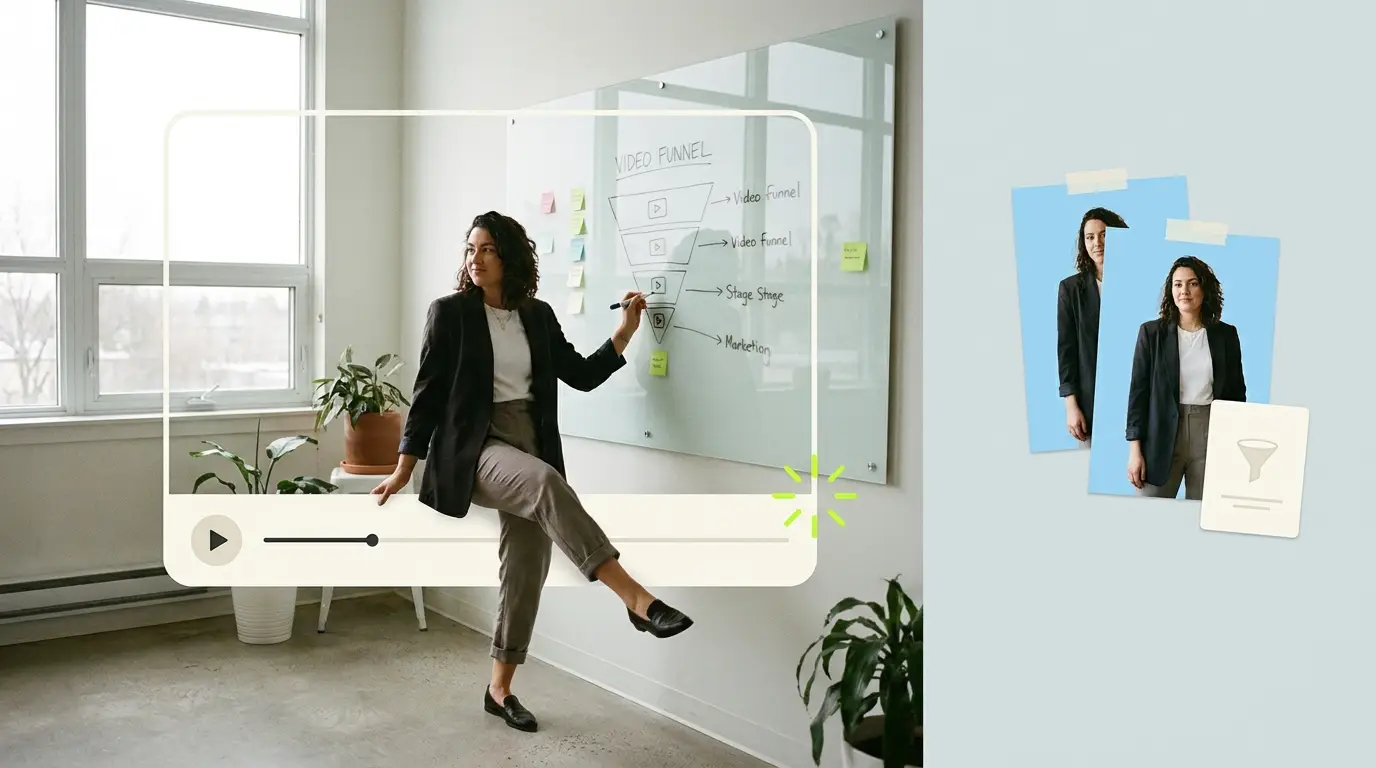
Most B2B teams produce video the way they produce blog posts: one piece at a time, with no clear sense of who it is for or what it should do next. A video marketing funnel fixes that. Instead of treating every video as a standalone asset, you map each one to a buyer stage, awareness, consideration, decision, or retention, so the whole library pulls in the same direction. The result is a system where prospects move from "never heard of you" to "ready to renew" with video doing the heavy lifting at every step.
This guide breaks down the video marketing funnel by stage. You will see which video types fit each phase, how to map content to buyer intent, which metrics actually matter per stage, and how to keep the pipeline fed so the funnel never runs dry.
Why a video marketing funnel beats one-off videos
A funnel forces intent. When you know a video is meant to create awareness, you stop trying to cram pricing details into the first ten seconds. When you know a video is meant to close a deal, you stop padding it with brand fluff. Each asset gets a job, and you can measure whether it does that job.
The numbers back the approach. According to Wyzowl, 91% of businesses use video as a marketing tool, and 82% say a video convinced them to buy a product or service. That second figure is the one that matters for funnel design: video does not just attract attention, it changes decisions. HubSpot's research on video marketing statistics echoes this, with marketers consistently ranking video as their highest-return format.
The catch is that no single video can do all of that work. A 90-second brand film will not answer a procurement team's technical objections, and a detailed product walkthrough will not stop the scroll on LinkedIn. You need different assets for different jobs, organized into stages.
Stage 1: Awareness

The goal at the top of the funnel is reach and recognition. Your prospect does not know they have a problem yet, or they know the problem but have never heard of you. Awareness video has to earn attention from people who were not looking for you.
What works here:
- Short social videos. Fifteen to sixty seconds, built for LinkedIn, YouTube Shorts, and embedded social feeds. They lead with a hook, make one point, and leave the viewer slightly smarter.
- Thought-leadership clips. Your founder or a subject expert taking a clear position on an industry question. These build credibility before a prospect ever visits your site.
- Brand and culture films. Higher production, lower frequency. They tell people who you are and why you exist.
The mistake most teams make is selling too early. Awareness video should give value, not pitch. If you are choosing formats, our breakdown of B2B video content types that convert covers which top-of-funnel formats earn the most attention.
Metrics that matter at awareness: views, reach, watch time, and view-through rate. Do not judge an awareness video on leads or sales. Judge it on how many of the right people saw it and how long they stayed. A three-second average watch time on a 45-second video means the hook failed, regardless of total views.
Stage 2: Consideration
Now the prospect knows they have a problem and is weighing options, including yours. Consideration video has to prove you understand their situation better than the alternatives. This is where most B2B buying actually happens, and it is where video earns its keep.
What works here:
- Explainer videos. Two to three minutes showing how your category solves a specific problem. Not a feature dump, a clear walkthrough of the approach.
- Webinar and event recaps. Edited highlights from a longer session, cut into digestible segments that demonstrate depth.
- Case study videos. A customer describing the before and after in their own words. These are the single most persuasive consideration asset because they transfer trust.
- Comparison and FAQ videos. Honest answers to the questions a buyer is already asking competitors.
Mapping content here means matching the video to the question the buyer is asking at that moment. Someone reading a comparison page wants a comparison video, not a brand film. Our guide to building a video content strategy for B2B buyers goes deeper on aligning assets to buyer questions.
Metrics that matter at consideration: engagement rate, average percentage watched, click-through to deeper content, and assisted conversions. A consideration video succeeds when viewers finish it and take the next step, downloading a resource, booking a call, or watching a second video.
Stage 3: Decision

At the bottom of the funnel, the prospect is close. They are comparing finalists, building an internal case, or waiting for one more reason to sign. Decision video removes friction and reduces risk.
What works here:
- Product demos. A focused walkthrough of the exact workflow the buyer cares about. Specific beats comprehensive.
- Detailed customer testimonials. Not a 30-second clip, a full story with metrics, names, and outcomes a buying committee can cite internally.
- Onboarding previews. Showing what the first 30 days look like calms the fear of a painful rollout.
- Pricing and proposal videos. A short personalized video walking a specific prospect through their quote often closes deals that a static PDF cannot.
The decision stage is where production quality and clarity both matter. A demo with confusing edits or muddy audio plants doubt at the worst possible moment. To connect these assets to revenue, see how to measure video marketing ROI so you can prove the bottom of the funnel is paying off.
Metrics that matter at decision: conversion rate, demo completion rate, deal velocity, and influenced pipeline. These are the videos you tie directly to closed revenue. If a sales rep can point to a demo video that a prospect watched twice before signing, that asset earned its budget.
Stage 4: Retention
The funnel does not end at the sale. For B2B subscription and contract businesses, retention and expansion are where the real margin lives. Retention video keeps customers using the product, renewing, and buying more.
What works here:
- Onboarding and tutorial videos. A library that gets new users to value fast and cuts support tickets.
- Feature announcement videos. Short clips that drive adoption of new capabilities customers already paid for.
- Customer spotlight videos. Featuring your own customers turns them into advocates and gives the next prospect proof.
- Quarterly business review clips. Short recaps that remind a customer of the value they received before a renewal conversation.
Mapping here is about lifecycle moments: day one, day thirty, the first renewal, a new feature launch. Each moment gets a video.
Metrics that matter at retention: product adoption rate, support ticket deflection, renewal rate, and expansion revenue. A tutorial library that cuts onboarding time and reduces churn is worth more than most top-of-funnel campaigns, and it rarely gets the same attention.
How to map content across the full funnel

Once you know the four stages, the planning gets simpler. Build a grid: stages across the top, buyer questions down the side. Every cell is a video you could make. Then prioritize by where your funnel leaks most.
If you get plenty of traffic but few demos booked, your consideration stage is thin. If you book demos but lose deals, your decision stage needs work. If customers churn, retention video is your highest-return investment, not another awareness campaign. Let the leak decide the order, not the format that feels most exciting to produce.
One more rule: repurpose down the funnel, not up. A single webinar can become a consideration explainer, three awareness clips, and a retention tutorial. One filming session feeds multiple stages when an editor knows how to cut it. That efficiency is what makes a full-funnel video program affordable rather than overwhelming.
Keeping the funnel fed with a steady editing pipeline
Here is where most video funnels break. Teams plan the stages, film a batch of footage, and then stall because editing is slow and expensive. A funnel with empty cells does not work. The fix is a predictable editing pipeline that turns raw footage into finished assets on a reliable schedule.
The market gives you a few options, each with tradeoffs:
- In-house editor. A full-time hire costs roughly $55,000 to $75,000 per year, according to ZipRecruiter salary data, before benefits, software, and equipment. Good for high volume, expensive for steady mid-volume needs.
- Freelancers. Typically $75 to $250 per video. Flexible, but quality and availability swing, and you spend time managing them.
- Agencies. Project work runs $500 to $5,000 or more per project. Strong for one-off flagship pieces, slow and costly for the constant stream a funnel needs.
The general market for ongoing video editing runs from about $500 to $3,000 depending on volume and model. The real challenge is not any single video, it is keeping every stage stocked month after month without blowing the budget or burning out your team.
What Pixel8 Production offers
Pixel8 Production is a done-for-you B2B video editing subscription built for exactly this problem: keeping a full-funnel video program fed without the cost and management of hiring. You get a dedicated editor who learns your brand, your funnel, and your style, plus a 48-hour turnaround so footage does not pile up while stages go empty.
Pricing is a flat $2,000 to $3,200 per month. For that you get consistent, predictable output across every funnel stage, awareness clips, consideration explainers, decision demos, and retention tutorials, all edited to the same standard. Compared to a $55,000 to $75,000 in-house salary or unpredictable freelance and agency invoices, a subscription turns video editing into a fixed line item you can plan around.
The model fits the funnel because the funnel is never done. You always need the next awareness clip, the next case study, the next tutorial. A subscription matches that constant demand. If you want the full picture, see how our done-for-you video editing service works and how it maps to ongoing content needs.
Connecting the funnel to revenue
A video funnel is only worth building if you can prove it works. Tie each stage to its metric, then tie the metrics to pipeline. Awareness feeds reach, consideration feeds engagement and assisted conversions, decision feeds closed revenue, and retention feeds renewals and expansion. When you can show that a consideration explainer lifted demo bookings or a tutorial cut churn, the budget conversation gets easy.
For a deeper framework on attribution and what to track, our guide on video marketing ROI for B2B walks through connecting video activity to revenue without overcomplicating the measurement.
Bottom line
A video marketing funnel turns scattered one-off videos into a system where every asset has a job. Map your content to awareness, consideration, decision, and retention, track the right metric at each stage, and fix your biggest leak first. The strategy is the easy part. The hard part is keeping every stage fed, and that comes down to a reliable editing pipeline. Whether you build that in-house or use a subscription like Pixel8 Production at $2,000 to $3,200 per month, the goal is the same: never let a stage of the funnel run dry.
Where to go from here
Frequently asked questions
What is a video marketing funnel?
A video marketing funnel is a system that maps video content to the stages a buyer moves through: awareness, consideration, decision, and retention. Instead of producing one-off videos, you assign each asset a specific job at a specific stage. This lets you measure whether each video moves prospects toward the next step.
How many videos do I need for a full funnel?
There is no fixed number, but a working starter funnel usually has at least two or three assets per stage, so roughly eight to twelve videos to begin. The priority is covering your biggest leak first rather than filling every cell at once. You build out depth over time as you learn which assets perform.
Which funnel stage should I invest in first?
Invest where your funnel leaks most. If you have traffic but few demos, build consideration content. If you close deals but lose customers, retention video has the highest return. Let your actual conversion data decide the order, not which format feels most fun to produce.
What metrics should I track at each funnel stage?
Track reach and watch time at awareness, engagement and assisted conversions at consideration, conversion rate and influenced pipeline at decision, and renewal and adoption rates at retention. Matching the metric to the stage stops you from judging an awareness video on sales it was never meant to drive.
How much does video editing for a funnel cost?
It depends on the model. An in-house editor runs $55,000 to $75,000 per year, freelancers charge $75 to $250 per video, and agencies bill $500 to $5,000 or more per project. The general market for ongoing editing sits around $500 to $3,000. Pixel8 Production offers a subscription at a flat $2,000 to $3,200 per month with a dedicated editor and 48-hour turnaround. A $900 trial is available to test the service before committing to a monthly plan.
Can I reuse footage across multiple funnel stages?
Yes, and you should. One webinar or filming session can become awareness clips, a consideration explainer, and a retention tutorial. The rule is to repurpose down the funnel, not up. A skilled editor turns a single shoot into assets for several stages, which is what makes a full-funnel program affordable.
How fast should video editing turn around to keep a funnel fed?
Fast enough that footage does not pile up and stages do not go empty. A 48-hour turnaround keeps the pipeline moving and lets you respond to timely topics while they are still relevant. Slow editing is the most common reason video funnels stall after a strong start.

Prakhar Mehta
Pixel8 is a done-for-you video editing subscription, giving SaaS companies, agencies, and founders a dedicated editing team with 48-hour turnaround.
Ready to stop doing this yourself?
Get a dedicated video editing team. 48-hour turnaround, unlimited revisions, month-to-month.