Video Editing for Proptech Companies: A Guide
Video editing for proptech companies turns dashboard demos and customer stories into clear, steady marketing output. See the workflows, costs, and formats.
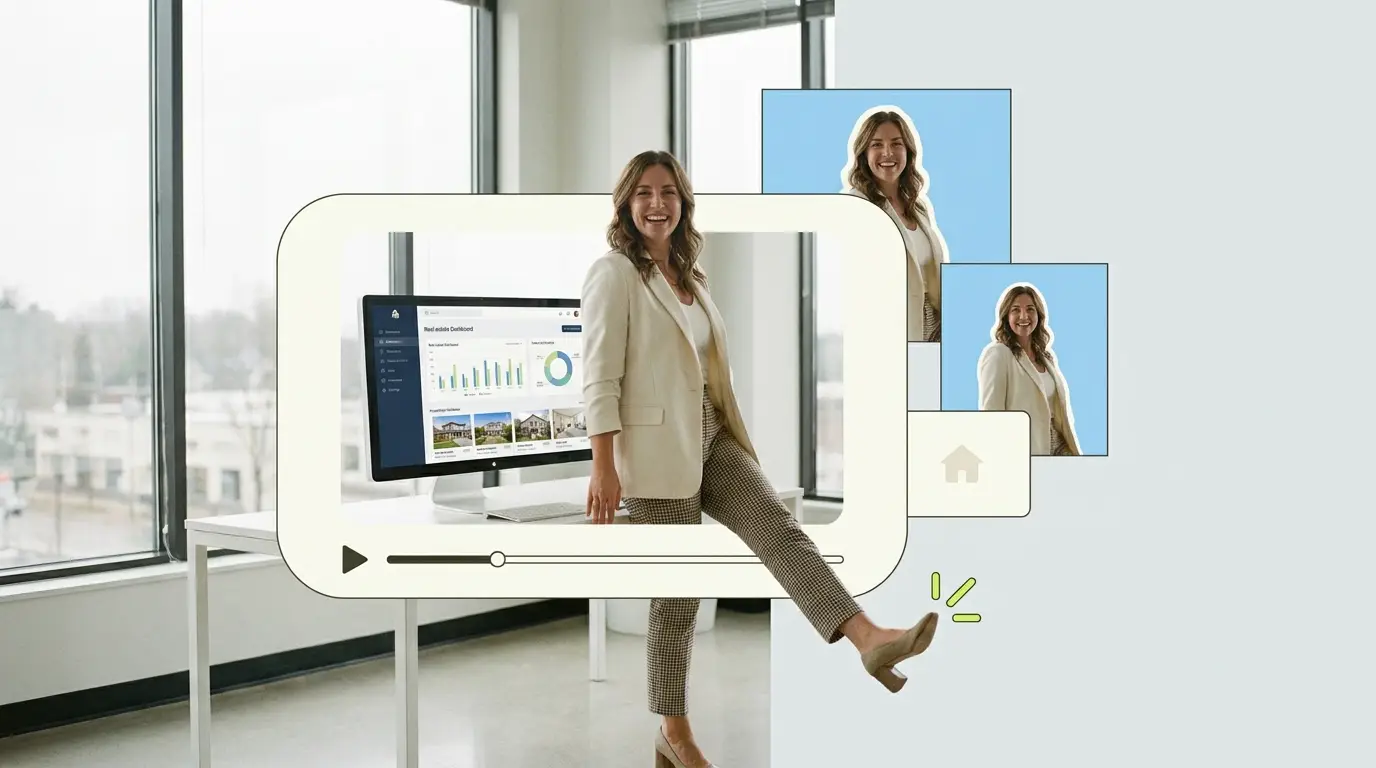
Video editing for proptech companies is the work that turns raw screen recordings, founder interviews, and conference footage into clips a broker, landlord, or investor will actually watch. Proptech sits at an awkward intersection: you are selling software, but your buyers come from real estate, a relationship-driven industry that responds to demonstration more than to feature lists. A polished walkthrough of your platform does more to close a brokerage than three pages of copy ever will. That is why video editing for proptech companies has become a core marketing function rather than an occasional project, and why the teams shipping the most content tend to win the category conversation.
The numbers back this up. According to Wyzowl, 91% of businesses use video as a marketing tool, and 82% say a video has convinced them to buy a product or service. For a proptech founder trying to explain a leasing workflow or a portfolio dashboard, that buying signal is exactly what you are after. The hard part is not deciding to make video. It is producing enough of it, consistently, without burning out your small team.
Why proptech is a video-first category
Real estate software solves problems that are easier to show than to tell. A property manager wants to see how rent collection flows through your system. An institutional investor wants to watch your analytics dashboard surface a cap-rate trend in real time. A leasing agent wants proof that your tool will not slow down their day. None of that lands as text.
Proptech also serves several distinct audiences at once, and each needs a different kind of video. A few that come up constantly:
- Product demos and platform walkthroughs. The core asset. A focused recording of your dashboard, with clear narration and on-screen callouts, that shows one workflow start to finish.
- Customer stories from brokerages and landlords. Interviews with the people using your software, cut into short testimonials that name a real result, like fewer vacant days or faster tenant screening.
- Conference and stage talks. Footage from a proptech summit or a real estate tech panel, edited into clips your sales team can send and your social channels can reuse.
- Investor updates. Quarterly progress videos that pair your founder talking with clean charts of MRR, retention, and units under management.
- DevRel and onboarding content. Short how-to videos that reduce support tickets and help new customers adopt features faster.
If you also work with agents and brokers directly, the editing patterns overlap with what we cover in video editing for real estate agents, though the proptech version leans harder on software and data.
The editing specifics that separate good proptech video from noise
This is where craft matters. Most proptech footage starts as a screen recording of software, and raw screen recordings are slow, cluttered, and full of dead time. The editing job is to make a complex interface legible to someone seeing it for the first time.
Screen recordings of dashboards
A dashboard recording usually arrives at the wrong pace. The presenter pauses, mis-clicks, hunts for a menu, then explains. A skilled editor cuts the dead air, speeds up navigation between steps, and slows down the moments that matter so the viewer can read the screen. The goal is a recording that feels confident even when the original take was not.
Clear UI callouts

Software interfaces are dense. When you mention the "tenant ledger," the viewer needs to know exactly where on the screen that lives. Editors add zooms, highlight boxes, arrows, and cursor emphasis so attention lands on the right element at the right second. Done well, these callouts are nearly invisible: the viewer just feels like they are being guided. Done poorly, they clutter the frame and compete with the narration.
Data visualization

Proptech runs on numbers, and numbers on a slide are forgettable. Animated charts that build a point step by step, clean lower-thirds that label a metric, and simple motion graphics that turn a static stat into a moment all help the data stick. This is especially true for investor updates, where the difference between a flat spreadsheet and an animated growth curve is the difference between attention and a closed tab. For more on which formats earn engagement, our breakdown of B2B video content types that convert is a useful reference.
Pacing and length

Proptech buyers are busy operators. A product demo that runs eight minutes will lose them; the same demo cut to two minutes, with the boring parts removed, gets watched to the end. Good editing is mostly subtraction. The principles here mirror what we lay out in SaaS product demo video best practices, which goes deep on structure and hooks.
Why steady output beats occasional polish
A single beautiful brand film does not move a proptech company forward. What moves the needle is a steady cadence: a new demo when you ship a feature, a customer clip every few weeks, a stage talk turned into five social cuts after every conference. HubSpot's research on video marketing statistics shows that consistency, not one-off production value, is what builds an audience and keeps a brand in front of buyers through a long sales cycle.
The problem is that consistency is exactly what most proptech marketing teams cannot sustain. You ship features faster than you can document them. A conference generates twenty hours of footage that sits untouched. A customer agrees to a testimonial, but the clip takes three weeks to produce, by which point the moment has passed. The bottleneck is almost never ideas or footage. It is editing capacity.
What it costs to solve the editing bottleneck
There are a few standard ways to get proptech video edited, and each has a clear trade-off.
Hire an in-house editor. A full-time video editor in the US costs roughly $55,000 to $75,000 per year according to ZipRecruiter salary data, before benefits, software, and hardware. That makes sense once your volume is high and predictable. For an early-stage proptech company shipping a handful of videos a month, a full-time hire is a heavy commitment, and you still carry the risk of vacation, sickness, and turnover.
Use freelancers. Freelance editors typically charge $75 to $250 per video depending on complexity. The flexibility is appealing, but quality and availability swing hard. The editor who understood your dashboard last month is booked this month, and the new one needs the same context all over again. Managing a roster of freelancers becomes its own part-time job.
Hire a production agency. Agencies deliver high production value and charge for it, often $500 to $5,000 or more per project. That is reasonable for a flagship brand film. It is not sustainable for the weekly drumbeat of demos and clips a proptech company actually needs.
Use a subscription editing service. A monthly subscription gives you a dedicated editor and predictable output for a flat fee. The general market for these services runs roughly $500 to $3,000 per month depending on volume and turnaround. This model fits proptech well because the work is steady and the editor builds lasting knowledge of your product. We compare the options in more depth in our guide to the done-for-you video editing service model.
What Pixel8 Production offers
Pixel8 Production is a done-for-you B2B video editing subscription built for companies that need steady output without managing freelancers or hiring in-house. The price is always $2,000 to $3,200 per month, a flat fee with no per-video billing and no surprise project quotes.
Here is what that includes:
- A dedicated editor. You work with the same person every month. They learn your platform, your UI, your brand, and your callout style, so each new demo gets faster and more consistent rather than starting from scratch.
- 48-hour turnaround. Send footage from a conference talk or a feature ship, and get an edited cut back within two business days. That speed is what makes the steady cadence possible.
- Unlimited revisions. Proptech founders are particular about how their product is shown, and rightly so. You can request changes until the cut is right, without watching a meter or worrying about extra invoices.
The subscription model fits the proptech rhythm because your editing needs are continuous, not occasional. You are always shipping features, always running events, always closing customers worth a testimonial. A dedicated editor on a flat monthly fee turns that flow of raw footage into a reliable content engine. If your needs lean toward animated explainers, our piece on how to outsource explainer video production for SaaS covers that angle too.
How to set up a proptech video pipeline that runs itself
The companies that ship video consistently are not more talented. They have a system. A practical one looks like this:
- Capture by default. Record every demo, every conference talk, every customer call where someone praises the product. Raw footage is cheap; the regret of not having it is expensive.
- Batch your asks. Instead of one-off requests, group footage and send your editor a clear brief: which clips, which callouts, what length, where it will run.
- Standardize your style. Lock in your callout treatment, lower-thirds, intro, and outro once. A dedicated editor maintains that style so everything looks like it came from one brand.
- Repurpose aggressively. One conference talk becomes a full session video, five social clips, a blog embed, and a sales snippet. The editing cost is marginal; the reach multiplies.
- Measure and adjust. Track which videos drive demo requests and which get skipped, then tell your editor what to make more of.
With a subscription editor handling the production side, your marketing team spends its time on strategy, distribution, and capturing good raw material, rather than wrestling with timelines and render queues.
Bottom line
Proptech sells software to an industry that buys on demonstration, which makes video less a nice-to-have than a core part of how you explain and sell your product. The footage is rarely the problem. The bottleneck is turning screen recordings, customer interviews, and conference talks into clean, well-paced clips on a steady schedule. Editing craft, clear UI callouts, sharp data visualization, and disciplined pacing are what make that footage land.
A subscription editing model solves the capacity problem without the cost and risk of a full-time hire. With Pixel8 Production at $2,000 to $3,200 per month, you get a dedicated editor who learns your platform, a 48-hour turnaround that keeps your content current, and unlimited revisions so every cut shows your product the way you want. For a proptech company trying to keep a consistent DevRel and marketing output, that is the difference between footage sitting in a folder and a content engine that runs every week.
Where to go from here
Frequently asked questions
What kinds of video do proptech companies need most?
Product demos and platform walkthroughs are the highest-value assets because they show your software solving a real workflow. Customer stories from brokerages and landlords, conference talk clips, and investor updates round out the mix. Most proptech companies benefit from a steady stream of short, focused videos rather than occasional long ones.
How is editing proptech video different from other B2B video?
The big difference is screen recordings of software. A proptech editor spends a lot of time cleaning up dashboard footage, adding clear UI callouts, and animating data so a dense interface becomes legible to a first-time viewer. That craft is specialized and is what separates a watchable demo from a confusing one.
How much does video editing for proptech companies cost?
It depends on the model. A full-time in-house editor runs $55,000 to $75,000 per year, freelancers charge $75 to $250 per video, and agencies charge $500 to $5,000 or more per project. Subscription services generally fall in the $500 to $3,000 per month range, which fits the steady cadence proptech marketing needs.
How fast can I get an edited video back?
With a subscription service like Pixel8 Production, turnaround is 48 hours for most edits. That speed matters in proptech, where a feature ship or a conference moment loses relevance fast if the clip takes weeks to produce.
Should I hire an editor in-house or outsource?
Hire in-house when your volume is high, predictable, and you can keep a full-time editor busy. Outsource to a subscription service when you want steady output without the overhead of salary, software, benefits, and turnover risk. Most early and mid-stage proptech companies find the subscription model more economical and more reliable.
Can one editor handle our whole content mix?
Yes, for most proptech companies. A dedicated editor who knows your product can move between demos, customer stories, conference clips, and investor updates because the underlying style and brand stay consistent. That continuity is a major advantage over rotating freelancers who relearn your product each time.
What does Pixel8 Production charge for proptech video editing?
Pixel8 Production is a flat $2,000 to $3,200 per month. That includes a dedicated editor, 48-hour turnaround, and unlimited revisions, with no per-video fees or surprise project quotes. The flat fee makes budgeting simple and supports the continuous output proptech marketing depends on.

Prakhar Mehta
Pixel8 is a done-for-you video editing subscription, giving SaaS companies, agencies, and founders a dedicated editing team with 48-hour turnaround.
Ready to stop doing this yourself?
Get a dedicated video editing team. 48-hour turnaround, unlimited revisions, month-to-month.