Video Editing for Medical Practices: A Guide
Video editing for medical practices helps clinics and dental offices build trust with patient education and provider intros. Here is how to do it consistently.
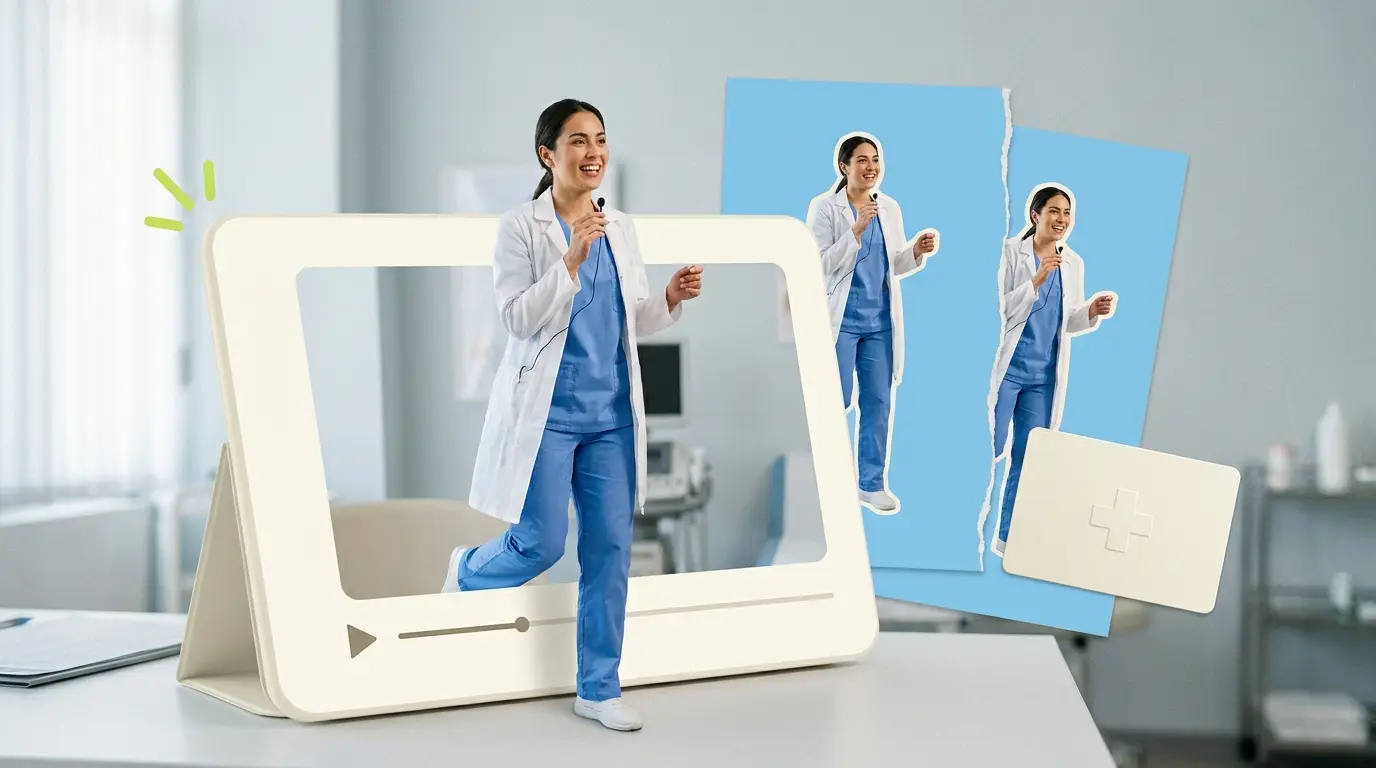
Video editing for medical practices is no longer a nice-to-have for clinics, dental offices, and specialist groups that want to be found and trusted online. A patient choosing a provider often watches a video before booking, and the quality of that video shapes the first impression. The trouble is that running a busy practice leaves almost no time to cut footage, add captions, and keep a steady stream of content going. That gap is exactly where a thoughtful approach to editing, and often a dedicated editor, makes the difference between a few stale clips and a content library that quietly works for you.
This guide covers how medical and healthcare practices actually use video, what makes editing for this field different from other industries, and why a subscription model fits the rhythm of a clinic better than one-off projects. A quick note before we start: nothing here is medical, legal, or compliance advice. Privacy rules and regulations vary by location and practice type, so treat the privacy points below as reminders to be careful, not as instructions to follow.
Why video matters for healthcare practices
People research their health constantly, and a large share of that research happens on video. According to Wyzowl, 91% of businesses use video as a marketing tool, and 82% say a video convinced them to buy a product or service. For a medical or dental practice, "buying" usually means booking a consultation or choosing one provider over another nearby. Video shortens the distance between a nervous prospective patient and the decision to walk through the door.
Healthcare buys on trust more than almost any other category. A prospective patient is not comparing features on a spreadsheet. They are asking whether they feel safe with this person, whether the office seems clean and modern, and whether the provider can explain things without talking down to them. A well-edited video answers all three questions in under two minutes, which is something a block of text on a homepage struggles to do.
The data backs this up across industries. HubSpot's research on video marketing statistics consistently shows video driving engagement and conversions higher than static content. The point for a practice is simple: patients want to see and hear you before they trust you with their care.
The main types of video a practice uses

Most successful healthcare practices lean on a handful of video formats. Each has its own editing needs, and a good editor treats them differently.
Patient education videos
These explain a condition, a treatment option, or what to expect from a procedure in plain language. A dentist might explain what a root canal actually involves, or a dermatologist might walk through how a particular treatment works. Editing here is about clarity. Clean cuts, simple on-screen text to reinforce key terms, and pacing that gives viewers time to absorb information matter more than flashy effects.
Procedure explainers
Closely related, these go a step deeper into the "how" of a specific service. They often use diagrams, animation, or B-roll of the office and equipment. The editor's job is to keep the visuals supporting the explanation without overwhelming an anxious viewer. Adding labels and chapter markers helps patients find the part they care about.
Provider introductions
A short video where a doctor, dentist, or specialist introduces themselves does enormous work in building trust before the first appointment. Editing keeps these warm and human. The goal is to make a provider look approachable, not to produce a glossy commercial. These pair well with the kind of talking head video editing service that keeps the focus on the person speaking.
Patient testimonials
Testimonials are powerful but require extra care in healthcare because of privacy. Any patient story should be shared only with clear, documented consent, and editors should be ready to blur, cut, or anonymize anything that was not meant to be public. The editing should feel honest rather than scripted, since over-polished testimonials read as fake.
Social and short-form clips
Short vertical clips for Instagram, TikTok, and YouTube Shorts keep a practice visible between bigger productions. These are usually repurposed from longer videos, which is one reason a single recording session can feed weeks of content when an editor handles the slicing and reformatting. This is similar to how a done-for-you video editing service turns one batch of footage into a steady posting schedule.
What makes editing for healthcare different
Editing a clinic's video is not the same as editing a product demo or a vlog. A few requirements come up again and again.
Clear and trustworthy, never hype
Healthcare audiences are sensitive to anything that smells like a hard sell. The editing tone should be calm, confident, and informative. That means resisting aggressive music, rapid jump cuts, and exaggerated claims on screen. An editor who understands the field will dial the energy down rather than up.
Accessible captions
Captions are essential, not optional. Many viewers watch with the sound off, and a large segment of healthcare audiences includes older patients or people with hearing differences. Accurate captions also help with search visibility and make a practice's content more inclusive. A good editor builds clean, readable captions into every video as a default.
Privacy awareness
This is the big one. Footage shot inside a practice can accidentally capture other patients, charts, screens, or identifying details in the background. An editor working in this space needs to be alert to that and ready to blur or remove anything sensitive. Again, the specific rules depend on your location and practice type, so the practical takeaway is to work with someone who treats privacy as a habit and to confirm your own requirements with the right advisor.
Consistency over time
A single great video does little. What moves the needle is a steady flow of content that keeps a practice present in patients' feeds and search results. Consistency is also the hardest thing for a busy clinic to maintain on its own, which is the core argument for a subscription editor.
The real cost of editing options

Practices weighing how to handle video editing usually look at four paths. Knowing the rough numbers helps the decision.
Hiring an in-house editor gives you the most control, but it is expensive. A full-time video editor in the United States earns roughly $55,000 to $75,000 per year according to ZipRecruiter salary data, before benefits, software, and equipment. For most single-location practices, that is hard to justify against the actual volume of video they produce.
Freelancers are more flexible and typically charge $75 to $250 per video, depending on length and complexity. The downside is consistency. Good freelancers get busy, raise rates, or move on, and you start over learning a new person's process every few months.
Traditional agencies handle bigger projects well but charge per project, often $500 to $5,000 or more, and they tend to be slow and formal for the steady, smaller-format work a practice needs week to week.
The fourth path is a fixed-fee subscription, which sits between these options. You get a dedicated editor and predictable output without the overhead of a hire. Pixel8's editing subscription runs $2,000 to $3,200 per month, which often costs less than half the loaded cost of a full-time editor while delivering far more consistency than scattered freelance work. The broader market for editing services ranges from about $500 to $3,000 depending on scope and provider.
How a subscription model fits a busy practice
The rhythm of a medical or dental office does not match the rhythm of one-off video projects. Patients come first, schedules shift, and content gets pushed to "later" until later never arrives. A subscription flips that dynamic.
With a dedicated editor on subscription, the workflow becomes simple. The practice records footage in batches, sends it off, and gets finished, captioned, privacy-checked videos back without managing a project each time. The same model works well for other service businesses too, which is why approaches like a video editing service for businesses have become popular across industries that depend on trust and consistency.
A dedicated editor also learns your practice. After a few rounds, they know your color preferences, your caption style, the music that fits your tone, and the privacy traps to watch for in your specific office. That accumulated knowledge is something you simply cannot get from a rotating cast of freelancers, and it shows in the finished work. The same principle that helps a video editing for coaches and consultants setup pay off applies directly to a practice that wants a recognizable, repeatable look.
Predictable cost is the other quiet benefit. A flat monthly fee makes budgeting easy and removes the per-video math that makes practices hesitate to publish. When editing is already paid for, you post more, and posting more is what actually builds visibility.
What Pixel8 Production offers

Pixel8 Production is a done-for-you B2B video editing subscription built for businesses that need steady, professional output without hiring in-house. For a medical or healthcare practice, that means a partner who handles the editing while you focus on patients.
Here is what the service includes:
- A dedicated editor who learns your practice's style, tone, and preferences over time, so every video feels consistent.
- A 48-hour turnaround on most edits, which keeps your content calendar moving instead of stalling.
- Accessible captions built into your videos as a standard, not an upcharge.
- A privacy-aware editing process, with attention to backgrounds, screens, and identifying details, plus the flexibility to blur or cut anything you flag.
- Repurposing of long-form recordings into short social clips, so one session feeds weeks of posts.
- Flat pricing of $2,000 to $3,200 per month, with no per-video surprises.
The model is straightforward. You send footage, your editor handles the rest, and finished videos come back ready to publish. For practices that have considered a broader corporate video production subscription, this is the editing engine that keeps the whole effort consistent week after week.
Getting started without overcomplicating it
You do not need a studio or a videographer to begin. Most practices start with a phone or a simple camera, record a few provider introductions and a couple of common patient questions, and let the editor turn that raw footage into polished pieces. The first batch teaches your editor your style, and the work gets smoother from there.
Build a short list of the questions patients ask most, the procedures worth explaining, and the providers who should introduce themselves. That list alone can fuel months of content. From there, recording in batches every few weeks keeps the pipeline full while the editing happens in the background.
Bottom line
Patients decide whether to trust a practice long before they meet anyone in person, and video is where much of that decision happens now. The practices that win are not the ones with the fanciest production. They are the ones that show up consistently with clear, trustworthy, privacy-aware video that answers real questions. Doing that on your own is hard when patients fill your day. A dedicated editor on a subscription model removes the friction, keeps the output steady, and lets you focus on care while your content quietly does its work in the background.
Where to go from here
Frequently asked questions
What is video editing for medical practices?
Video editing for medical practices is the process of turning raw footage from a clinic, dental office, or specialist group into polished, publish-ready videos. It typically covers patient education clips, provider introductions, procedure explainers, and social posts. The editing focuses on clarity, trust, accessible captions, and privacy awareness rather than flashy effects.
How much does it cost to edit videos for a healthcare practice?
Costs vary by path. Freelancers usually charge $75 to $250 per video, agencies charge $500 to $5,000 or more per project, and a full-time in-house editor runs $55,000 to $75,000 per year. A subscription like Pixel8 costs $2,000 to $3,200 per month for ongoing, dedicated editing. A $900 trial is available to test the service before committing to a monthly plan.
Why are captions so important for medical videos?
Many people watch video with the sound off, and healthcare audiences often include older patients or people with hearing differences. Accurate captions make your content accessible to all of them and also help with search visibility. A good editor adds clean, readable captions to every video as a standard practice.
How do you handle patient privacy in videos?
The careful approach is to only use patient stories with clear, documented consent and to watch for backgrounds, screens, charts, or details that could identify someone. Editors should be ready to blur or remove anything sensitive. Because privacy rules vary by location and practice type, confirm your specific requirements with the right advisor rather than relying on general guidance.
How long does it take to get a video edited?
It depends on the provider. Freelancers and agencies can take days or weeks depending on their workload. Pixel8 offers a 48-hour turnaround on most edits, which keeps a practice's content calendar moving instead of stalling between projects.
Can one recording session create multiple videos?
Yes, and this is one of the biggest advantages of working with a dedicated editor. A single longer recording can be cut into a main video plus several short clips for social platforms. That repurposing turns one session into weeks of content without extra filming.
Is a subscription better than hiring an in-house editor?
For most single-location practices, a subscription is more practical. It costs less than the loaded salary of a full-time editor, removes the overhead of hiring and managing, and still gives you a dedicated person who learns your style. Larger health systems with constant, high-volume needs may eventually justify an in-house team.

Prakhar Mehta
Pixel8 is a done-for-you video editing subscription, giving SaaS companies, agencies, and founders a dedicated editing team with 48-hour turnaround.
Ready to stop doing this yourself?
Get a dedicated video editing team. 48-hour turnaround, unlimited revisions, month-to-month.