Video Editing for Fitness Brands That Convert
Video editing for fitness brands turns workout clips into scroll-stopping reels. See the formats, volume, and why a subscription editor keeps output steady.
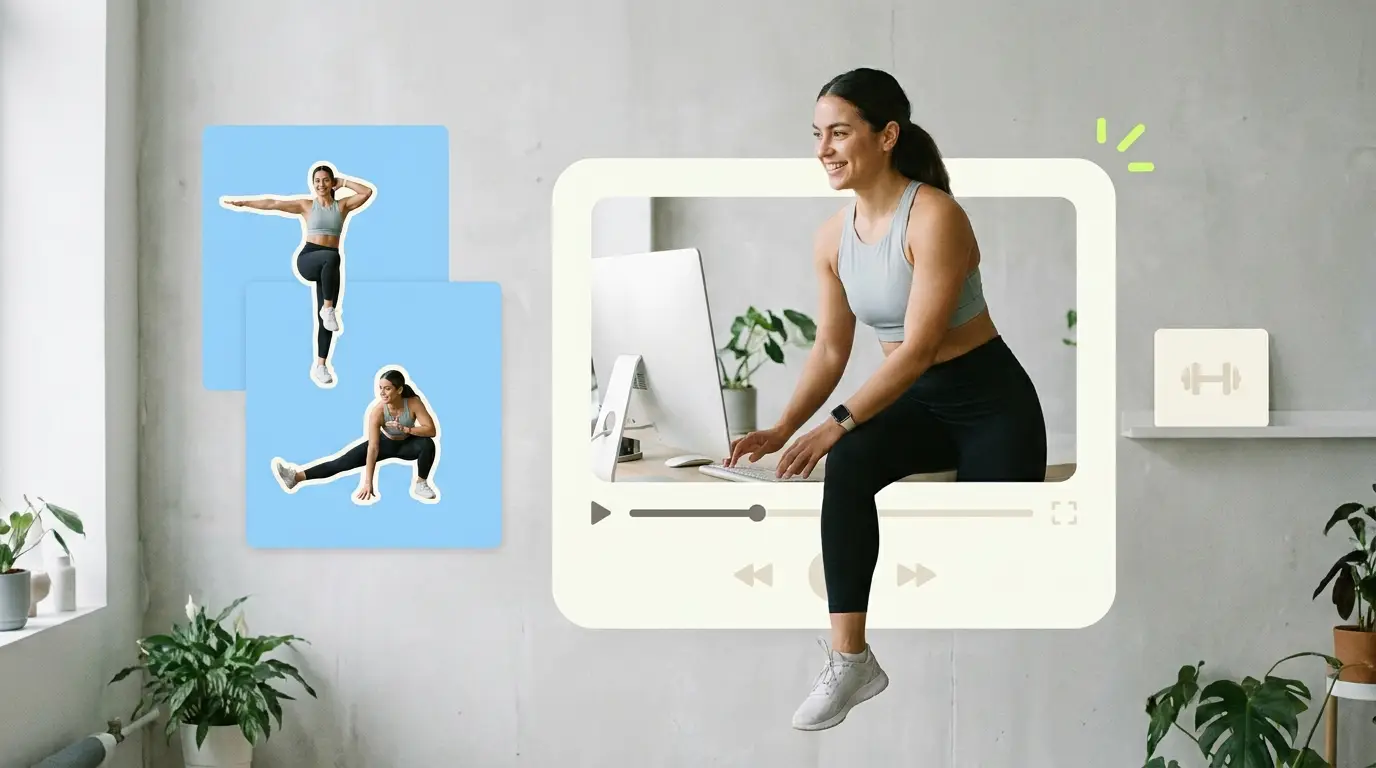
Video editing for fitness brands is the difference between a phone full of raw clips and a feed that fills classes, sells memberships, and books personal training slots. A gym owner can film a great workout, a clean transformation reveal, or a high-energy class promo, but raw footage rarely performs. The cuts feel slow, the captions are missing, the audio is flat, and the format is wrong for the platform. The work of video editing for fitness brands is turning that footage into something people stop scrolling to watch and then act on.
That matters because the audience is already trained to watch. According to Wyzowl, 91% of businesses use video as a marketing tool, and 82% say a video convinced them to buy a product or service. For fitness and wellness brands, where the product is a feeling, a result, and a sense of belonging, video is not optional. It is the main way prospects decide whether your gym, studio, or coaching program is for them.
This guide covers how fitness, gym, and wellness brands actually use video, the editing specifics that make those videos work, the volume a real content program demands, and why a subscription editor is the most reliable way to keep that output flowing.
How fitness and wellness brands use video
Fitness content is not one format. It is a stack of formats, each doing a specific job in the buying journey. The strongest brands run several at once.
Workout clips. Short demonstrations of a movement, a circuit, or a finisher. These are the bread and butter of a fitness feed. They show competence, give value for free, and pull in people searching for "kettlebell core" or "10 minute leg day." Editing turns a 90-second raw take into a tight 20-second clip with on-screen rep counts and form cues.
Transformation stories. Before-and-after journeys are the highest-converting content a gym or coach can post. A good transformation edit weaves photos, milestone clips, and a short client voiceover into a 30 to 60 second arc. The emotional payoff drives sign-ups because the viewer pictures their own result.
Class promos. Studios live and die by class attendance. A promo for a new spin block, a yoga series, or a bootcamp needs to convey energy, the vibe of the room, and the schedule, all in a vertical clip built for Stories and Reels.
Trainer intros. People buy from people. A trainer intro humanizes the brand, builds trust before the first session, and gives prospects a reason to pick your coach over the gym down the street. These edits favor warm pacing, clean audio, and a clear personality.
Short-form social. Reels, TikToks, and Shorts are where new audiences find you. This is the volume engine, and it demands a steady drumbeat of fast, punchy, vertical content. A serious fitness brand publishes here several times a week, every week, which is exactly where most in-house efforts stall.
If short-form is your growth channel, it pays to treat it as its own discipline. Our breakdown of a dedicated short-form video editing service explains how that workflow differs from long-form project work.
The editing specifics that make fitness video work
Fitness video has a recognizable feel, and that feel is built in the edit. These are the technical choices that separate content that converts from footage that sits.
Fast-paced cuts
Fitness viewers expect momentum. Long static takes lose them. A good editor trims dead air, cuts on the beat, and varies the shot every two to four seconds so the energy never dips. The goal is to match the intensity of the workout itself. A slow edit of a hard session feels like a contradiction, and viewers swipe away.
Captions and on-screen text

Most social video is watched on mute, especially in gyms, on commutes, and in bed at night. Burned-in captions are not a nice-to-have, they are required. Beyond captions, fitness edits use on-screen text for rep counts, form cues, exercise names, and timers. This text guides the viewer, increases watch time, and makes the content usable as an actual workout.
Music sync

Energy in fitness content comes from music. A skilled editor syncs cuts to the beat, builds toward a drop for a transformation reveal, and matches track choice to the mood of the format. A calming flow for yoga, a driving track for HIIT. Cutting on the beat is one of the most underrated skills in this niche, and it is hard to fake.
Vertical formats

The phone is vertical, so your content should be too. Reels, TikTok, and Shorts all live in 9:16, and reframing horizontal footage into vertical without cropping out the action takes a trained eye. Editors reframe, reposition the subject, and sometimes rebuild the composition shot by shot. Brands that ignore vertical formatting leave most of their reach on the table.
These specifics are why generic editing rarely works for fitness. The pacing, the captioning conventions, and the music sensibility are particular to the niche. When you hire help, you want an editor who has done this kind of work before, not someone who treats a gym promo like a corporate explainer. Our guide to a video editing service for businesses covers what to look for when you evaluate providers.
The volume problem nobody warns you about
Here is the part that catches fitness brands off guard. A real content program is not a few videos a month. To grow on short-form, you need consistent output, and consistency at the volume social platforms reward is genuinely hard to sustain.
Consider a mid-sized gym or coaching brand posting Reels four times a week. That is around 16 finished short-form videos a month, plus the occasional class promo, transformation feature, and trainer intro. Each of those finished clips might be cut from several minutes of raw footage. The filming is the easy part. The editing is the bottleneck.
This is where most fitness brands break down. The owner or marketing lead films plenty of footage, then the editing piles up. A week goes by, then two, and the feed goes quiet right when momentum was building. HubSpot's research on video marketing consistently shows that brands publishing regularly outperform those that post in bursts. The algorithm rewards rhythm, and rhythm requires a reliable editing engine.
You cannot will yourself to a steady output if editing depends on whoever has a free evening. The work has to be owned by someone whose only job is to turn your footage around, fast, every week.
The three ways fitness brands get video edited
There are three common paths, and each has a clear trade-off.
Hire an in-house editor. A full-time editor gives you control and availability, but the cost is significant. According to ZipRecruiter salary data, an in-house video editor runs $55,000 to $75,000 per year before benefits, equipment, and software. For a single gym or a small wellness brand, that is a heavy fixed cost for a role that may not have 40 hours of work every single week.
Use freelancers. Freelance editors typically charge $75 to $250 per video. That flexibility is appealing until you scale. At 16 to 20 videos a month, the per-video math climbs fast, quality varies between hires, and your best freelancer always seems to get busy right when you need them most. Managing a roster of freelancers becomes its own part-time job.
Hire an agency per project. Agencies handle big productions well, with project costs from $500 to $5,000 or more. But agency pricing and timelines suit launches and campaigns, not the weekly drip of short-form content that fitness growth actually requires. You end up paying premium project rates for routine clip edits.
For the broader market, ongoing editing help generally costs anywhere from $500 to $3,000 depending on volume and format. The honest problem with all three options is that none is built for high-volume, fast-turnaround, consistent short-form output, which is exactly what a fitness brand needs. If you are weighing your options carefully, our comparison of the best video editing services compared lays the choices side by side.
Why a subscription editor keeps output steady
A video editing subscription solves the volume and consistency problem directly. Instead of paying per video, hiring a salaried employee, or chasing freelancers, you pay a flat monthly fee for a dedicated editor and a predictable turnaround. The model is built for exactly the rhythm fitness content demands.
The advantages line up neatly with the fitness use case:
- Predictable output. You send footage, you get finished videos back on a set turnaround. No gaps in the feed because someone got busy.
- A dedicated editor who learns your brand. The same person edits your content week after week, so they learn your pacing, your caption style, your music taste, and your trainers' personalities. Quality goes up over time instead of resetting with every new freelancer.
- Flat, predictable cost. No per-video surprises and no salary overhead. You budget one number and scale your content as much as that allows.
- Fast turnaround. Short-form lives and dies on timing. Trends move quickly, and an editor who turns clips around in days, not weeks, keeps you in the conversation.
For fitness and wellness brands specifically, the subscription model maps onto how the work actually flows. You film in batches, send footage, and keep the feed stocked without the management overhead. If your channel of choice is Instagram, our piece on Instagram Reels for B2B brands covers principles that apply just as well to consumer fitness accounts.
What Pixel8 Production offers
Pixel8 Production is a done-for-you video editing subscription built for brands that need steady, high-quality output without the overhead of hiring. For fitness, gym, and wellness brands, that means workout clips, transformation reels, class promos, and trainer intros edited to the standard your audience expects.
Here is what is included:
- A dedicated editor. One editor assigned to your account who learns your style, your brand, and your formats. Not a rotating cast, not a queue of strangers.
- 48-hour turnaround. You send footage and get finished, platform-ready video back within 48 hours, so you stay on top of trends and never let the feed go quiet.
- Unlimited revisions. If a cut is not right, we fix it until it is. No per-revision fees, no friction, no awkward conversations about scope.
- Flat monthly pricing. Pixel8 costs $2,000 to $3,200 per month. That is one predictable number for a full editing engine, less than the loaded cost of a single in-house hire and far more consistent than juggling freelancers.
The pricing sits below the $55,000 to $75,000 per year an in-house editor costs, and unlike per-video freelance rates, it does not climb as your volume grows. You can read more about how the model works in our overview of a done-for-you video editing service.
The point is simple. Fitness brands win on consistency, and Pixel8 exists to make consistency the default rather than the thing you fight for every week.
Bottom line
Fitness and wellness brands grow on video, and video grows on consistency. The formats are clear: workout clips, transformation stories, class promos, trainer intros, and short-form social. So are the editing specifics: fast cuts, captions, music sync, and vertical formatting. The hard part is sustaining the volume, where in-house hires, freelancers, and agencies fall short for the weekly drip short-form demands.
A subscription editor solves that. Pixel8 Production gives fitness brands a dedicated editor, 48-hour turnaround, unlimited revisions, and flat $2,000 to $3,200 per month pricing. That is a full editing engine for less than a single in-house hire, built for fitness content.
Where to go from here
Frequently asked questions
What types of fitness videos can a subscription editor handle?
A subscription editor handles the full range of fitness content, including short workout clips, transformation stories, class promos, trainer intros, and short-form social videos for Reels, TikTok, and Shorts. The dedicated editor learns the conventions of each format. With Pixel8, you simply send the footage and specify the format you need.
How much does video editing for fitness brands cost?
Costs vary by approach. An in-house editor runs $55,000 to $75,000 per year, freelancers charge $75 to $250 per video, and agencies charge $500 to $5,000 or more per project. The general market for ongoing editing falls between $500 and $3,000 depending on volume. Pixel8 charges a flat $2,000 to $3,200 per month for a dedicated editor with unlimited revisions. A $900 trial is available to test the service before committing to a monthly plan.
How fast can I get my fitness videos edited?
With Pixel8, the turnaround is 48 hours from the time you send your footage. That speed matters for fitness content because trends move quickly and consistent posting is what social platforms reward. Fast turnaround keeps your feed active and lets you react to trends while they are still relevant.
Do you add captions and on-screen text to fitness videos?
Yes. Captions are essential because most social video is watched on mute, and on-screen text like rep counts, form cues, and exercise names increases watch time and makes the content more useful. These are standard parts of the editing process, not add-ons.
Can you edit videos for vertical formats like Reels and TikTok?
Yes. Vertical 9:16 formatting is standard for short-form fitness content. A skilled editor reframes and repositions footage so the action stays centered without awkward cropping. This is one of the most common requests from fitness and wellness brands, and it is built into the workflow.
How many videos can I get each month with a subscription?
Output depends on the complexity and length of your videos, but the subscription model is built for the high volume that fitness brands need. A dedicated editor working on a steady drip can keep a feed stocked with several videos a week. The unlimited revisions policy means you refine each one until it is right.
Why is a subscription better than hiring a freelancer for fitness content?
A freelancer charges per video, which gets expensive at the volume fitness growth requires, and quality varies between hires. A subscription gives you a single dedicated editor who learns your brand, a predictable flat cost, and a reliable turnaround. That consistency is exactly what keeps a fitness feed active week after week.

Prakhar Mehta
Pixel8 is a done-for-you video editing subscription, giving SaaS companies, agencies, and founders a dedicated editing team with 48-hour turnaround.
Ready to stop doing this yourself?
Get a dedicated video editing team. 48-hour turnaround, unlimited revisions, month-to-month.