Video Editing for Architecture Firms: Full Guide
Video editing for architecture firms covers walkthroughs, project showcases, and client presentations. See what it costs and how to find the right service.
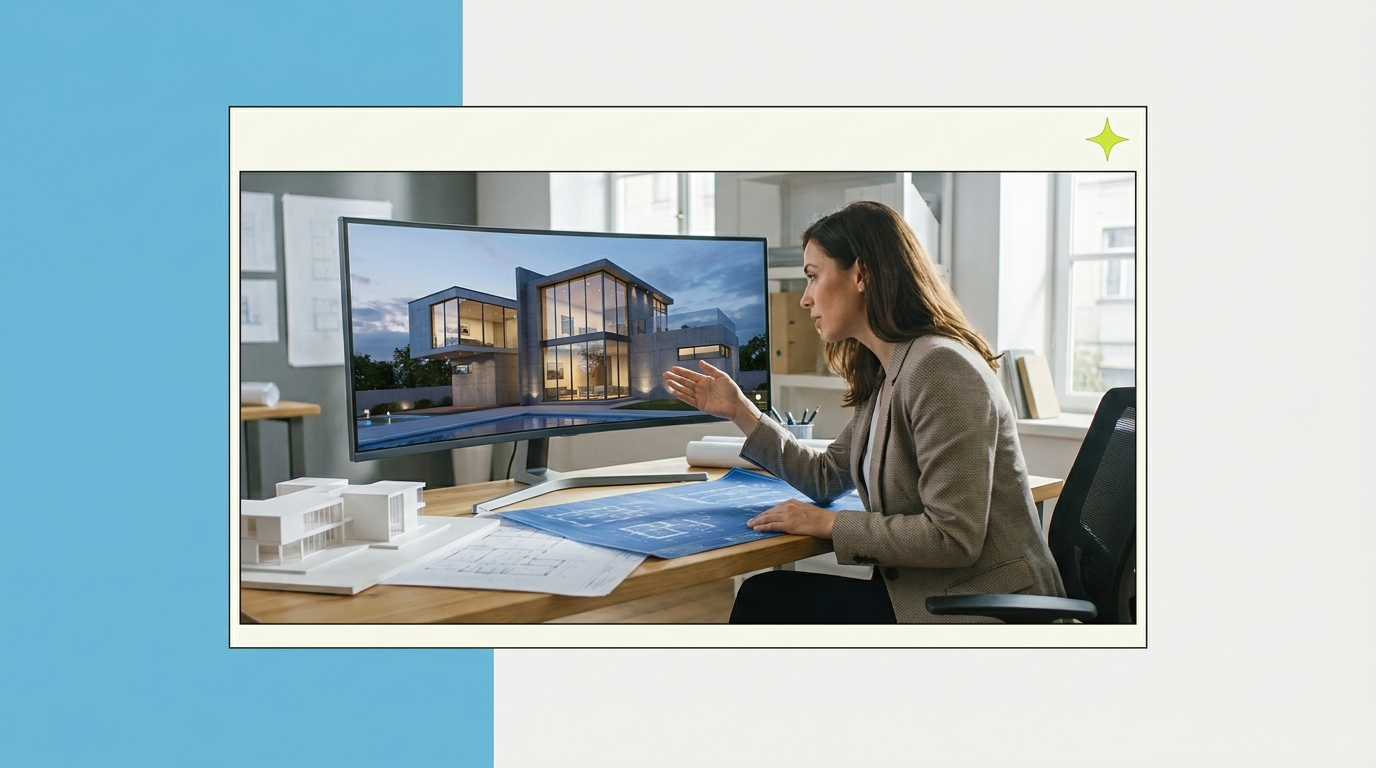
Video editing for architecture firms has become a meaningful competitive differentiator as client expectations for visual presentation have risen. Prospective clients evaluating firms for significant commissions now expect more than static renderings in a PDF proposal. Walkthrough videos, project showcase reels, and thoughtfully produced case study presentations communicate design intent and spatial experience in ways that flat images simply cannot. The gap between firms that present this way and those that do not is visible before a single meeting happens.
This guide covers what professional video editing for architecture firms actually involves, what content types produce the strongest results, what it costs, and how to find a service that understands your production requirements.
What video editing for architecture firms involves
Architecture video editing has a specific production profile. The source material is typically a mix of rendered walkthroughs, drone footage of completed sites, construction progress clips, interior photography exported as video, and interview content featuring the principals or project team.
A professional editor working on architecture content focuses on: pacing that gives spaces room to breathe visually rather than cutting too quickly, color grading that presents materials and light accurately, music selection that matches the tone of the project, lower thirds identifying project name and location, voice-over synchronization for narrated walkthroughs, and title sequences for firm reels.
The standard that matters most is how the finished video communicates design quality. Rough cuts, inconsistent color, poorly timed music, or amateur-looking text overlays undermine the impression that the design itself is trying to create. The editing either amplifies what the footage shows or works against it.
Content types architecture firms use video for

Project showcase reels are the most common use case. A two-to-three-minute firm reel covering five to eight completed projects, each given thirty to forty-five seconds, functions as a visual portfolio piece used in pitches, on the firm website, and in award submissions. This requires careful project selection, consistent color treatment across different footage sources, and pacing that gives each project enough room to register.
Architectural walkthrough videos are produced from renderings for unbuilt projects or drone and interior footage for completed ones. For unbuilt projects, these are often the primary tool for communicating how a space will feel, how light moves through it, and how the program is organized spatially.
Client presentation videos accompany design proposals. A polished presentation video that walks a client through design alternatives, explaining the reasoning behind each, communicates competence and attention to detail that a static slide presentation does not.
Awards and publication submissions increasingly require video as part of the submission package. Architecture awards competitions and editorial features at publications like Dezeen and ArchDaily often request video alongside photography, and the quality of that video influences selection.
According to Wyzowl, 82% of people say a video has convinced them to make a buying decision. In architecture, that buying decision is often a multi-year commission. The investment in high-quality video content for client presentations is justified on those terms.
How much video editing for architecture firms costs
Architecture video editing pricing varies by project type, footage complexity, and service model.
For a standalone firm reel or project showcase, expect per-project rates ranging from $1,500 to $5,000 depending on length, the number of sources, and whether the edit requires color correction across significantly different footage types. Walkthrough videos that sync narration with rendering output typically cost more than simple footage edits.
For firms producing video content on a regular schedule, a done-for-you subscription service runs $2,000 to $3,200 per month and provides ongoing editing capacity for a flat fee. This model works well for firms that produce content for multiple active projects simultaneously or publish regularly on their website and social channels.
HubSpot research on video marketing shows that businesses with consistent video content output see compounding gains in website engagement and inbound inquiries. Architecture firms with active YouTube or Vimeo channels featuring completed projects attract prospective clients who have already seen the work before making contact.
In-house editing is another option but adds to overhead. ZipRecruiter puts video editor base salaries at $55,000 to $75,000 per year. For most architecture firms, unless video production is a core part of their practice development strategy at high volume, a subscription or per-project service is more cost-effective.
What to look for in a video editing service for architecture firms

The most important criterion is aesthetic sensibility. An editor who understands architecture and design will make better decisions about pacing, color, music, and sequencing than one who does not. Ask to see examples of architecture, real estate, or design-related work they have produced. Generic product promotional footage and construction walkthroughs are not the same thing.
Drone footage handling is also worth evaluating. Many architecture project videos involve aerial footage that needs to be integrated smoothly with interior and rendering content. An editor who handles drone footage poorly will produce jarring cuts between the two.
Turnaround time matters for time-sensitive submissions or pitches. Confirm the service can meet award submission or presentation deadlines before committing.
For a broader view of professional editing services across different use cases, see best video editing services compared. If you are also evaluating whether to invest in video at all for your practice development strategy, see the video marketing ROI guide for a data-driven framing.
How to brief an architecture video editor
Architecture project videos have specific context that a brief needs to cover: the project name and type, the intended audience for the video (client pitch versus public portfolio versus award submission), the tone (restrained and editorial versus narrative and warm), the source footage available and its quality, the target length, and any specific moments or sequences to highlight or avoid.
For narrated walkthroughs, a script or narration recording should be delivered with the footage brief. For firm reels, providing a list of preferred projects with notes on why each is featured helps the editor sequence logically.
The video brief template provides a starting structure you can adapt for architecture content. The cleaner your brief, the faster the edit and the fewer revision rounds you need.
Video content for architecture firm social channels

Firms that publish consistently on Instagram, LinkedIn, and YouTube attract inbound interest from prospective clients who find the work before any marketing pitch is made. The editorial standard for social video from an architecture firm is high: the audience knows what quality looks like.
Short-form content that works for architecture firms includes: project progress clips from active sites, brief walkthroughs of completed spaces, time-lapses of construction or installation, and short explainer clips about design decisions or material choices. These do not need to be long. Thirty to sixty seconds, well-paced, color-graded, and captioned is more effective than a three-minute unedited walkthrough.
For platform-specific strategy, the YouTube channel growth strategy guide covers how firms building ongoing content channels approach publishing cadence and content sequencing. The video editing for personal brand guide is also relevant for principals who want to build individual profile through thought leadership video content.
Building a long-term video content strategy for architecture practices
Architecture firms that invest in video content consistently over time build a searchable visual archive of their practice that compounds in value. A firm with sixty polished project videos published across YouTube, Vimeo, and their website occupies a fundamentally different market position than one with six.
The compounding effect happens in several ways. Search: project-specific videos with accurate metadata rank for terms prospective clients search. A developer researching firms that have completed mixed-use urban projects finds your portfolio. A hospitality group evaluating firms with boutique hotel experience finds your reel before you have made a single call.
Award exposure: architectural publications and competition committees increasingly surface firms through their online content as part of the research phase before formal consideration. A well-maintained video channel is part of your visibility in those processes.
Referral quality: clients who have watched your project videos before reaching out arrive already aligned with your design approach. The early consultation conversations are more productive because the visual communication has already happened. You spend less time showing and more time discussing.
Building toward that position requires a sustainable production process, not a one-time production push. The firms that build strong video libraries treat video production like they treat photography: part of the project closeout process, not a separate marketing initiative. Every completed project produces photography, and every completed project produces video. The editorial workflow is the same each time.
A professional editing service that handles your ongoing project video makes that systematic approach possible without adding headcount. New project footage feeds the same editing relationship that handled the previous ten. The style remains consistent. The editor knows your visual preferences without being re-briefed each time.
For a broader look at how professional video content fits into B2B marketing strategy, the video marketing ROI guide provides a framework for evaluating that investment. The how to build a B2B video content engine covers the operational principles behind building a systematic content output.
Where to go from here
Frequently asked questions
What type of video content is most useful for architecture firms?
Project showcase reels, architectural walkthrough videos (both rendered and completed), client presentation videos, and social channel content for Instagram and LinkedIn. Award and publication submission videos are also increasingly common for firms pursuing editorial coverage.
How much does architecture video editing cost?
Per-project rates typically run $1,500 to $5,000 for standalone reels or showcase videos. Done-for-you subscription services cost $2,000 to $3,200 per month and cover ongoing editing volume for firms producing content consistently across multiple active projects. A $900 trial is available to test the service before committing to a monthly plan.
Do I need a specialist editor for architecture video?
Not necessarily, but an editor with experience in architecture, real estate, or design content will produce better work than a general-purpose editor unfamiliar with the visual sensibility these projects require. Always ask to see relevant portfolio examples.
How long should a firm reel be?
Two to three minutes is the standard for architecture firm reels. Anything longer risks losing viewer attention before the end. Showcase five to eight projects with enough time for each to register visually, roughly thirty to forty-five seconds per project.
What footage is typically used in architecture video projects?
Drone footage, interior photography and videography, rendered walkthroughs and fly-throughs, construction progress clips, time-lapses, and interview content featuring principals or project team members. The mix depends on whether the project is completed or in design.
How do I find a video editing service that understands architecture?
Ask for portfolio examples of architecture, real estate, or interior design video work. A good service will have produced content with similar visual requirements. If they cannot show you relevant examples, they may not be the right fit for projects where aesthetic sensibility matters.
Can video content help an architecture firm win new commissions?
Yes. Prospective clients evaluating firms for significant projects increasingly expect polished visual presentation. A firm reel, project walkthrough, or client presentation video that communicates design quality and spatial experience before a formal meeting positions the firm more effectively than PDF portfolio alone.

Prakhar Mehta
Pixel8 is a done-for-you video editing subscription, giving SaaS companies, agencies, and founders a dedicated editing team with 48-hour turnaround.
Ready to stop doing this yourself?
Get a dedicated video editing team. 48-hour turnaround, unlimited revisions, month-to-month.