Restaurant Video Editing Service: A Guide
A restaurant video editing service turns raw kitchen footage into mouth-watering reels that drive foot traffic, orders, and bookings. See costs and turnaround.
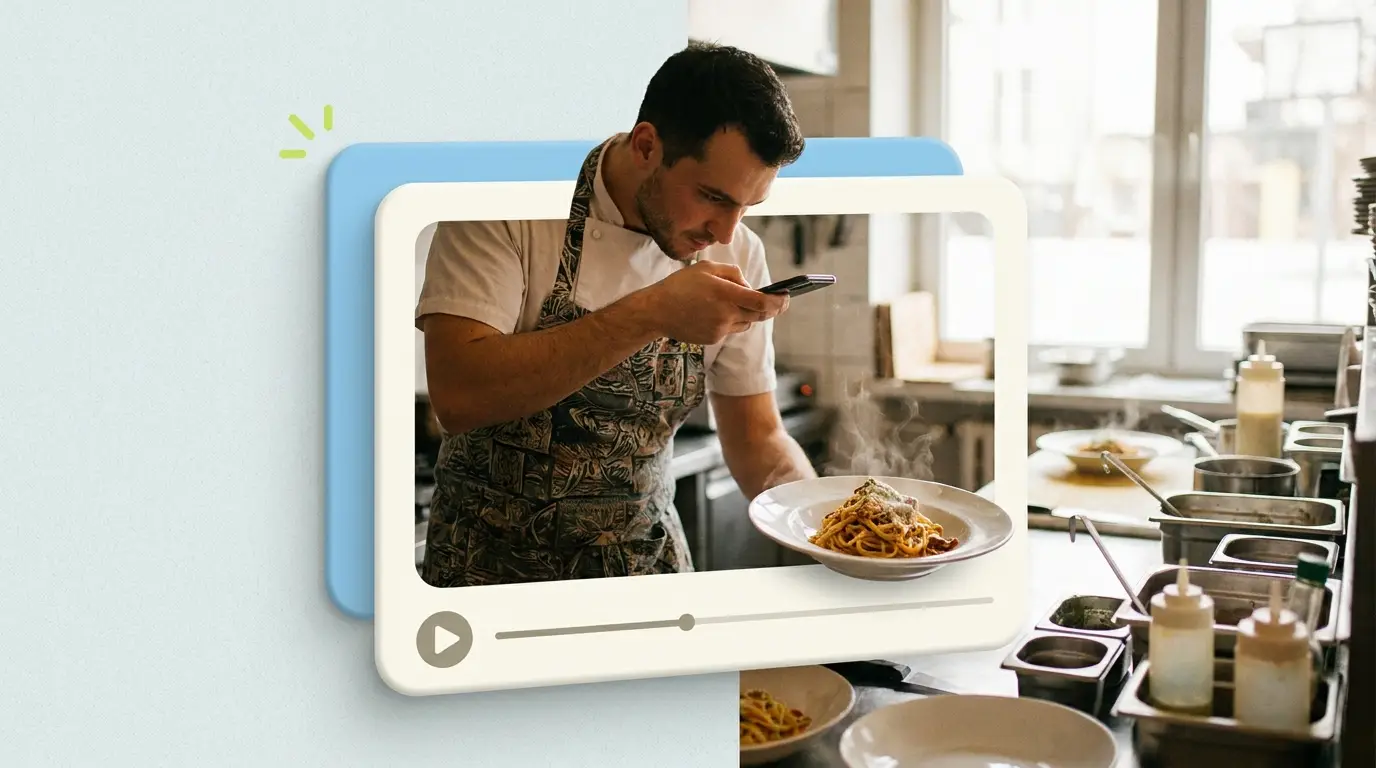
A restaurant video editing service takes the raw clips you shoot on a phone in your kitchen and dining room and turns them into polished, appetizing video that makes people hungry enough to walk through your door. A single plated dish, filmed well and edited with the right color and pacing, can do more for a Friday night than a month of flyers. The problem is that most restaurant owners and chefs do not have the time, software, or patience to cut that footage themselves. That is exactly the gap a done-for-you restaurant video editing service fills: you shoot, you send, and finished reels come back ready to post.
This guide covers how restaurants and food brands actually use edited video, what to look for in a service, how fast the work should come back, and what it costs compared to doing it yourself or hiring in-house.
Why video works so well for restaurants
Food is one of the most visual products on earth, and video is the format built for visual products. People decide where to eat with their eyes. A close-up of cheese pulling apart, steam rising off a bowl of ramen, or a cocktail being shaken and poured does something a still photo cannot: it shows motion, texture, and the promise of an experience.
The numbers back this up across industries. According to Wyzowl, 91% of businesses use video as a marketing tool, and 82% say a video has convinced them to buy a product or service. For a restaurant, that buying decision is dinner tonight or a table for six this weekend. Edited video shortens the distance between someone scrolling on their couch and someone sitting in your booth.
The platforms reward it too. Instagram Reels, TikTok, and YouTube Shorts push short vertical video to people who have never heard of your spot. A well-edited fifteen-second dish reel can reach thousands of locals for free, which no print ad or table tent can match. HubSpot's research on video marketing trends shows short-form video continuing to deliver the strongest return on investment of any content format, and restaurants are perfectly positioned to use it because every service produces new footage.
What restaurants actually post

The best part about food content is that you already have an endless supply of source material. Here are the formats a restaurant video editing service produces most often.
Mouth-watering dish reels
This is the workhorse. A tight, fast vertical clip of one dish: the plating, a garnish drop, a sauce pour, the first cut into something. Good color grading makes the food look warm and fresh instead of flat and gray. Snappy cuts keep the viewer watching for the full clip, which is what the algorithm cares about.
Behind-the-kitchen content
People love seeing how the food is made. A chef breaking down a fish, the line during a dinner rush, fresh pasta being rolled, the pizza going into a wood-fired oven. This content builds trust and personality, and it humanizes your brand in a way a dish shot alone cannot.
Weekly specials and promotions
This is where volume becomes the whole point. If you run a new special every week, you need a new video every week. Each one is a small edit, but they add up fast, and they need to be consistent in look and feel so your feed reads as one brand.
Social ads
Paid ads need a sharper edit: a strong hook in the first second, captions for sound-off viewing, and a clear call to action like "order now."
If you produce longer videos, like a full chef interview or an event recap, you can also repurpose long-form video into shorts and get a dozen clips out of a single shoot. That is one of the most cost-effective things a restaurant can do with footage it already owns.
What to look for in a restaurant video editing service
Not every editor understands food. Here is what separates a service that gets restaurants from one that just knows software.
Appetizing color and grading
This is the single most important skill for food video. Raw phone footage often looks dull, yellow, or washed out under restaurant lighting. A skilled editor corrects white balance, warms the tones, deepens saturation in the right places, and makes the food look as good on screen as it does on the plate. If the color is wrong, nothing else matters, because the food will not look craveable.
Fast vertical clips built for the feed
Your audience is on their phones. The service should deliver vertical 9:16 video by default, edited for the fast pace that short-form platforms demand. That means quick cuts, motion that holds attention, on-screen captions, and a hook that lands in the first second. An editor who only knows horizontal YouTube-style cuts will give you video that underperforms on the platforms where your customers actually are. A specialist short-form video editing service handles this natively.
Volume for weekly output
A single great video is nice. A steady stream of them is what builds a following and keeps your name in front of locals. Look for a service that can handle real volume without the quality dropping, because restaurants need new content constantly. This is where a done-for-you video editing service model shines: predictable throughput, week after week, without you managing it.
Consistency across every clip
Your videos should look like they came from the same brand. Same color treatment, same caption style, same logo placement, same energy. A dedicated editor who learns your brand delivers that consistency, while a rotating cast of random freelancers will not. Brand consistency is what turns scattered posts into a recognizable presence.
A simple shoot-and-send workflow
The whole value of outsourcing is that it saves you time. The service should make sending footage effortless, drop it into a shared folder or a quick upload, and handle everything from there. If the process requires constant back and forth, it defeats the purpose.
Turnaround: why speed matters for food

Restaurants move fast. A special you are running this week is useless as a video next week. A dish that is on the menu today might be off it by the weekend. That is why turnaround is one of the most important things to ask about.
Slow agencies that take a week or two per video simply cannot keep up with a restaurant's pace. By the time the video comes back, the moment has passed. The standard you want is a 48-hour turnaround, fast enough to promote tonight's special, react to a busy weekend, or jump on a trend while it is still relevant.
Just as important is unlimited revisions. Food video is subjective. Maybe the color is slightly off, maybe a cut feels too slow, maybe you want the logo bigger. You should be able to ask for changes until the video is right without paying extra or waiting days for each round. A service that caps revisions or charges per change will either cost you more or leave you posting video you are not happy with.
Cost: service vs DIY vs in-house
Here is the honest math on what professional food video costs, and why a subscription often wins for restaurants.
Doing it yourself
The cheapest option on paper, and the most expensive in practice. Editing software has a learning curve, and good food editing takes real skill in color and pacing. The bigger cost is your time. Every hour you spend wrestling with an editing app is an hour you are not running your kitchen, managing staff, or building the business. Most owners who try DIY end up posting inconsistently, then stopping altogether because it is one more thing on a full plate.
Hiring a freelancer
Freelance editors typically charge $75 to $250 per video, depending on length and complexity. That works for the occasional one-off, but it gets expensive fast at restaurant volume. Five videos a week at $150 each is $3,000 a month, and you still have to find, brief, and manage the freelancer for every single clip. Quality and availability also swing from person to person.
Hiring in-house
A full-time, in-house video editor costs roughly $55,000 to $75,000 per year in salary, according to ZipRecruiter, before you add benefits, payroll taxes, software, and equipment. For a single location, that is almost never justified. You would be paying a full salary for work that does not fill forty hours a week.
Agencies and project work
Traditional agencies charge $500 to $5,000 or more per project, and the general market for outsourced video editing runs anywhere from $500 to $3,000 depending on scope and provider. Agencies often produce excellent work but move slowly and price each project separately, which makes consistent weekly output costly and hard to budget.
The subscription model
A done-for-you subscription gives you a flat monthly rate for steady output, a dedicated editor, and fast turnaround. For most restaurants and food brands, this is the sweet spot: predictable cost, predictable volume, and no hiring or management overhead. If you want to compare formats side by side, our roundup of the best video editing services compared breaks down the trade-offs.
What Pixel8 Production offers

Pixel8 Production is a done-for-you video editing subscription built for businesses that need consistent, professional video without the hassle of hiring. For restaurants and food brands, that means you can shoot footage on your phone during service, send it over, and get back polished, appetizing reels ready to post.
Here is what is included:
- A dedicated editor who learns your brand, your color preferences, and your style, so every video looks consistent
- A 48-hour turnaround on most edits, fast enough to promote this week's special or react to a busy weekend
- Unlimited revisions, so you can refine the color, pacing, or captions until each video is exactly right
- A flat rate of $2,000 to $3,200 per month, with no per-video fees and no surprises
The pricing covers steady weekly output, which is exactly what restaurant content demands. Instead of paying per project or managing a rotation of freelancers, you get one predictable monthly cost and a partner who already knows how your food should look on screen. To see how the subscription model works across industries, take a look at our overview of a video editing service for businesses.
How to get started
If you have a phone and a kitchen, you already have everything you need to feed a video pipeline. Start by shooting a few clips during a normal service: a dish being plated, a sauce pour, the line in motion, a drink being made. Aim for steady, well-lit shots and get close to the food. You do not need to be a videographer. The editor handles the polish.
From there, build a simple habit of capturing footage during every shift and sending it over in batches. With a service handling the edits, you can post several times a week without it eating into your time. The restaurants that win on social are not the ones with the fanciest cameras. They are the ones that post consistently with food that looks irresistible, and that is exactly what a good editing service delivers.
Bottom line
Video is the most effective way to turn online attention into people through your door, and food is the ideal subject for it. The challenge is producing enough of it, consistently, without burning your own time. A restaurant video editing service solves that by handling the editing so you can focus on the kitchen. Look for appetizing color, fast vertical clips, real volume, and a quick turnaround. For most restaurants, a done-for-you subscription delivers all of that for less than hiring in-house, and keeps your feed full of food that makes people hungry.
Where to go from here
Frequently asked questions
What is a restaurant video editing service?
It is a service that takes raw footage you shoot of your food, kitchen, and dining room and edits it into polished, appetizing video ready to post on social media or run as an ad. A done-for-you service handles all the editing so you only need to shoot and send the clips.
How much does restaurant video editing cost?
It depends on the model. Freelancers charge $75 to $250 per video, agencies charge $500 to $5,000 or more per project, and the general market for outsourced editing runs $500 to $3,000. A subscription service like Pixel8 Production is a flat $2,000 to $3,200 per month for steady weekly output. A $900 trial is available to test the service before committing to a monthly plan.
Can I just edit my restaurant videos myself?
You can, but it usually costs more in time than it saves in money. Good food editing takes skill in color and pacing, and the software has a learning curve. Most owners who try DIY end up posting inconsistently and then stopping, because it is one more task on top of running the restaurant.
What kind of videos should a restaurant post?
The most effective formats are mouth-watering dish reels, behind-the-kitchen content, weekly specials and promotions, and paid social ads. Short vertical clips perform best on Instagram Reels, TikTok, and YouTube Shorts, where most local customers discover new places to eat.
How fast should video editing come back?
For a restaurant, fast turnaround matters because specials and trends move quickly. A 48-hour turnaround is the standard to look for, fast enough to promote tonight's special or react to a busy weekend before the moment passes.
Why does color grading matter so much for food video?
Raw phone footage shot under restaurant lighting often looks dull or off-color. A skilled editor corrects the white balance and warms the tones so the food looks as craveable on screen as it does on the plate. If the color is wrong, the food will not look appetizing no matter how good the rest of the edit is.
Do I need professional camera equipment?
No. A modern phone shoots more than enough quality for social video. What matters is steady, well-lit shots taken close to the food. The editor handles color, pacing, captions, and polish, so your job is just to capture good raw footage during service.

Prakhar Mehta
Pixel8 is a done-for-you video editing subscription, giving SaaS companies, agencies, and founders a dedicated editing team with 48-hour turnaround.
Ready to stop doing this yourself?
Get a dedicated video editing team. 48-hour turnaround, unlimited revisions, month-to-month.