LinkedIn vs YouTube for B2B Video Marketing
LinkedIn vs YouTube for B2B: a fair head-to-head on audience, formats, discovery, shelf life, and lead-gen so you pick the right channel for your video.
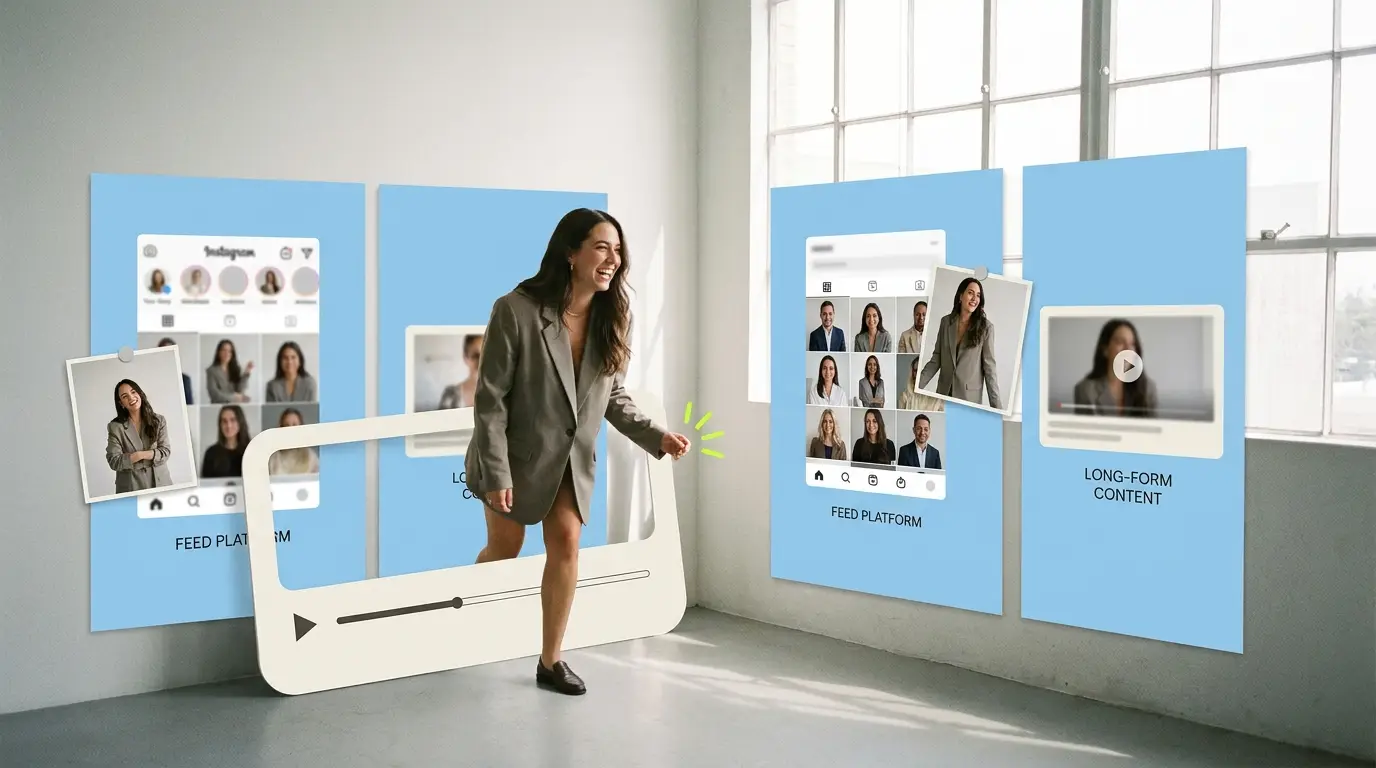
The question of LinkedIn vs YouTube for B2B comes up in nearly every video planning meeting, and the answer is rarely "pick one." Both platforms move buyers, but they do it in different ways, for different stages of the funnel, and with different content. If you treat them as interchangeable, you will end up posting YouTube uploads on LinkedIn and wondering why nobody watches. This guide breaks down LinkedIn vs YouTube for B2B across audience and intent, formats, discovery, shelf life, and lead generation, then shows how to run both from a single editing pipeline so you are not doubling your production cost.
According to Wyzowl, 91% of businesses use video as a marketing tool, and 82% say a video convinced them to buy a product or service. The buyers exist on both platforms. The job is matching the right message to the right place.
Audience and intent
The biggest difference between the two channels is why people are there.
LinkedIn is a professional network first. People open the app to see what colleagues, competitors, and peers are doing. They are in work mode, scrolling a feed between meetings, and they are receptive to industry commentary, hot takes, case studies, and short explainers. Intent is low to medium. Nobody opens LinkedIn searching for "how to reduce SaaS churn," but they will stop on a 60-second clip that names the problem they had this morning. LinkedIn is a discovery and relationship channel where your video reaches people who were not looking for you.
YouTube is a search engine and a watch destination. People arrive with a question or a topic in mind, often typing exactly what they want to learn. A prospect searching "best CRM for field sales teams" has high intent and is actively evaluating. That makes YouTube closer to the bottom of the funnel for many B2B categories, even though it also serves top-of-funnel awareness through suggested videos and browse traffic. The mix of search intent plus a logged-in account history makes YouTube powerful for capturing demand that already exists.
In short, LinkedIn is good at creating demand among people scrolling, and YouTube is good at capturing demand among people searching. Most B2B companies need both. For a deeper look at the search side, our guide to YouTube for B2B lead generation covers how to turn that intent into pipeline.
Content formats that work on each

Format failure is the most common mistake. The same raw footage can succeed on both platforms, but only after it is cut differently.
What works on LinkedIn
LinkedIn rewards short, native, vertical or square video that delivers one idea fast. The strongest performers tend to be:
- Talking-head clips of 30 to 90 seconds with bold captions, because most people watch on mute.
- Founder or executive commentary on an industry shift, since LinkedIn loves a point of view from a named person.
- Customer proof in micro form, a single result or quote rather than a full case study.
- Behind-the-scenes and culture clips that humanize the brand.
The unifying trait is that LinkedIn video has to earn attention in the first two seconds while it autoplays silently in a busy feed. If your clip needs sound or a slow setup, it dies. Our LinkedIn video strategy for B2B brands goes deeper on hooks, captions, and posting cadence.
What works on YouTube
YouTube rewards longer, sound-on, search-aligned video. The formats that build B2B channels are:
- How-to and tutorial content that answers a specific query end to end.
- Product walkthroughs and demos that a buyer watches while evaluating.
- Thought-leadership long-form, interviews, and webinars repurposed into clean episodes.
- Comparison and "vs" videos, which match the way buyers research.
YouTube viewers will sit through 8, 12, even 20 minutes if the content delivers. That depth is impossible on LinkedIn but it is exactly what builds authority and ranking on YouTube. If you sell software, the B2B SaaS YouTube channel strategy breakdown shows how to structure a channel around buyer questions.
The practical takeaway: one filming session can feed both. A 20-minute YouTube explainer holds three or four 60-second LinkedIn cutdowns inside it. For a fuller menu of formats, see B2B video content types that convert.
Discovery and the algorithm
How each platform decides who sees your video shapes everything about your strategy.
LinkedIn distribution is feed-driven and social-graph weighted. When you post, LinkedIn shows the video to a slice of your network and connections, then expands reach based on early engagement signals like dwell time, comments, and reshares. The good news is you can reach far beyond your follower count when a clip resonates. The bad news is that reach is front-loaded. A LinkedIn video does most of its work in the first 24 to 48 hours, then fades. Hashtags and search exist but drive little discovery compared to the feed.
YouTube distribution is search and recommendation driven. Your video can surface through YouTube search, Google search results, suggested videos beside related content, and the home feed. The algorithm optimizes for watch time and session length, rewarding videos that keep people on the platform. Titles, thumbnails, descriptions, and chapters all influence whether you rank. Discovery compounds because a single video can keep pulling in viewers from search for years.
This difference matters for planning. LinkedIn rewards consistency and volume because each post has a short window. YouTube rewards quality and relevance because each video is a long-term asset. HubSpot research on video marketing reinforces that the platform you choose should follow where your audience already spends attention, not the other way around.
Shelf life

Shelf life is where the two platforms diverge most sharply, and it should shape how you budget production time.
A LinkedIn video is a fast-burning asset. It can generate strong reach, comments, and inbound messages, but almost all of that happens within two days. After a week it is effectively invisible. This is not a flaw. It means LinkedIn rewards a steady drumbeat of fresh, timely, opinionated content. You trade longevity for immediacy and conversation.
A YouTube video is a slow-burning, compounding asset. A well-optimized tutorial published today can still earn views, subscribers, and leads three years from now because it answers a question people keep typing. The first month may be quiet while the algorithm learns who the video is for, then it can climb steadily. You trade immediacy for durability.
The strategic implication is simple. Use LinkedIn for momentum and relationships, use YouTube for a library that works while you sleep. A company that only posts to LinkedIn is renting attention. A company that only posts to YouTube may grow slowly and miss the relationship-building that closes B2B deals. Running both covers the gap.
Lead generation vs awareness
This is the heart of LinkedIn vs YouTube for B2B, and the honest answer is that they play different roles.
LinkedIn leans toward awareness, relationships, and warm inbound. Because the audience is in professional mode and often includes your actual target accounts, LinkedIn video is excellent for building familiarity with decision makers, staying top of mind, and starting conversations in the comments or DMs. The path from a LinkedIn clip to a closed deal is usually indirect: someone sees several of your videos, recognizes the brand, and reaches out or replies to a sales email warmer than they would have otherwise.
YouTube leans toward lead generation and active evaluation, especially for search-intent content. A buyer searching for a solution and landing on your demo or comparison video is much closer to a decision. With end screens, pinned comments, cards, and description links, you can route that high-intent viewer straight to a landing page, free trial, or booking link. YouTube also feeds your retargeting and supports longer content that does real selling.
A balanced B2B program uses LinkedIn to create and warm demand, then YouTube and your site to capture it. Measuring them by the same metric is the trap. Judge LinkedIn on reach, engagement, and inbound conversations. Judge YouTube on watch time, search ranking, and click-throughs to your offer.
Running both with one editing pipeline

Most teams stall here. They assume two platforms means two production workflows and double the cost. It does not have to.
The efficient model is to film once and edit for purpose. You record a single high-value session, a founder interview, a product deep dive, an expert explainer, then your editor produces a primary YouTube cut and slices the best moments into vertical or square LinkedIn clips. One shoot can yield a long-form anchor video plus four to eight short clips that feed weeks of LinkedIn posts.
The hard part is the editing throughput, because the two formats need different treatment. YouTube cuts need chapters, retention-friendly pacing, clear thumbnails, and sound design. LinkedIn cuts need burned-in captions, a punchy two-second hook, square or vertical framing, and an aspect ratio that fills the feed. Doing this well, consistently, every week is where in-house teams burn out and freelancers get expensive.
This is the case for a dedicated editing partner that handles both formats from the same source footage. A repeatable pipeline turns one filming day into a full content calendar across both platforms without you touching a timeline. The strategic version of this is covered in our overview of done-for-you video editing service options.
The cost question
Editing is the real bottleneck in running both channels, so it is worth being clear about what the work costs.
Hiring in-house, a full-time video editor runs roughly $55,000 to $75,000 per year according to ZipRecruiter, before software, benefits, and management time. Freelancers typically charge $75 to $250 per video, which is flexible but unpredictable when you need consistent weekly volume across two platforms. Agencies often quote $500 to $5,000 or more per project, which suits one-off campaigns more than an always-on content engine. Across the general market, editing support lands somewhere in the $500 to $3,000 range depending on scope and consistency.
The trade-off for most B2B teams is between the fixed overhead of a hire and the variable cost and reliability gaps of freelancers and agencies.
What Pixel8 Production offers
Pixel8 Production is a done-for-you B2B video editing subscription built for teams that want to run LinkedIn and YouTube without staffing an internal edit bay. The price is always $2,000 to $3,200 per month, which gets you a dedicated editor who learns your brand, your formats, and your style.
You send raw footage, and your editor returns both a polished YouTube cut and the LinkedIn-ready short clips pulled from the same session, with a 48-hour turnaround on standard edits. Because it is one editor and one pipeline, the LinkedIn clips stay on-brand with the long-form video instead of looking like they came from a different company. The flat monthly price means no per-video surprises and no recruiting, so you can plan a full content calendar across both platforms with a predictable budget. For most teams, that is less than the loaded cost of a single in-house hire while covering the throughput that two platforms demand.
Bottom line
LinkedIn vs YouTube for B2B is not a contest with one winner. LinkedIn creates and warms demand in the feed with short, timely, opinionated clips that burn bright for 48 hours. YouTube captures demand through search with longer, sound-on video that compounds for years. The smart move is to run both: film once, and edit each piece for the platform it lives on. The only real obstacle is editing throughput, and that is a solvable cost. Match the message to the channel, keep one pipeline feeding both, and you get LinkedIn's awareness and YouTube's lead generation without doubling spend.
Where to go from here
Frequently asked questions
Is LinkedIn or YouTube better for B2B video?
Neither is universally better, because they serve different jobs. LinkedIn is stronger for awareness, relationships, and warming up decision makers in the feed, while YouTube is stronger for capturing search intent and generating leads from buyers who are actively evaluating. Most B2B companies get the best results by running both rather than choosing one.
Can I post the same video on LinkedIn and YouTube?
You can use the same source footage, but you should not post the exact same cut. YouTube favors longer, sound-on, search-aligned video, while LinkedIn favors short, captioned, vertical or square clips that hook in two seconds. Film once, then edit two different versions for the two platforms.
How long should B2B videos be on each platform?
On LinkedIn, aim for 30 to 90 seconds for feed video, since attention drops fast. On YouTube, length should match the topic, and 8 to 20 minutes is normal for tutorials, demos, and thought-leadership content because viewers arrive ready to watch. Let the format and intent set the length rather than a fixed rule.
Which platform generates more leads for B2B?
YouTube tends to generate more direct leads because viewers often arrive through search with active buying intent, and you can route them to landing pages and trials. LinkedIn generates more indirect, warm demand by keeping your brand in front of target accounts. Together they cover both demand creation and demand capture.
How often should I post B2B video on LinkedIn vs YouTube?
LinkedIn rewards frequency because each post has a short shelf life, so two to four clips per week is a reasonable target. YouTube rewards quality over volume, so one strong, well-optimized video per week is often enough to build a compounding library. Consistency matters more than raw output on both.
Do I need separate editing teams for LinkedIn and YouTube?
No. A single editor or editing pipeline can produce both the long-form YouTube cut and the short LinkedIn clips from one filming session, which keeps the brand consistent and the cost down. The key is having editors who understand the different format requirements of each platform.
How much does it cost to edit video for both platforms?
Costs vary by model. An in-house editor runs about $55,000 to $75,000 per year, freelancers charge roughly $75 to $250 per video, and agencies often quote $500 to $5,000 or more per project. A subscription like Pixel8 is a flat $2,000 to $3,200 per month for a dedicated editor covering both formats. A $900 trial is available to test the service before committing to a monthly plan.

Prakhar Mehta
Pixel8 is a done-for-you video editing subscription, giving SaaS companies, agencies, and founders a dedicated editing team with 48-hour turnaround.
Ready to stop doing this yourself?
Get a dedicated video editing team. 48-hour turnaround, unlimited revisions, month-to-month.