Designjoy vs Video Editing Subscription
Designjoy vs video editing subscription: compare a flat-rate unlimited design service against a dedicated video editor to see which fits your team's real needs.
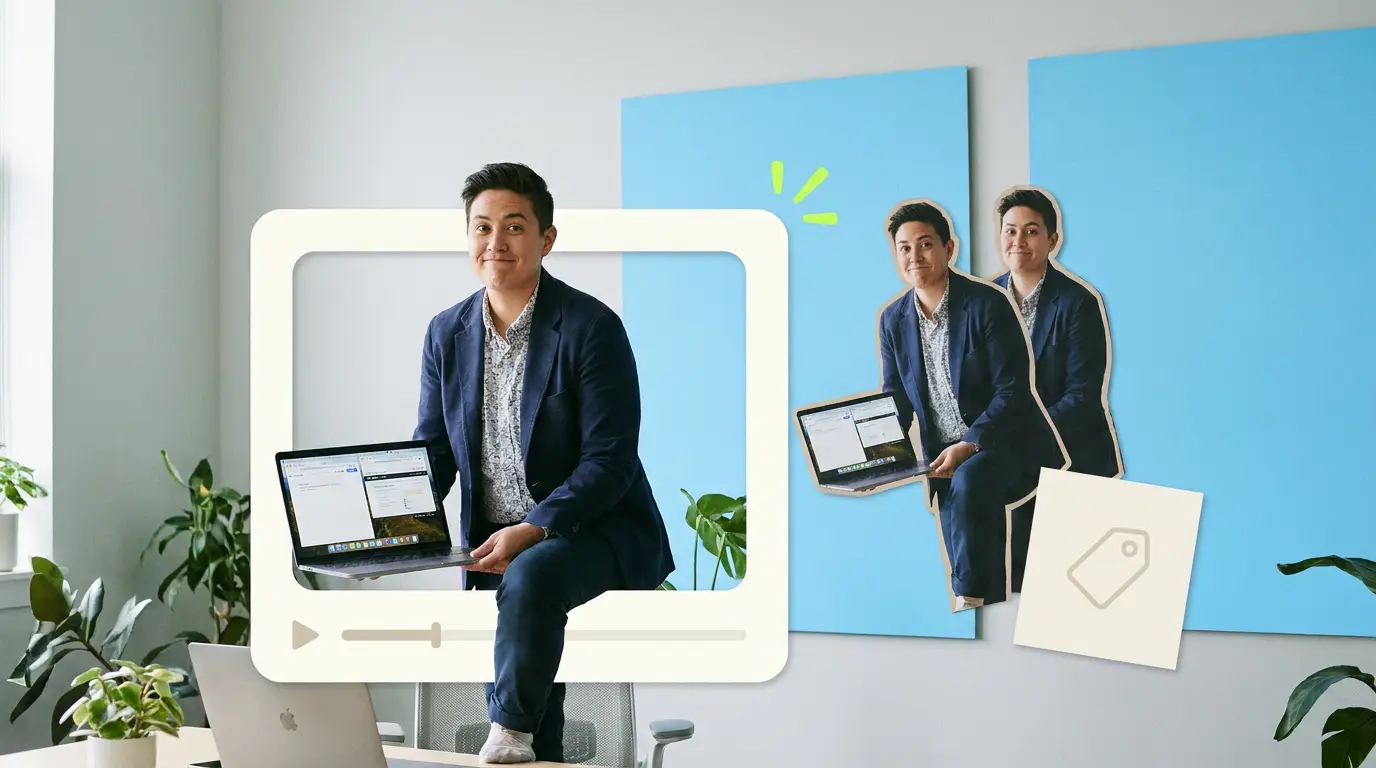
If you have been weighing Designjoy vs video editing subscription, the first thing to get straight is what each one actually does. Designjoy is a flat-rate unlimited design subscription. You pay a single monthly fee, drop requests into one queue, and a designer works through them. A video editing subscription is a different animal: it gives you a dedicated editor who turns your raw footage into finished video on a regular schedule. Both use a subscription model, but they solve different problems. This guide breaks down what each covers, how the unlimited-queue model compares to a dedicated video editor, turnaround expectations, and when each is the right call for your team.
What Designjoy actually is
Designjoy is one of the best-known productized design services. It runs on a simple promise: a flat monthly fee for unlimited design requests, handled through one queue, with no contracts and the ability to pause or cancel anytime. The work it covers is graphic and web design. Think landing pages, brand identity, social graphics, presentation decks, illustrations, web mockups, and similar visual assets.
The model is built around one person working your queue. You submit as many requests as you want, but they get completed one (or a couple) at a time. "Unlimited" refers to how many requests you can stack up, not how many run in parallel. Designjoy uses a flat monthly pricing model, and while the exact rate changes over time, the structure stays the same: one price, one queue, one designer.
What Designjoy is not is a video service. It is a design subscription. Some design subscriptions add light motion graphics or simple animated assets, but a flat-rate design queue is not built to handle ongoing video editing, multi-track timelines, color grading, audio mixing, or the volume of finished cuts a content team burns through every week. Buyers who hit this wall with other design subscriptions often end up comparing Design Pickle alternatives for the same reason.
What a video editing subscription actually is

A video editing subscription replaces the design-queue model with a video-first one. Instead of a designer working a stack of mixed requests, you get a dedicated editor (or a small editing team) whose entire job is turning your footage into finished video.
That difference matters because video is not just "another design asset." Editing involves syncing audio, cutting to a beat, color correction, captions, motion graphics, b-roll, music licensing awareness, and exporting to a dozen platform-specific formats. A specialist who lives in editing software all day does this faster and better than a generalist designer squeezing video between logo requests.
The subscription structure is similar to Designjoy's on the surface: flat monthly fee, no per-project quoting, ongoing relationship. But the output is video, the turnaround is tuned for video, and the person doing the work is a video editor, not a graphic designer. If you want a deeper breakdown of how these services work, our video editing subscription services guide walks through the model in detail.
The unlimited queue vs the dedicated editor
This is the core of the comparison, so it is worth slowing down.
The unlimited queue model (Designjoy and similar design subscriptions) is optimized for breadth. You can ask for a landing page on Monday, a pitch deck on Wednesday, and an ad set on Friday. One person pulls each task off the stack in order. It works beautifully when your needs are varied, visual, and not especially time-sensitive on any single item.
The dedicated editor model is optimized for depth in one discipline. The same person learns your brand voice, your show format, your intro and outro, your caption style, and your export presets. Over a few weeks they stop needing instructions because they already know how your videos should look. For ongoing video, that compounding familiarity is the whole point. A generalist queue cannot match it because the work keeps changing hands and context.
There is also a throughput difference. A single design queue completes one thing at a time, which is fine for occasional video but a bottleneck when you need three YouTube edits, ten shorts, and two ads in the same week. A dedicated video editor (or pod) is staffed around that volume. We cover this trade-off more in our piece on choosing a design subscription with video editing versus a video-only service.
Turnaround: where video gets demanding

Turnaround is where the two models diverge most for video work.
In a design queue, your video request waits behind whatever else is in line, and the editor may not be a video specialist, so a single edit can take days of back-and-forth. In a video-first subscription, turnaround is the headline feature. At Pixel8 Production, the standard is a 48-hour turnaround on most edits, with unlimited revisions so you are not paying extra every time you want a tighter cut.
Why does speed matter so much for video specifically? Because video is usually tied to a publishing cadence. A weekly show, a daily short, a campaign with a launch date. Miss the window and the content loses value. Design assets are often more evergreen; a logo or landing page can wait a few extra days without real cost. A late video edit can mean a missed upload slot. If you want to compare turnaround and quality across providers, see our roundup of the best video editing services compared.
Why teams need video at all
It helps to remember why this decision even comes up. Video has become the default format for marketing and sales. According to Wyzowl, 91% of businesses use video as a marketing tool, and 82% say a video has convinced them to buy a product or service. HubSpot's research points the same direction, with video consistently ranking among the formats marketers say delivers the strongest results. You can see more of those figures in HubSpot's video marketing statistics.
When video is occasional, a design subscription that dabbles in motion can be enough. When video is a core channel and you are shipping it every week, you have crossed into territory where a dedicated editor is not a luxury, it is the floor.
The cost comparison

Pricing is where people often assume the two models are interchangeable. They are not, because the work is not.
A flat-rate design subscription gives you a designer's time across many disciplines. A video editing subscription gives you a specialist's time in one. The broader market for outsourced video runs roughly $500 to $3,000 per month for subscription services, depending on volume and seniority. Here is how the common options stack up:
- In-house editor: $55,000 to $75,000 per year in salary alone according to ZipRecruiter, before benefits, software, and equipment.
- Freelancer: $75 to $250 per video, which adds up fast and comes with availability risk.
- Agency, per project: $500 to $5,000+ per project, great for one-off launches, expensive for steady output.
- Video editing subscription: a flat monthly fee, predictable and built for volume.
Pixel8 Production sits in the subscription bucket at $2,000 to $3,200 per month for a dedicated editor with 48-hour turnaround and unlimited revisions. For a fuller breakdown of how these numbers compare across the market, our guide on video editing subscription pricing lays out the math.
The point is not that one is cheaper than the other in the abstract. A design subscription and a video subscription are priced for different scopes of work. Comparing their monthly fees directly is like comparing a generalist contractor's day rate to a specialist plumber's. You pay the specialist when the job is specialized.
When a design subscription like Designjoy is the right call
Be fair about this: Designjoy is excellent at what it does. A flat-rate design subscription is the right choice when:
- Your primary need is graphic and web design, not video.
- You have a steady stream of varied visual requests (decks, graphics, web pages, branding).
- Your occasional video needs are light, like a simple animated logo or a basic social clip.
- You value having one queue for all your visual work and want predictable monthly cost.
If that describes you, a design subscription will likely serve you well, and bolting heavy video work onto it would only slow the queue down.
When you need a dedicated video specialist
You have outgrown the design-queue model for video when:
- Video is a core marketing or sales channel, not an afterthought.
- You publish on a regular cadence (weekly shows, daily shorts, ongoing ad creative).
- Your edits need real craft: color, audio mixing, motion graphics, captions, multi-format exports.
- Turnaround speed directly affects whether content ships on time.
- You want an editor who learns your brand and stops needing detailed briefs.
At that point, a dedicated video editing subscription is the better structural fit. The work is too specialized and too time-sensitive to share a queue with logo requests.
What Pixel8 Production offers
Pixel8 Production is a done-for-you B2B video editing subscription built for teams that publish video regularly. Here is what is included:
- A dedicated editor who learns your brand, format, and style, so the work gets faster and more consistent over time.
- 48-hour turnaround on most edits, tuned to publishing schedules rather than a shared design queue.
- Unlimited revisions, so you are never charged extra to get a cut exactly right.
- Flat monthly pricing of $2,000 to $3,200 per month, predictable and built for ongoing volume rather than one-off projects.
The model is deliberately narrow. We do not try to be your graphic designer, your web team, and your video editor all at once. We do video, and we do it for teams whose output depends on it. If you want to understand the full scope of that approach, our overview of a done-for-you video editing service explains how a dedicated subscription runs day to day.
Bottom line
Designjoy and a video editing subscription both use a clean, flat-rate subscription model, but they are built for different jobs. Designjoy is a design subscription: one queue, one designer, broad visual work, no contracts. A video editing subscription gives you a dedicated specialist, a turnaround tuned for publishing, and the depth that real editing demands.
If your need is mostly graphic and web design with the occasional light video, a design subscription is the smart, economical choice. If video is a core channel and you are shipping it every week, you need a video specialist, not a generalist working a queue. Match the subscription to the work that actually drives your business, and the decision makes itself.
Where to go from here
Frequently asked questions
Is Designjoy a video editing service?
No. Designjoy is a flat-rate unlimited design subscription focused on graphic and web design, such as landing pages, branding, decks, and social graphics. Some design subscriptions handle light motion assets, but a design queue is not built for ongoing, specialized video editing.
Can a design subscription handle my video needs?
It depends on volume and complexity. If you only need occasional, simple video like an animated logo or a basic social clip, a design subscription may cover it. If you publish video regularly or need color grading, audio mixing, and motion graphics, a dedicated video editor is the better fit.
What is the difference between an unlimited queue and a dedicated editor?
An unlimited queue lets you stack many requests that one designer works through one at a time, which suits varied visual work. A dedicated editor focuses solely on your video and learns your brand over time, which delivers more consistency and faster output for ongoing video.
How much does a video editing subscription cost?
Subscription services for outsourced video generally run from $500 to $3,000 per month depending on volume and seniority. Pixel8 Production charges $2,000 to $3,200 per month for a dedicated editor with 48-hour turnaround and unlimited revisions. A $900 trial is available to test the service before committing to a monthly plan.
Is hiring an in-house editor cheaper than a subscription?
Not usually, once you account for the full cost. An in-house video editor costs $55,000 to $75,000 per year in salary alone according to ZipRecruiter, before benefits, software, and equipment. A subscription gives you specialist output at a predictable monthly fee without those overheads.
What turnaround should I expect for video editing?
It varies by provider. In a shared design queue, video can take days because requests wait in line and the worker may not be a specialist. A video-first subscription like Pixel8 Production targets a 48-hour turnaround on most edits, which matters when content is tied to a publishing schedule.
Should I choose a design subscription or a video subscription?
Choose based on your dominant need. If most of your work is graphic and web design with light video, a design subscription is the economical choice. If video is a core channel you publish on a regular cadence, a dedicated video editing subscription is the better structural fit.

Prakhar Mehta
Pixel8 is a done-for-you video editing subscription, giving SaaS companies, agencies, and founders a dedicated editing team with 48-hour turnaround.
Ready to stop doing this yourself?
Get a dedicated video editing team. 48-hour turnaround, unlimited revisions, month-to-month.