Demo Day Video: Editing and Production Guide
A guide to demo day videos for startups: produce a pitch video that stands out at an accelerator demo day. What to include, what it costs, and editing tips.
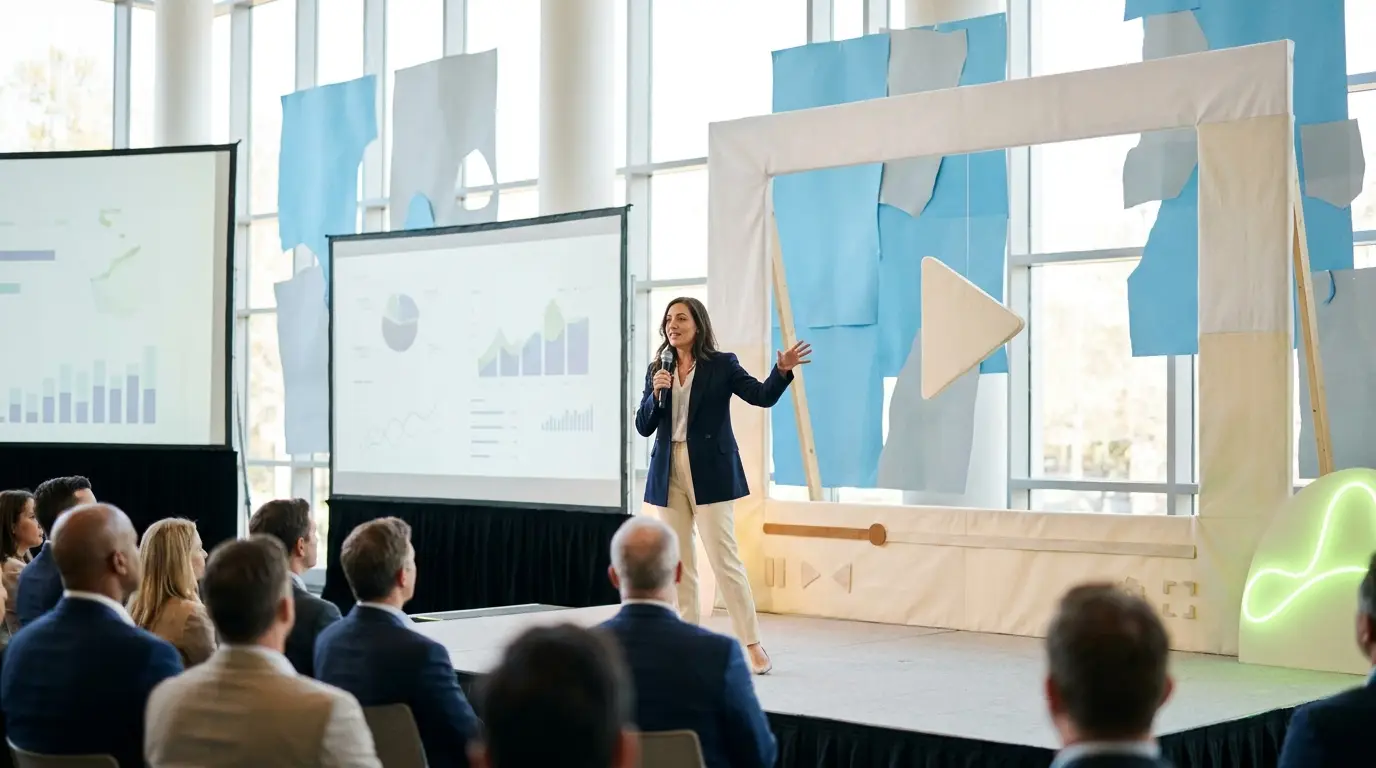
A demo day video is a startup's shot at making hundreds of investors remember them in a couple of minutes. Whether it accompanies a live accelerator pitch or stands alone for investors watching remotely, a sharp demo day video compresses the team, the product, the traction, and the vision into a tight, compelling story. Get it right and it opens investor conversations; get it wrong and the startup blends into the dozens that pitched the same day. This guide covers what a demo day video involves, what it includes, what it costs, and how to edit one that stands out.
What demo day video involves
A demo day video is a short, high-impact video produced for an accelerator demo day, where many startups present to a room or a feed full of investors. It has to communicate the opportunity, the product, and the traction fast, because investors are watching many pitches and deciding in minutes who to follow up with.
The defining trait is compression with impact. A demo day video has only a couple of minutes to convey what the startup does, why it matters, and why now, so every second has to earn its place. The editing has to be tight, energetic, and clear, hitting the points investors care about, problem, product, traction, team, without a wasted moment.
The other defining trait is that it has to stand out in volume. On demo day, investors see startup after startup, so a video that is merely competent gets forgotten. The production and editing have to give the pitch energy and polish that make it memorable among many, while keeping the substance investors are actually evaluating front and center. Wyzowl reports that 83% of video marketers say video has directly helped increase sales.
What demo day video includes

Pitch and product demo segments show what the startup does and the product in action, the substance investors are evaluating. Our investor pitch video production guide covers the broader pitch video.
Traction and metrics highlights convey momentum through clear, well-presented numbers, often the single most persuasive element for investors.
Founder and team segments put a face to the company and convey the conviction and credibility investors back. Our video editing for startup founders overview covers founder-focused editing.
Tight, energetic editing compresses the story into a couple of high-impact minutes with pacing that holds a busy investor's attention. Our motion graphics animation service overview covers polishing metrics and visuals.
Captions and polish ensure the video lands even when watched without sound in a crowded feed, common for remote demo day viewing.
A standalone follow-up cut serves investors who watch after the event, extending the video beyond the live moment. Our startup video production pre-seed series-a guide covers startup video across stages.
How much it costs
For project-based work, a polished demo day video typically runs $2,000 to $10,000 or more from a production company, depending on how much is filmed versus edited from existing material. Many startups edit a strong demo day video from footage they already have, which costs less.
For startups producing investor and marketing video around a raise, a dedicated subscription is more economical than commissioning each piece separately. Done-for-you services run $2,000 to $3,200 per month and cover a demo day video alongside the other content a fundraising startup needs for a flat fee. Our video editing cost per month for business breakdown explains how to budget for this.
Hiring an in-house editor is an option for teams with constant volume, but an in-house video editor costs $55,000 to $75,000 per year before benefits per ZipRecruiter, plus equipment and software. For most companies a service delivers the same quality without the overhead of a full-time hire.
What to look for

Prioritize tight, energetic editing. For a broader shortlist at this stage, see our ranked guide to video editing for YC startups, which orders the options by stage and budget. A demo day video lives on compression and impact, so confirm the editor can cut a couple of minutes of high-energy, clear storytelling that holds investor attention. Review pitch or startup video in their portfolio.
Look for a sense of what investors care about. The video has to foreground problem, product, traction, and team, the substance investors evaluate, so an editor who understands the investor audience produces a sharper result than one who does not.
Move fast. Demo day has a hard deadline and pitches often evolve until the last minute, so confirm the partner can turn around edits quickly. Our video editing turnaround time guide covers expectations.
Why the demo day video is worth getting right
Demo day is a rare moment of concentrated investor attention, and a startup gets one short window to make an impression on a room or feed full of people who could fund them. A demo day video that compresses the opportunity into a tight, memorable couple of minutes can open conversations with investors who would otherwise have moved on, which makes it one of the highest-impact pieces of video a startup will ever produce.
The stakes are raised by the volume. Because investors watch many pitches in a row, a forgettable video means a forgotten startup, regardless of how good the company is. The editing, the energy, the clarity, the pacing, is often what determines whether a strong company actually lands in investors' memory or blurs into the rest of the day.
The practical implication is to treat the demo day video as a high-stakes asset and edit it accordingly: tight, energetic, clear, and focused on what investors evaluate. A startup that invests in sharp editing here gives its pitch the best chance of standing out, which on demo day is the difference between a full follow-up inbox and silence. Wistia found that 8 in 10 B2B teams say LinkedIn is their primary place to share video.
The bottom line on demo day videos

A demo day video is a startup's chance to be remembered among many, compressing the opportunity, product, traction, and team into a tight, high-impact couple of minutes. The decisive factor is editing: energetic, clear, and focused on what investors evaluate. With a hard deadline and pitches that evolve until the last minute, fast turnaround matters too. A dedicated video partner, at a predictable monthly cost, can deliver a standout demo day video alongside the other content a fundraising startup needs, giving the pitch its best shot at landing.
Making the most of a single demo day moment
Demo day concentrates an enormous amount of investor attention into a tiny window, which is exactly why the video deserves disproportionate care. A startup may never again have hundreds of relevant investors watching at once, and the difference between a video that lands and one that blurs into the day is often measured in follow-up meetings booked. Treating the demo day video as a high-stakes asset, rather than a quick edit of the pitch, is what turns that rare attention into pipeline.
The substance investors evaluate has to lead, even within an energetic edit. Problem, product, traction, and team are what get a startup remembered, and traction in particular, presented clearly, is frequently the single most persuasive moment in the video. Energy and pacing serve to make that substance memorable, not to paper over a thin story, which is why the strongest demo day videos feel both exciting and concrete rather than slick but hollow.
The video also has a life beyond the live event, which startups often overlook. Many investors watch demo day content afterward, on their own time, and a standalone cut that works without the live context extends the video's reach well past the day itself. Producing with that second audience in mind, ensuring the video stands on its own, multiplies the return on the same effort.
For a startup preparing for demo day, the practical takeaway is to invest in the edit and plan for both audiences. Lead with the traction and substance investors care about, use energetic pacing to make it memorable, and produce a version that works long after the live moment passes. With pitches evolving until the last minute, a partner who can turn sharp edits around fast is what lets a startup put its best, most current story in front of the attention demo day briefly provides.
Where to go from here
Frequently asked questions
What is a demo day video?
A demo day video is a short, high-impact video produced for an accelerator demo day, where many startups present to investors. It compresses what the startup does, why it matters, the traction, and the team into a couple of compelling minutes built to open investor conversations.
How long should a demo day video be?
Usually a couple of minutes or less, matching the tight format of demo day pitches. Investors watch many in a row, so the video has to convey the opportunity fast, with every second earning its place.
How much does a demo day video cost?
A polished demo day video runs $2,000 to $10,000 or more from a production company, depending on how much is filmed versus edited from existing footage. Editing from material a startup already has costs less. A dedicated subscription runs $2,000 to $3,200 per month. A $900 trial is available to test the service before committing to a monthly plan.
What should a demo day video include?
The problem and opportunity, the product in action, traction and key metrics, and the founding team, edited tightly and energetically. Traction and a credible team are often the most persuasive elements for investors.
How is a demo day video different from a regular pitch video?
A demo day video is built for a high-volume moment where investors watch many pitches in a row, so it prioritizes compression, energy, and standing out. A regular pitch video can be longer and more detailed for a single investor meeting.
Can a startup edit a demo day video from existing footage?
Often yes. Many startups assemble a strong demo day video from product footage, founder recordings, and metrics they already have, which is an economical approach when production time and budget are tight before the event.
Why does editing matter so much for a demo day video?
Because investors see startup after startup, the editing, energy, clarity, and pacing, is often what determines whether a company is remembered or forgotten. Tight, compelling editing gives a strong startup the best chance of standing out in a crowded day.
What should lead a demo day video?
The substance investors evaluate: problem, product, traction, and team, with traction often the single most persuasive moment. Energy and pacing make that substance memorable, but they serve the story rather than replace it, so the strongest demo day videos feel both exciting and concrete.
Can a demo day video be made from existing footage?
Often yes. Many startups assemble a strong demo day video from product footage, founder recordings, and metrics they already have, which is an economical approach when production time and budget are tight in the run-up to the event.
Does the demo day video matter after the event?
Yes. Many investors watch demo day content afterward on their own time, so a standalone cut that works without the live context extends the video's reach well past the day itself, multiplying the return on the same production effort.

Prakhar Mehta
Pixel8 is a done-for-you video editing subscription, giving SaaS companies, agencies, and founders a dedicated editing team with 48-hour turnaround.
Ready to stop doing this yourself?
Get a dedicated video editing team. 48-hour turnaround, unlimited revisions, month-to-month.