App Promo Video Editing Service
An app promo video editing service helps mobile app teams produce store preview videos, launch clips, and vertical ad creative that drives more installs.
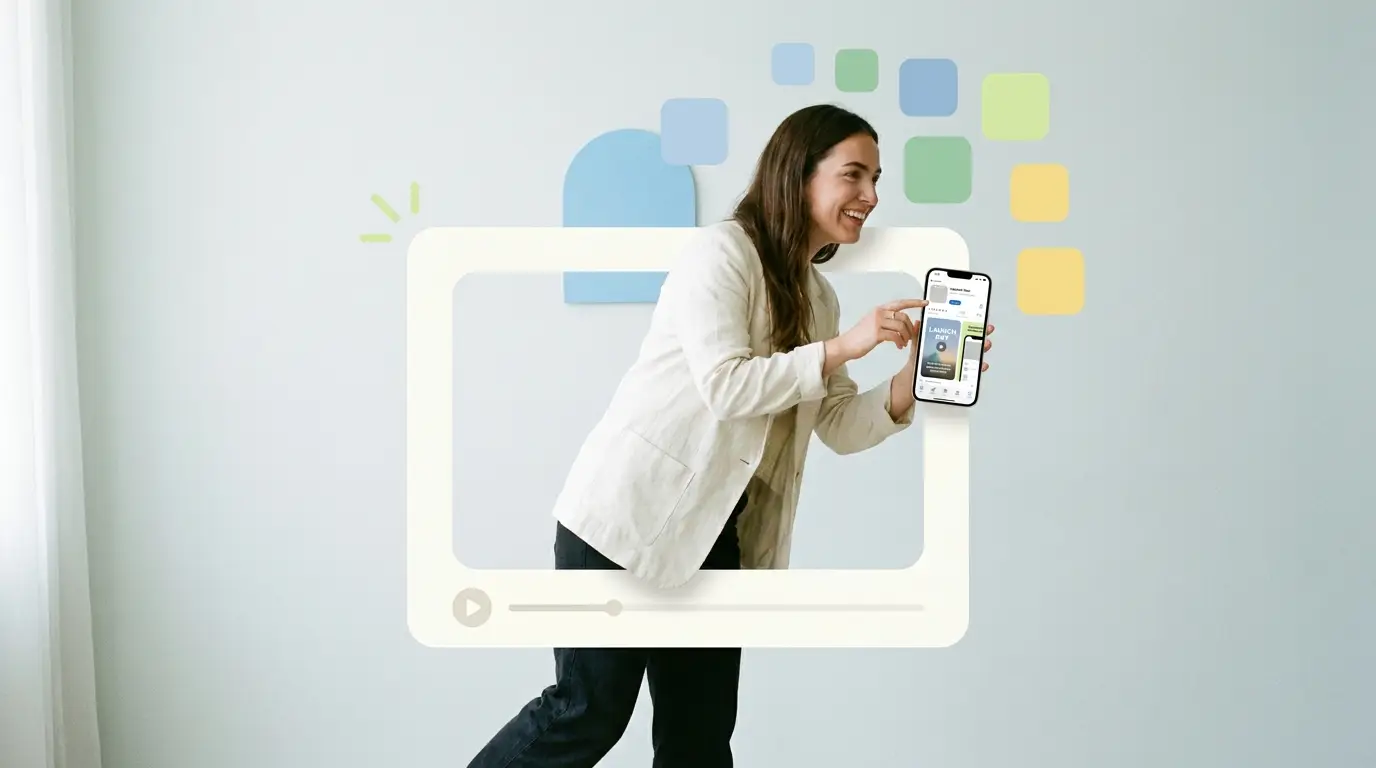
A good app promo video editing service does something most mobile app teams underestimate: it turns rough screen recordings into polished, install-driving creative without eating up your engineers or designers. If you build apps, you already know that a slick interface does not sell itself. People decide whether to download in seconds, and the deciding factor is often the video they watch on the app store, in a social feed, or in a paid ad. App promo video editing is the craft of taking your raw captures and shaping them into something that converts. This guide walks through what these services actually do, what to look for, and how the cost compares to doing it yourself.
Video is no longer optional for app marketing. According to Wyzowl, 91% of businesses use video as a marketing tool, and 82% say a video convinced them to buy a product or service. For a mobile app, that buying decision is the install, and the video doing the convincing is usually 15 to 30 seconds long.
Why mobile app companies need video editing help
Building an app and marketing an app are two different disciplines. Your product team can record a screen capture of a feature in about five minutes. Turning that capture into a preview video that survives App Store and Google Play review, plays well muted, and actually communicates the value in the first three seconds is a separate skill set entirely.
Most app teams hit the same wall. The founder or marketer records something on their phone, drops it into a free editor, and ends up with a clip that looks amateurish next to competitors. The cursor jumps around, the pacing drags, the text is hard to read on a small screen, and the whole thing feels like a tutorial instead of a pitch. That is the gap a dedicated editing service fills.
App marketing also runs on volume. You are not making one video. You need a store preview, a few launch announcements, a steady stream of feature updates, and dozens of ad variations to test across channels. A single freelancer working project by project cannot keep up with that pace, and your internal team has a product to ship. This is exactly where a short-form video editing service earns its keep, because the work is repetitive, high-volume, and spec-driven.
What an app promo video editing service actually produces

The category covers more than one type of video. A capable service handles the full range an app company needs across its lifecycle.
App store preview videos
These are the autoplay clips that sit at the top of your App Store and Google Play listings. They have strict rules: Apple wants 15 to 30 seconds, specific resolutions per device, and footage captured from the actual app. Google Play has its own requirements through a linked YouTube video. A preview video that does not meet spec gets rejected, and a rejected video means a delayed launch. An editing service that knows these requirements saves you the back-and-forth with review teams.
Launch and feature-announcement videos
When you ship a new version or a headline feature, you need a clip that explains what changed and why it matters. These run longer than store previews and live on your website, in email, and across social. The editing job here is about clarity: showing the feature in action, layering in motion graphics that point to the right part of the screen, and keeping the energy up so viewers do not drop off.
Vertical ad creative
Paid user acquisition lives and dies on creative volume. You need 9:16 vertical videos for TikTok, Reels, and Shorts, each cut slightly differently so you can test hooks, captions, and pacing against each other. The teams that win at paid acquisition are not the ones with the single best ad. They are the ones who can produce twenty variations fast and let the data pick the winner. If you already have longer assets, a service that can repurpose long-form video into shorts gives you that volume without filming anything new.
What to look for in a service
Not every video editor understands app marketing. Here is what separates a service built for app companies from a generalist who happens to edit video.
Screen-recording cleanup
Raw screen captures are messy. The cursor wanders, taps do not register visually, and there are dead moments where nothing happens. A skilled editor cleans this up by adding tap indicators, smoothing scroll motion, trimming dead air, and zooming into the part of the screen that matters. This single skill is what makes the difference between a clip that looks like a help-desk recording and one that looks like a product launch.
Motion graphics and device framing
Good app videos rarely show a bare screen recording. They frame the footage inside a clean device mockup, add animated callouts that highlight features, and use kinetic text to reinforce the voiceover or carry the message when the sound is off. These touches are what make a video feel premium, and they are hard to fake with templates alone.
App store spec compliance
This is the boring detail that causes the most pain. Aspect ratios, frame rates, maximum file sizes, captured-footage rules, and device-specific resolutions all matter. A service that has shipped store videos before knows the spec sheet cold and will not hand you a file that gets bounced by review.
Fast ad variations
Ask any prospective service how quickly they can turn one approved ad into ten variations. The answer tells you whether they understand performance marketing. You want different hooks, different opening frames, different caption styles, and different lengths, all produced in days, not weeks. Speed here directly affects how fast you can iterate on your cost per install.
A consistent, dedicated editor
The hidden cost of cheap editing is the ramp-up time every new editor needs to learn your app, your brand, and your preferences. A service that assigns a dedicated editor who learns your product once and applies that knowledge across every project will produce better, faster work over time. This is one of the main reasons a done-for-you video editing service model tends to beat one-off freelance hires for app teams.
The cost: service versus doing it yourself

This is the question that decides most of these conversations. Let us look at the real numbers for each path.
Hiring in-house
A full-time video editor in the United States costs between $55,000 and $75,000 a year according to ZipRecruiter salary data, before benefits, software licenses, and equipment. For a single app company that needs steady output, one editor can make sense, but you carry the full overhead, you manage them directly, and if they leave you start over. You also have to keep them busy, which is hard if your video needs come in waves around launches.
Freelancers
Freelance editors charge roughly $75 to $250 per video depending on complexity. This works for occasional one-off projects, but the model breaks down when you need volume. Every project means a new brief, a new round of revisions, and an editor relearning your app. Turnaround is unpredictable because you are competing with their other clients, and quality drifts as you cycle through different people.
Agencies
Traditional video agencies charge anywhere from $500 to $5,000 or more per project. The work is usually high quality, but the per-project pricing punishes the high-volume, fast-iteration workflow that app marketing demands. Producing thirty ad variations at agency project rates would cost a fortune.
The subscription model
A monthly subscription sits between these options. You pay a flat fee for a dedicated editor and unlimited requests, which fits the steady, high-volume rhythm of app marketing far better than per-project pricing. The general market for these services runs from $500 to $3,000 per month depending on turnaround and quality. For a deeper comparison of the options, see our breakdown of the best video editing services compared.
The math usually favors a service the moment your needs become regular. The cost of a single rejected store video, or the opportunity cost of your engineers cutting clips instead of shipping features, often exceeds a month of subscription. And the case for video keeps getting stronger: HubSpot reports that video continues to dominate the content channels marketers invest in, as covered in their video marketing statistics roundup.
DIY: when it makes sense and when it does not
Doing your own editing is reasonable in two situations. The first is the very early stage, when you have no budget and one founder can spend an evening in a free editor to get something on the listing. The second is when you have genuine in-house design talent with spare capacity, which is rare.
For everyone else, DIY tends to be a false economy. The time your team spends learning editing software, fighting with export settings, and redoing rejected store videos is time not spent on product or growth. The output also rarely matches what a dedicated editor produces, and in a feed full of polished competitor ads, looking amateur costs you installs. A structured video editing service for businesses removes that drag and gives you predictable output.
What Pixel8 Production offers

Pixel8 Production is a done-for-you B2B video editing subscription built for the kind of steady, high-volume work that app marketing requires. You get a dedicated editor who learns your app and brand once and applies that knowledge to everything from store previews to ad variations. Turnaround is 48 hours on standard requests, and revisions are unlimited, so you iterate until the clip is right without paying per change.
Pricing is a flat $2,000 to $3,200 per month. That covers your store preview videos, launch and feature-announcement clips, and the volume of vertical ad variations you need to test paid channels properly. Because it is a subscription rather than per-project billing, the cost does not balloon when your launch calendar gets busy, and you are not negotiating a new quote every time you need ten new ad cuts.
The model is designed to replace the awkward middle ground most app teams get stuck in: too much volume for freelancers, too little budget for an agency, and no spare capacity in-house. You hand over your raw screen recordings and brand assets, and you get back polished, spec-compliant, install-ready video on a predictable schedule.
Bottom line
App promo video editing is not a nice-to-have for mobile app companies. It is the work that determines whether someone who finds your app actually installs it. The right service handles screen-recording cleanup, motion graphics, store spec compliance, and fast ad variations so your team can stay focused on the product. DIY makes sense only at the earliest stage or with rare spare design capacity. For everyone else, a subscription model like Pixel8 Production, at a flat $2,000 to $3,200 per month with a dedicated editor, 48-hour turnaround, and unlimited revisions, gives you the steady, high-volume output that app marketing demands without the overhead of a full-time hire or the per-project sticker shock of an agency.
Where to go from here
Frequently asked questions
What is an app promo video editing service?
It is a service that takes your raw app footage, usually screen recordings, and edits it into polished marketing videos. That includes app store preview videos, launch and feature-announcement clips, and vertical ad creative for social and paid channels. The service handles the cleanup, motion graphics, and platform spec compliance that turn rough captures into install-driving video.
How long should an app store preview video be?
Apple allows app preview videos of 15 to 30 seconds, and they must use footage captured from the app itself. Google Play uses a linked promotional video with its own requirements. A good editor knows these rules and will deliver a file that passes review the first time, which avoids launch delays.
How much does app promo video editing cost?
It depends on the model. Freelancers charge roughly $75 to $250 per video, agencies charge $500 to $5,000 or more per project, and an in-house editor costs $55,000 to $75,000 a year. Subscription services generally run $500 to $3,000 per month. Pixel8 Production charges a flat $2,000 to $3,200 per month for a dedicated editor with unlimited revisions. A $900 trial is available to test the service before committing to a monthly plan.
Is it cheaper to hire in-house or use a service?
For most app companies, a service is more cost-effective until your video volume is large enough to keep a full-time editor busy year-round. An in-house hire carries salary plus benefits, software, and management overhead. A subscription gives you a dedicated editor without that fixed overhead, which fits the wave-like demand of app marketing better.
Why do I need so many ad variations?
Paid user acquisition is a testing game. The teams with the lowest cost per install are usually the ones producing many variations of each ad, different hooks, opening frames, captions, and lengths, then letting performance data pick the winners. A service that can turn one approved ad into ten variations quickly is what makes that testing loop possible.
Can a service work from just my screen recordings?
Yes. Screen-recording cleanup is a core part of the job. A skilled editor adds tap indicators, smooths scrolling, trims dead air, frames the footage in device mockups, and layers in motion graphics and text. You supply the raw captures and brand assets, and the service handles everything else.
What turnaround time should I expect?
It varies by provider. One-off freelancers can take weeks depending on their other clients. A subscription service like Pixel8 Production delivers standard requests in 48 hours, which lets you keep pace with launches and ad testing without the unpredictable waits that come with project-based work.

Prakhar Mehta
Pixel8 is a done-for-you video editing subscription, giving SaaS companies, agencies, and founders a dedicated editing team with 48-hour turnaround.
Ready to stop doing this yourself?
Get a dedicated video editing team. 48-hour turnaround, unlimited revisions, month-to-month.