Animated vs Live Action Video: Which for Explainers?
A practical breakdown of animated vs live action video for B2B explainers, covering cost, production time, shelf life, editing, and when each one wins.
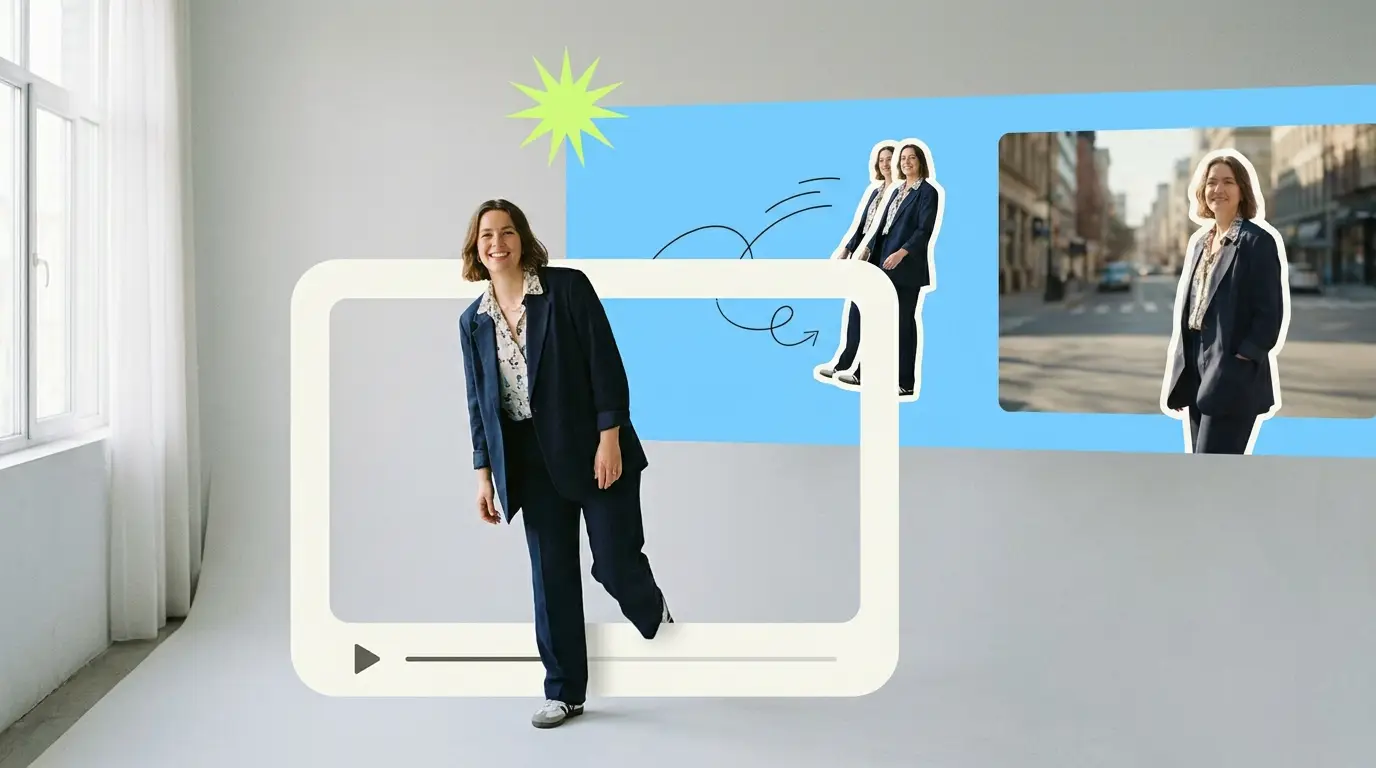
Choosing animated vs live action video is one of the first real decisions a B2B team faces when planning an explainer or product video. It shapes your budget, your timeline, and how long the finished asset stays useful before it needs a refresh. Get the choice right and you ship a video that explains your product clearly and keeps working for two years. Get it wrong and you spend more than you planned on something that feels dated by the next product release.
This guide breaks down the animated vs live action video question the way a buyer actually needs it: cost, production time, when each format wins, how long it lasts, and how each one is edited after the shoot or render. By the end you will know which format fits your product, your team, and your release cadence.
What we mean by animated and live action
Animated explainer video covers anything built from designed assets rather than filmed footage. That includes 2D motion graphics, character animation, kinetic typography, screen-recorded product walkthroughs with animated overlays, and 3D renders. The common thread is that nothing is captured with a camera. Every frame is created, which gives you total control and also means every change runs through a designer or animator.
Live action explainer video is filmed footage: a founder on camera, a customer testimonial, a product used in a real setting, a team at work, or a presenter walking through a value proposition. It feels human because it shows real people, and that human quality is exactly why some messages land better in live action than they ever would as a cartoon.
Most B2B explainers are not purely one or the other. A live action founder intro with animated lower-thirds and an animated product diagram is common, and so is an animated explainer that cuts to one filmed customer quote for credibility. Still, the core build leans one way, and that lean drives almost every decision that follows.
Cost: where your money actually goes

Cost is usually the deciding factor, so start there. Video is now standard practice, not a nice-to-have. According to Wyzowl, 91% of businesses use video as a marketing tool, and 82% say a video convinced them to buy a product or service. That demand has pushed prices across a wide band, and animated vs live action video sit at different points on it.
Animated video cost is front-loaded into design and animation labor. A short 2D motion graphics explainer can run from the low end of the market into several thousand dollars depending on script length and how custom the assets are. Character animation and 3D push the high end higher because each second of motion takes real time to build. The upside: once the assets exist, you own a library you can reuse.
Live action video cost is spread across more line items: crew, talent, location, equipment, travel, and the shoot day. A simple founder-to-camera piece in one location with a small crew can be affordable. A multi-location shoot with professional talent climbs fast. Across the market, explainer-style projects commonly run from $500 to $3,000 for straightforward work, with full-production projects reaching $500 to $5,000 or more depending on scope.
The real cost driver in both cases is editing, which is where the explainer actually gets built. HubSpot data shows how central video has become to B2B funnels, and that means most teams produce more than one. If you are publishing regularly, your recurring cost is not the shoot or the render. It is the ongoing edit work, and that math is what makes the production model you choose matter more than the format. We cover the options in our guide to video editing subscription services.
Production time: weeks, not hours
The two formats also differ in how long they take to produce, and the timeline rarely matches buyer expectations.
Animated explainers move through script, storyboard, illustration, animation, and revision. Each stage depends on the one before it, so a custom animated explainer usually takes three to six weeks. Anything with custom characters or 3D takes longer. The work is predictable, which is a real advantage: you are not waiting on weather, a location, or a talent's calendar.
Live action front-loads coordination. Pre-production includes scripting, casting, scheduling, and location scouting before anyone shoots. The shoot day is fast, but everything around it is not. From kickoff to final cut, a live action explainer commonly lands in the three to six week range too, with more variability because a single scheduling problem can push the whole project.
The practical takeaway: neither format is fast if you want it done well, and both depend heavily on the editing stage to hit deadline. If your bottleneck is consistently the edit, a done-for-you video editing service with a fixed turnaround removes the most common source of slippage.
When animated wins

Animated explainer video is the stronger choice in a few clear situations.
When you are explaining something abstract or invisible, animation wins easily. Software, data flows, APIs, security architecture, and financial concepts have no physical form to film. Animation lets you show a process that does not exist in the real world, which is why so many SaaS explainers are animated.
When you need full control over every frame, animation delivers. You can match brand colors exactly, show a product UI that is still in development, and update a single screen without reshooting anything. For early-stage products where the interface changes often, this control is worth a lot.
When your story spans concepts rather than people, animation keeps it focused. A walkthrough of how three systems connect is cleaner as a diagram than as a filmed scene. For deeper guidance on matching format to message, our breakdown of B2B video content types that convert maps formats to funnel stages.
When live action wins
Live action earns its place whenever trust and humanity carry the message.
When you need credibility, real faces beat illustrations. A customer saying your product saved them ten hours a week is more persuasive on camera than as a voiceover over animation. Testimonials, case studies, and founder stories almost always perform better in live action.
When you are selling a physical product or an in-person service, you have to show the real thing. Hardware, retail, hospitality, and field services need footage of the product in use. No animation substitutes for seeing the actual object work.
When your brand depends on personality and culture, live action carries it. Professional-services firms and founder-led companies often sell on the strength of the people involved, and showing those people builds a connection that animation cannot replicate. If your product is software but your differentiator is your team, a hybrid works well. Pair an animated product walkthrough with a filmed founder intro. Our notes on SaaS product demo video best practices cover how to blend the two without losing focus.
Shelf life and update-ability

This is the factor buyers underestimate most, and it often matters more than upfront cost.
Animated video is easier to update in some ways and harder in others. If you keep your project files, swapping a stat, changing a screen, or updating a logo is a contained edit. But if the change is structural, like a new product flow, you may be rebuilding scenes from scratch. Animation also dates through style. A look that felt current two years ago can read as old, and refreshing it means significant rework.
Live action ages differently. Footage with people carries visual cues, clothing, hairstyles, office setups, that anchor it to a moment in time. You cannot edit a person's outfit out of a clip. When the footage feels dated, you reshoot, which is expensive. A clean, simply shot live action piece with timeless framing can stay usable for years if you avoid trendy choices.
The honest answer on shelf life: animated video is cheaper to tweak but vulnerable to style drift, while live action is harder to change but can age gracefully if shot with restraint. For products that change often, animation's editability usually wins. For evergreen brand and testimonial content, live action's durability often wins.
How each format is edited
Editing is where both formats become finished explainers, and the workflows differ enough to affect who you hire.
Animated editing happens inside motion and design tools. The editor works with layers, keyframes, and timing, syncing motion to a voiceover and pacing transitions so the explanation reads clearly. Changes mean going back into the project file and adjusting assets, so the editor needs design fluency, not just cutting skills. Revisions can be precise because every element is controllable.
Live action editing is footage-driven. The editor selects the best takes, cuts for pace, color-grades, mixes audio, and layers in graphics, music, and captions. The skill is in selection and rhythm: turning raw footage into a tight story. Revisions are bounded by what was filmed, so if a shot does not exist, no edit can create it.
In practice, most B2B teams need both skill sets because most real projects are hybrids. That is the case for outsourcing the edit rather than hiring narrowly. A single dedicated editor who handles motion graphics and footage covers the full range of explainer work. For SaaS teams specifically, our guide to explainer video production for SaaS covers how to scope the work.
What it costs to staff editing in-house
Whichever format you choose, the recurring cost is editing, so it helps to price the in-house option honestly. A full-time editor in the United States runs roughly $55,000 to $75,000 per year in salary alone, before benefits, software, and equipment, according to ZipRecruiter. That is a real commitment for a role that may sit idle between projects.
Freelancers fill the gap at $75 to $250 per video for simple work, but managing a rotating bench across animated and live action projects creates its own overhead: briefing, quality control, and inconsistent style. Agencies handle full projects at $500 to $5,000 or more each, which works for one-off launches but gets expensive when you publish steadily. We compare these models in our roundup of the best video editing services compared.
What Pixel8 Production offers
Pixel8 Production is a done-for-you B2B video editing subscription built for teams that publish regularly and want both animated and live action work handled by one editor. For $2,000 to $3,200 per month, you get a dedicated editor who learns your brand, a 48-hour turnaround on most edits, unlimited revisions, and no per-project fees.
That model fits the animated vs live action video question well, because most B2B teams need both over time. One month you are cutting a filmed customer testimonial, the next you are building an animated product walkthrough for a launch. A single dedicated editor handles both, so you are not hiring a motion specialist and a footage editor separately, or paying agency project rates every time scope shifts.
The flat monthly price also fixes the budgeting problem. Instead of pricing each explainer one at a time and watching costs swing with complexity, you have a predictable line item that covers whatever the month requires. Unlimited revisions mean both edits get refined until they are right, without a meter running. For teams shipping explainers, demos, and social cuts on a steady cadence, that predictability is the point.
Bottom line
The animated vs live action video choice comes down to your message, your product's pace of change, and your publishing cadence. Animation wins for abstract ideas and frequent updates. Live action wins when real people and trust carry the message. Most B2B teams need both, so the production model matters more than the format. A predictable, done-for-you editing setup lets you choose the right format for each project without rethinking your budget.
Where to go from here
Frequently asked questions
Is animated or live action video cheaper for a B2B explainer?
It depends on scope, but neither is reliably cheaper across the board. Simple live action can be very affordable, while custom 3D animation is expensive, and the reverse is also true. The bigger cost is recurring editing, which runs the same for both formats and is where most of your long-term spend lands.
Which format is faster to produce?
Both typically take three to six weeks from kickoff to final cut for custom work. Animation has a more predictable timeline because it does not depend on weather, locations, or talent schedules. Live action can be faster on the shoot day but slower overall because of coordination.
Can I combine animated and live action in one video?
Yes, and most effective B2B explainers do. A common pattern is a filmed founder or customer intro paired with an animated product walkthrough. The hybrid gives you human credibility plus the control to show software or abstract concepts clearly.
Which format lasts longer before it needs updating?
Animated video is easier to tweak if you keep the project files, but it can date through style drift. Live action can age gracefully if shot with timeless framing, but it is expensive to change because you cannot edit footage that was never filmed. For fast-changing products, animation usually wins on update-ability.
Does animated or live action perform better for conversions?
Performance depends on the message, not the format. Testimonials and founder stories convert better in live action because real faces build trust, while abstract software concepts convert better animated because you can show what cannot be filmed. Match the format to the message rather than picking a default.
How is editing different between the two formats?
Animated editing happens in motion and design tools with layers and keyframes, so the editor needs design fluency. Live action editing is footage-driven, focused on selecting takes, pacing, color, and audio. Many B2B projects are hybrids, so a single editor who handles both saves you from hiring two specialists.
Why use a subscription instead of hiring per project?
If you publish video regularly, per-project pricing swings with format and complexity and adds up fast. A subscription like Pixel8 at $2,000 to $3,200 per month gives you a dedicated editor, 48-hour turnaround, and unlimited revisions at a predictable cost, covering both animated and live action edits without per-project fees.

Prakhar Mehta
Pixel8 is a done-for-you video editing subscription, giving SaaS companies, agencies, and founders a dedicated editing team with 48-hour turnaround.
Ready to stop doing this yourself?
Get a dedicated video editing team. 48-hour turnaround, unlimited revisions, month-to-month.