Video Ad Editing Service: A Guide
A practical guide to how a video ad editing service produces high-performing paid creative across platforms, what to look for, turnaround, and real cost.
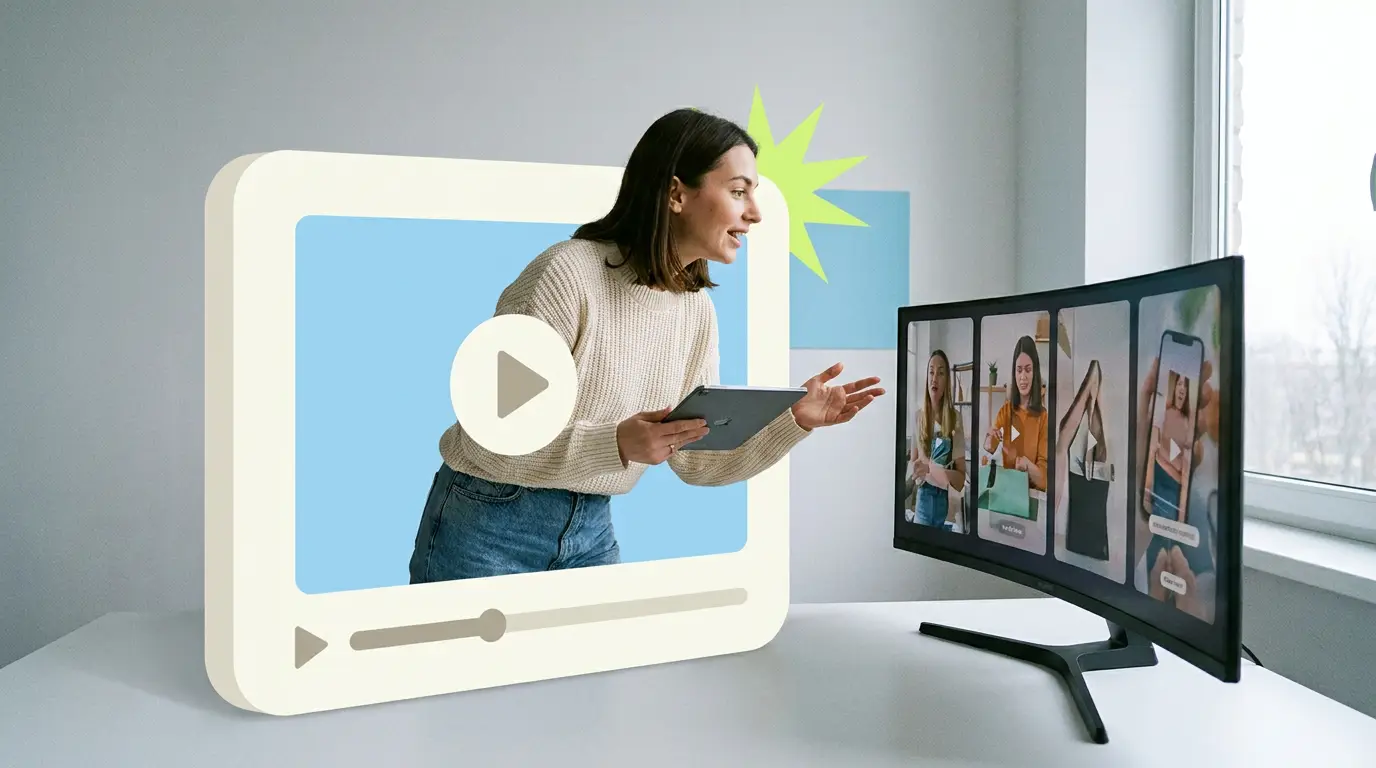
A video ad editing service is the production engine behind paid media that actually performs. The job is not to make one pretty video. The job is to turn raw footage and a media plan into a steady stream of ad-ready creative: strong hooks, multiple variations for testing, captions burned in, and the right aspect ratios for every placement. If your paid social or YouTube spend is flat, the problem is usually not the targeting. It is the creative, and how fast you can produce more of it. A good video ad editing service exists to fix exactly that.
Paid platforms reward volume and freshness. Meta and TikTok algorithms burn through creative quickly, and the accounts that win are the ones feeding the system new hooks every week. That cadence is hard to hit with a single freelancer or an in-house editor stretched across ten other tasks. This guide covers what these services do, how to evaluate one, the turnaround you need for real testing cycles, and how the cost compares to doing it yourself or hiring an agency.
Why ad creative is the real lever
Targeting and budget optimization matured years ago. On most platforms the auction does the heavy lifting, which means the variable you still control is the creative itself. According to Wyzowl, 91% of businesses use video as a marketing tool and 82% say a video has convinced them to buy a product or service. Video is where the persuasion happens, and in paid media that persuasion has to land in the first three seconds.
The catch is fatigue. A winning ad does not win forever. Frequency climbs, the audience has seen it, and performance decays. The only durable answer is a pipeline that keeps producing new angles. That is why the best advertisers think in terms of creative throughput rather than individual videos, and why a dedicated video editing service for businesses tends to beat one-off production every time.
What a video ad editing service actually does
The work breaks down into a few repeatable functions that map directly to ad performance.
Hooks built for the scroll
The first three seconds decide whether an ad gets watched or skipped. A skilled ad editor opens with a pattern interrupt, a bold claim, a question, or a visual that stops the thumb. A strong service will cut three to five different hooks for the same core ad so you can test which opener holds attention. The body of the ad can stay the same while the hook changes, which is the cheapest, fastest way to find a winner.
Multiple variations for testing

You cannot optimize what you cannot test. A proper service delivers an ad in batches: different hooks, different pacing, different calls to action, different music. Each becomes a separate variant in your ad set. This is the difference between guessing and learning. Producing variations at volume is exactly what short-form video editing service workflows are designed around, because the same source footage can yield a dozen distinct cuts.
Captions and sound-off optimization

Most paid social is watched muted. Captions are not optional. A good ad editor burns in styled, on-brand captions that are readable on a phone, times them to the audio, and makes sure the message survives without sound. This single detail often moves view-through rates more than any other edit.
Multiple aspect ratios per placement

The same ad needs to live in a 9:16 vertical feed, a 1:1 square, a 4:5 portrait, and sometimes a 16:9 horizontal slot. A service that understands paid media delivers all the required ratios from one edit, with the framing adjusted so the subject and captions stay in the safe zone for each. Reframing footage well is a real skill, and it is closely related to how teams repurpose long-form video into shorts for organic distribution.
Fast iteration on winners
When a variant wins, you want more of it immediately. The service should be able to take the winning hook and spin five new versions while the ad is still hot. Speed here is the whole point. A two-week turnaround means the winner has already fatigued by the time the next batch arrives.
Why volume and speed beat polish
There is a stubborn myth that ad performance comes from one perfectly crafted hero video. In paid media, the opposite is closer to the truth. Performance comes from testing many ideas quickly and pouring budget into the few that work.
HubSpot's research backs the broader shift toward video, with marketers consistently ranking it among their highest-return formats. You can see the supporting data in the HubSpot video marketing statistics roundup. But the return only shows up when you give the algorithm enough creative to find a winner. Ten decent ads tested fast will almost always outperform one expensive ad that took a month to produce.
This is why turnaround is the metric that matters most. If your editing partner can deliver a fresh batch every two or three days, you can run a real testing cadence: launch, read the data, kill the losers, scale the winners, and feed in new angles. That loop is what separates accounts that scale from accounts that plateau. A done-for-you video editing service is structured to keep that loop spinning without you managing it.
What to look for when choosing a service
Not every editing service is built for paid media. Use this checklist.
- Paid media fluency. They should talk about hooks, retention curves, and placements without prompting. If they only talk about color grading and transitions, they are a brand video shop, not an ad shop.
- Variation as standard. Ask how many cuts they deliver per concept. If the answer is one, keep looking. You want batches.
- Caption and ratio coverage included. Captions and all required aspect ratios should be part of the deliverable, not an upsell.
- Turnaround in days, not weeks. Confirm the actual delivery window in writing. For testing to work you need a 48-hour to 72-hour cycle.
- Unlimited or generous revisions. Ad copy and framing get tweaked constantly. A per-revision fee kills iteration speed.
- A dedicated editor. Someone who learns your brand, your offers, and your winning patterns is far more valuable than a rotating queue.
For a wider comparison of providers and models, our breakdown of the best video editing services compared walks through the tradeoffs in detail.
Turnaround and testing cycles
Here is what a healthy paid creative cycle looks like in practice.
Day one, you brief the service on a campaign and hand over footage or assets. Within 48 hours you have a batch of five to eight variants: a few hooks, a couple of pacing options, captioned, in every ratio your placements need. You launch them. By day four or five the data is readable. You identify one or two winners, request five new versions of the winning hook, and within another 48 hours those are live. Meanwhile you brief the next concept.
Run that loop continuously and you always have fresh creative entering the auction while fatigued ads exit. The constraint is never your ideas. It is production speed. That is the single reason a subscription model with a fixed fast turnaround tends to outperform project-based production for advertisers.
Cost: DIY versus freelance versus agency versus subscription
The honest comparison matters, because the cheapest option is rarely the cheapest once you account for speed and volume.
In-house editor. Hiring full time gives you control but costs the most. A video editor salary runs roughly $55,000 to $75,000 per year according to ZipRecruiter, plus benefits, software, and management time. One person also caps your output at one person's pace, which is a real ceiling when you need batches every few days.
Freelancers. Flexible and good for spikes, freelancers typically charge $75 to $250 per video. The math gets ugly fast at testing volume. Twenty variants a month at even $100 each is $2,000, and you carry the overhead of briefing, chasing, and quality-checking a contractor who may vanish mid-campaign.
Agencies. Full-service agencies charge $500 to $5,000 or more per project and deliver high production value. The problem for paid media is speed and cost per asset. Agency timelines are built for campaigns, not for the rapid-fire testing cadence that paid social demands.
Subscription services. A monthly subscription with a dedicated editor sits in the practical middle. You get predictable cost, fast turnaround, and the volume that testing requires, without the overhead of an employee. General market subscriptions range from about $500 to $3,000 per month depending on output and turnaround.
What Pixel8 Production offers
Pixel8 Production is a done-for-you B2B video editing subscription built for teams that need consistent, ad-ready creative without managing freelancers or hiring in-house. The price is always $2,000 to $3,200 per month, flat.
You get a dedicated editor who learns your brand, your offers, and the hooks that win for your account. Turnaround is 48 hours on standard requests, which is fast enough to run a real testing loop rather than waiting weeks between batches. Revisions are unlimited, so tightening a hook, swapping a caption style, or recutting for a new placement never costs extra or slows you down.
In practice that means you brief a concept, receive a batch of variants with captions and the aspect ratios your placements need, launch your tests, and request fresh cuts of the winners while they are still performing. The fixed monthly fee makes budgeting simple, and the dedicated relationship means the work gets sharper over time as your editor learns what converts for you. It is built for the exact cadence paid media rewards: volume, speed, and steady iteration.
Bottom line
Paid media is won on creative, and creative is won on volume and speed. A video ad editing service that delivers strong hooks, multiple test variations, captions, and every aspect ratio on a fast, repeatable cycle is the engine behind accounts that scale. DIY caps your output, freelancers get expensive at volume, and agencies are too slow for real testing. A subscription with a dedicated editor and a 48-hour turnaround hits the sweet spot. Pixel8 Production delivers exactly that for $2,000 to $3,200 per month, so your testing loop never stalls.
Where to go from here
Frequently asked questions
What is a video ad editing service?
It is a production service that turns raw footage and briefs into ad-ready creative for paid platforms. The output includes hooks, multiple test variations, burned-in captions, and the aspect ratios each placement needs, all built to perform in the ad auction rather than just look good.
How fast should ad creative turnaround be?
For real testing you want a 48-hour to 72-hour cycle. That cadence lets you launch a batch, read the data within a few days, and request new versions of the winners before they fatigue. Two-week turnarounds break the testing loop and let winning ads decay before you can scale them.
How many ad variations do I need?
Plan for batches rather than single videos. A healthy starting point is five to eight variants per concept, mixing different hooks, pacing, and calls to action. Volume is what lets the algorithm find a winner, and fresh creative is what keeps performance from decaying.
Why are captions so important for video ads?
Most paid social is watched with the sound off. Burned-in, styled captions make sure the message lands without audio, which usually improves view-through and conversion rates more than any other single edit. They are a baseline requirement, not an optional extra.
How much does a video ad editing service cost?
It depends on the model. Freelancers charge $75 to $250 per video, agencies charge $500 to $5,000 or more per project, and a full-time editor costs roughly $55,000 to $75,000 a year. Subscription services generally run $500 to $3,000 per month. Pixel8 Production is $2,000 to $3,200 per month with a dedicated editor and 48-hour turnaround. A $900 trial is available to test the service before committing to a monthly plan.
Is a subscription better than hiring a freelancer?
For paid media volume, usually yes. Freelancers work for occasional needs, but at testing scale the per-video cost and the overhead of briefing and chasing add up. A subscription gives predictable cost, faster turnaround, and a dedicated editor who learns your account, which compounds in value over time.
Can one edit cover all the aspect ratios I need?
Yes. A capable service delivers 9:16, 1:1, 4:5, and 16:9 versions from a single edit, reframing each so the subject and captions stay in the safe zone for that placement. You should not pay separately for each ratio or have to brief them individually.
What should I look for when choosing a service?
Prioritize paid media fluency, variation as a default deliverable, captions and all ratios included, turnaround measured in days, generous revisions, and a dedicated editor. A service that only discusses transitions and color grading is built for brand films, not for ad performance.

Prakhar Mehta
Pixel8 is a done-for-you video editing subscription, giving SaaS companies, agencies, and founders a dedicated editing team with 48-hour turnaround.
Ready to stop doing this yourself?
Get a dedicated video editing team. 48-hour turnaround, unlimited revisions, month-to-month.