Sales Demo Video: Production and Editing Guide
A guide to sales demo video production and editing: turn live demos into polished sales assets that move deals forward. Costs, tips, and what to include.
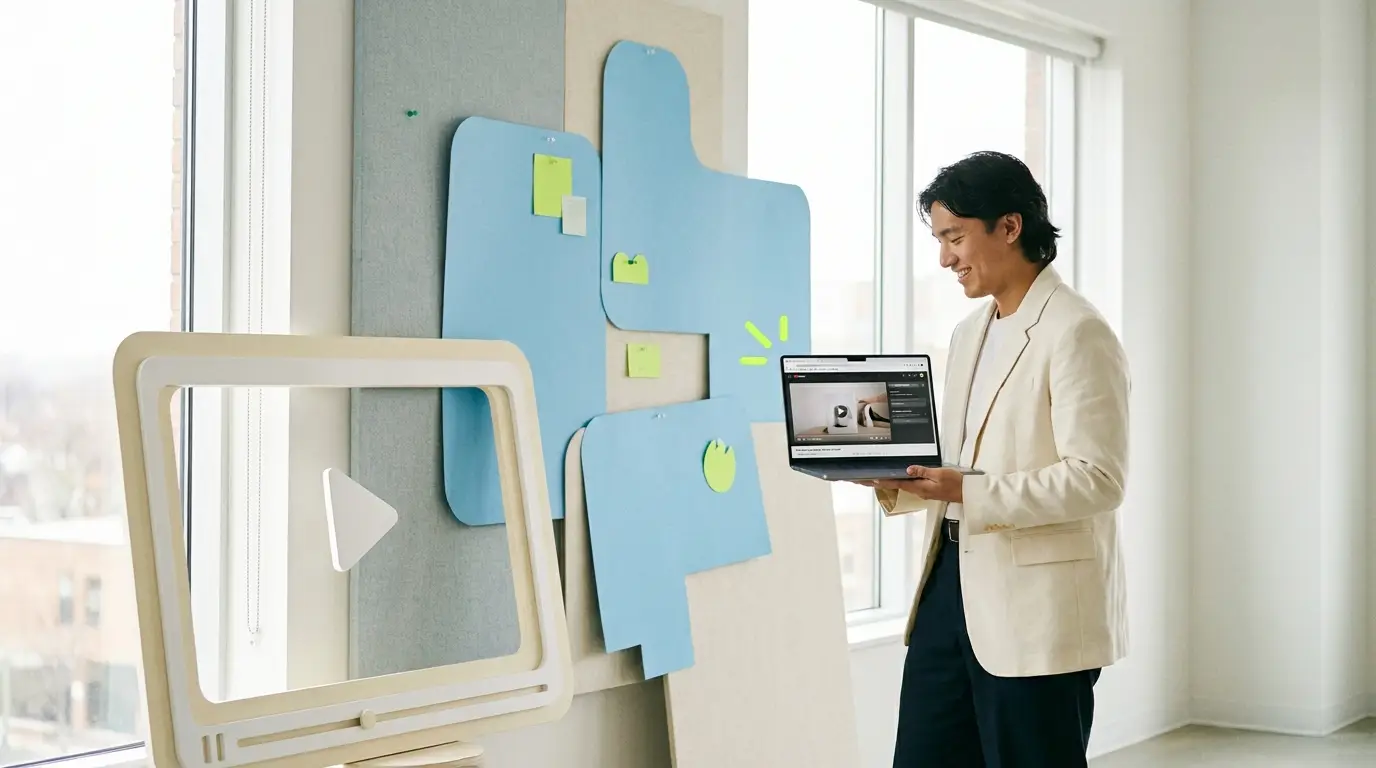
A sales demo video is one of the most practical assets a sales team can have: a polished, repeatable walkthrough of the product that reps can send to prospects, use in follow-ups, and rely on to move deals forward without scheduling another live call. Sales demo video production and editing turns the raw material of live demos and screen recordings into clean, persuasive assets built for the sales process. This guide covers what a sales demo video involves, what it includes, what it costs, and how to get demos that help reps close.
What sales demo video involves
A sales demo video is a product walkthrough built specifically for the sales process, designed to be sent, shared, and reused rather than performed live each time. It lets a prospect see the product on their own schedule, gives reps a consistent asset, and keeps deals moving between calls.
The defining trait is sales intent. Unlike a marketing explainer, a sales demo is built around the buyer's specific questions and objections, often tailored to a use case or segment, and structured to advance the deal. The editing has to keep it tight and persuasive while showing enough of the product to build confidence.
The other defining trait is that the raw material usually exists already. Sales teams record live demos and walkthroughs constantly; the value is in editing that raw footage into a clean, reusable asset, trimming the dead air, tightening the pacing, and adding the polish that makes it persuasive. Our B2B sales enablement video production guide covers the broader category. Wyzowl finds that 85% of video marketers say video has helped them generate leads.
What sales demo video includes

Edited live-demo recordings turn a recorded sales call or demo into a clean, reusable asset, trimming tangents and dead air into a tight walkthrough.
Purpose-built sales demos are produced specifically for the sales process, with clean capture and narration structured around buyer questions.
Use-case and segment versions tailor the demo to different buyers, showing the features and outcomes that matter to each, which lifts relevance and conversion.
Short follow-up clips answer specific objections or highlight a single feature, giving reps quick assets to send between calls. Our short form video editing service overview covers producing these efficiently.
Personalized demo edits add light customization for key accounts, a high-impact touch for enterprise deals.
Captions and polish make demos easy to watch in any setting and reflect well on the brand, since many are viewed without sound. Our video content strategy b2b buyers framework covers how these fit the buyer journey.
How much it costs
For project-based work, a purpose-built sales demo runs $2,000 to $10,000 or more from a production company depending on complexity. Editing existing demo recordings into polished assets costs less per piece, often a few hundred to a couple of thousand dollars each depending on the work involved.
For sales teams with ongoing demo needs, a dedicated subscription is far more economical than commissioning each one separately. Done-for-you services run $2,000 to $3,200 per month and cover a steady flow of edited demos, follow-up clips, and other sales content for a flat fee. Our video editing cost per month for business breakdown explains how to budget for this.
Hiring an in-house editor is an option for teams with constant volume, but an in-house video editor costs $55,000 to $75,000 per year before benefits per ZipRecruiter, plus equipment and software. For most companies a service delivers the same quality without the overhead of a full-time hire.
What to look for

Look for sales fluency, not just editing skill. A good sales demo is structured around buyer questions and built to advance a deal, so the partner should understand the sales process, not just cut footage. Ask how they approach structuring a demo to persuade.
Confirm they can work from your raw recordings. Much of the value is editing existing live-demo footage into clean assets, so the partner should be efficient at trimming, tightening, and polishing recordings. Our video editing turnaround time guide covers expectations.
Prioritize speed and volume. Sales moves fast and needs assets quickly, so confirm the partner can turn around demos and clips on a steady cadence rather than treating each as a slow project.
Why sales demos are advantage for a sales team
A sales demo video is pure advantage: it lets one well-produced walkthrough do the work of countless live demos, freeing reps from repeating the same presentation and letting prospects engage on their own schedule. That advantage compounds across a sales team, recovering hours of selling time and keeping deals moving between calls, which is why a strong sales demo is one of the highest-return assets a sales org can build.
The reason many sales teams underuse this is that their raw demo recordings never get edited into reusable assets. The footage exists, recorded live calls, screen walkthroughs, but without editing it stays as unwatchable raw recordings no rep would send. Turning that raw material into clean, persuasive, reusable demos is where the advantage is unlocked.
The practical move is to treat sales demos as a content operation: capture the raw material reps already produce, edit it into a library of polished, use-case-specific demos and follow-up clips, and keep it current. A dedicated video partner makes this practical, turning the team's raw recordings into a steady supply of sales assets that move deals forward. Sprout Social reports that 27% of LinkedIn users prefer short-form video, the most of any content type on the platform.
The bottom line on sales demo videos

A sales demo video gives a sales team advantage: one polished walkthrough replaces countless live demos, lets prospects engage on their schedule, and keeps deals moving between calls. The value is in editing the raw demo recordings reps already produce into clean, persuasive, reusable assets structured around buyer questions. For ongoing demo needs a dedicated subscription is the most economical way to keep a steady supply of sales assets flowing, turning raw recordings into deals-moving content for a predictable monthly cost.
Building a library of sales demo assets
The biggest unlock for a sales team is not a single great demo video but a library of them, because different deals stall at different points and a one-size demo rarely fits. A library, an overview demo for early interest, deeper walkthroughs for evaluators, short clips that answer specific objections, use-case versions for different segments, gives reps the right asset for the exact moment a deal needs it, which is what keeps deals moving instead of waiting for the next live call.
This library approach is only practical because the raw material already exists. Reps record live demos and walkthroughs constantly, and most of that footage simply disappears after the call. Treating those recordings as a supply of raw material, edited down into reusable assets, turns work the team already does into a growing library at a fraction of the cost of producing each demo from scratch. The value is in the editing, not in new shoots.
Keeping the library current matters as much as building it. A product changes, messaging evolves, and a demo that shows an old flow or a stale value proposition can actively hurt a deal. A sustainable model, where a partner edits new recordings and refreshes outdated ones on an ongoing basis, keeps the library accurate and useful rather than letting it decay into a set of demos reps are reluctant to send.
For a sales team deciding how to resource demo video, the practical takeaway is to build and maintain a library, not commission one-off demos. Capture the raw material reps already produce, edit it into a set of assets matched to where deals stall, and keep it current. A dedicated partner makes that ongoing, turning the team's everyday recordings into a steady supply of assets that move deals forward.
Where to go from here
Frequently asked questions
What is a sales demo video?
A sales demo video is a product walkthrough built for the sales process, designed to be sent, shared, and reused rather than performed live each time. It lets prospects see the product on their schedule and gives reps a consistent asset that moves deals forward.
How much does a sales demo video cost?
A purpose-built sales demo runs $2,000 to $10,000 or more from a production company. Editing existing demo recordings costs less, often a few hundred to a couple of thousand dollars each. A dedicated subscription covering ongoing needs runs $2,000 to $3,200 per month. A $900 trial is available to test the service before committing to a monthly plan.
How is a sales demo different from a marketing demo?
A sales demo is built around a specific buyer's questions and objections, often tailored to a use case or segment, and structured to advance a deal. A marketing demo is broader, aimed at a wider audience to drive general interest and signups.
Can you make a sales demo from a recorded live demo?
Yes, and this is often the most economical approach. Editing trims tangents and dead air from a recorded live demo and adds polish, turning raw footage reps already produce into a clean, reusable sales asset.
What makes a sales demo video effective?
A tight structure built around buyer questions, clean capture and narration, pacing that keeps it engaging, and a clear next step. Tailoring to a use case or segment lifts relevance and conversion.
Should sales demos be personalized for big accounts?
For key enterprise deals, light personalization, addressing the specific account or use case, can have outsized impact. A dedicated video partner makes these custom edits practical without slowing the team down.
How do sales demos help reps close?
They let prospects engage with the product on their own time, give reps a consistent and persuasive asset, answer objections between calls, and free reps from repeating the same live demo, all of which keep deals moving forward.
Can sales demos be made from recorded calls?
Yes, and it is usually the most economical approach. Reps record live demos constantly, and editing trims the tangents and dead air into clean, reusable assets. Turning footage the team already produces into a library of demos is far cheaper than shooting each one fresh.
How many sales demo assets does a team need?
Enough to match where deals stall: an overview demo, deeper walkthroughs for evaluators, short clips that answer common objections, and use-case versions for key segments. A library gives reps the right asset for each moment, which keeps deals moving between calls.
How do sales demos save reps time?
One polished demo replaces countless live walkthroughs, letting prospects engage on their own schedule and freeing reps from repeating the same presentation. Across a team that recovers significant selling time, and it keeps deals progressing even when a live call cannot be scheduled.
Do sales demos need to be personalized for big accounts?
For key enterprise deals, light personalization can have outsized impact: addressing the specific account, its use case, or the stakeholders involved signals genuine effort and relevance. A dedicated video partner makes these custom edits practical without slowing the team down, so reps can tailor a demo for a major opportunity while still relying on the standard library for everyday deals. The result is a demo that feels made for the buyer rather than generic, which can be decisive in a competitive, high-value sale.

Prakhar Mehta
Pixel8 is a done-for-you video editing subscription, giving SaaS companies, agencies, and founders a dedicated editing team with 48-hour turnaround.
Ready to stop doing this yourself?
Get a dedicated video editing team. 48-hour turnaround, unlimited revisions, month-to-month.