Tech Company Video Production: A Full Guide
A guide to tech company video production: what tech teams need, the models, what it costs, and how to choose a partner built for fast technical content.
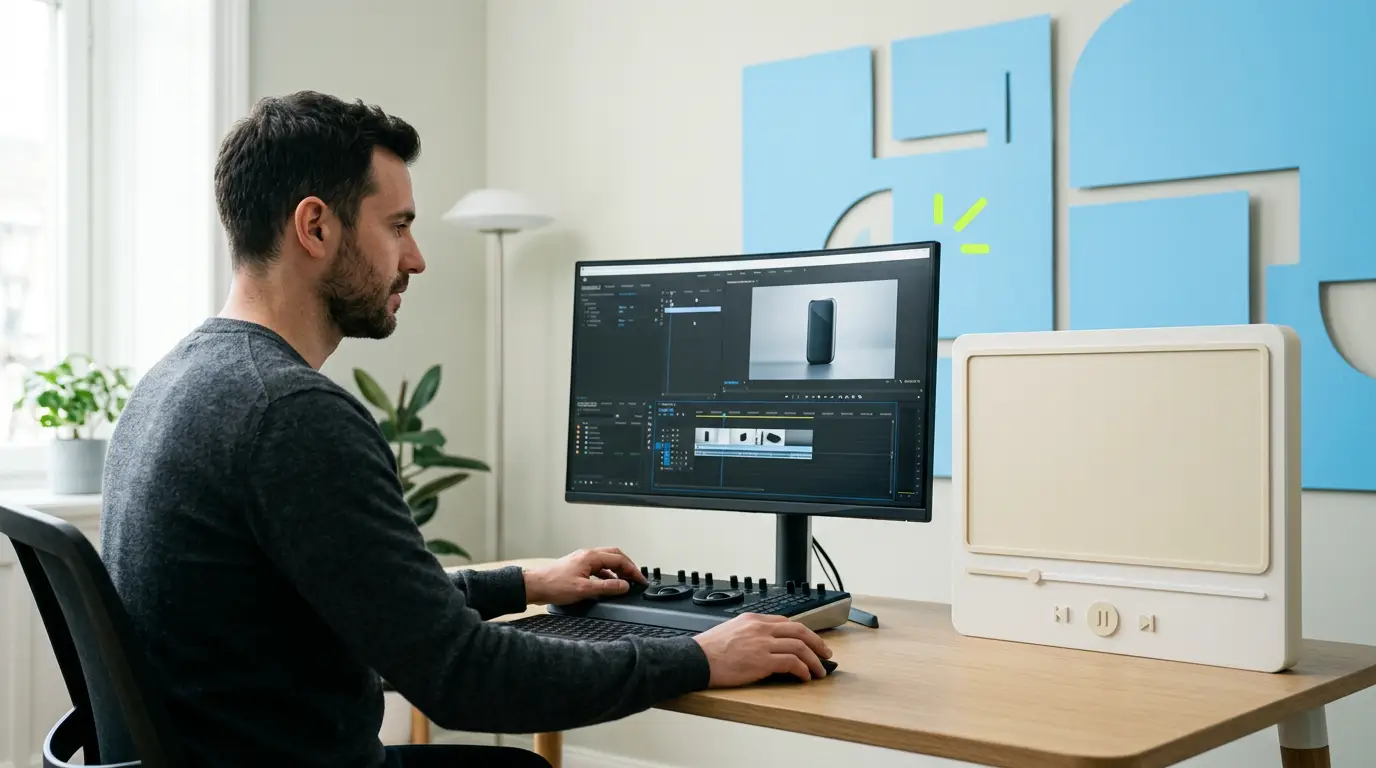
Tech company video production has its own demands that generic video work rarely meets. Technology companies, from startups to established platforms, need video that explains complex products clearly, keeps pace with fast release cycles, and builds credibility with technical and business audiences alike. A traditional video production company, built for occasional high-budget shoots, struggles to match the speed and technical fluency a tech company needs. This guide covers what tech company video production involves, the content types it spans, what it costs, and how to choose a partner built for the way tech moves.
What tech company video production involves
Tech company video production creates the video that explains technology, drives adoption, and builds a brand in a fast-moving market: product demos, explainers, feature videos, technical content, customer stories, and launch videos. The defining challenge is making complex, often abstract technology clear and compelling to the people who buy and use it.
Good tech video balances technical accuracy with accessibility. The production has to explain a product correctly without losing a non-technical buyer, which requires a partner who genuinely understands the technology and how to translate it. This is where generic video companies often fall short and where technical fluency becomes the differentiator.
The bigger shift is pace. Tech moves on fast release cycles and constant launches, so video production has to keep up with frequent, timely content rather than slow, one-off projects. A production model built for occasional flagship films cannot match the cadence a tech company needs to stay current. Wyzowl reports that 80% of people have bought or downloaded an app after watching a demo video.
What tech company video production includes

Product demo and explainer videos make complex technology clear and show it in action, the core assets that drive understanding and adoption. Our explainer video production outsource saas guide covers this format for tech products.
Feature and release videos keep pace with fast development cycles, announcing and explaining new capabilities as they ship.
Technical and educational content builds authority with technical audiences and helps users get value, from tutorials to deep-dive walkthroughs.
Customer story and case study videos prove the technology works in the real world, the credibility tech buyers look for. Our video testimonial editing service overview shows how these are produced.
Launch and brand videos support major product launches and position the company in a competitive market.
Social and short-form content, often repurposed from longer assets, keeps the brand visible across the channels where tech audiences gather. Our video content repurposing service b2b overview covers this.
How much it costs
For project-based work, a traditional production company typically charges $5,000 to $30,000 or more per tech video for a polished demo or launch piece, with timelines of several weeks. That works for an occasional flagship asset but does not match the steady, timely output a tech company needs to keep pace with its roadmap.
For ongoing output, a dedicated video subscription is far more economical than commissioning each video separately. Done-for-you services run $2,000 to $3,200 per month and cover a steady flow of demos, feature videos, technical content, and social clips for a flat fee, which fits the fast cadence of a tech company. Our video editing cost per month for business breakdown explains how to budget for this.
Hiring an in-house editor is an option for teams with constant volume, but an in-house video editor costs $55,000 to $75,000 per year before benefits per ZipRecruiter, plus equipment and software. For most companies a service delivers the same quality without the overhead of a full-time hire.
What to look for

Look for real technical fluency. A partner that understands technology can explain a product accurately without losing a non-technical buyer, which generic video companies often cannot. Ask to see tech demos, explainers, and technical content in their portfolio.
Prioritize speed that matches your roadmap. Tech moves fast, so confirm the partner can deliver timely content on a steady cadence rather than only producing slow, expensive one-off films. Our video editing turnaround time guide covers realistic expectations.
Match the model to your pace and budget. A traditional agency, a freelancer, and a dedicated subscription suit very different needs, and the right choice depends on how much content your roadmap demands.
Why pace and fluency beat prestige
The tech companies that build strong video presence are rarely the ones who hired the most prestigious production company; they are the ones who found a partner who understands the technology and can keep pace with it. A single polished launch film does little if the product ships major features every month with no video to explain them, while a steady stream of clear demos, feature videos, and technical content keeps users adopting and the brand current.
This is why the traditional agency model, built for occasional high-budget shoots, often fits tech poorly. The work is good, but the cost and pace cannot match a roadmap that moves weekly. A dedicated video subscription gives a tech company a consistent, technically fluent partner who turns out professional video continuously for a flat monthly cost, keeping content in step with development.
The practical move for most tech companies is to treat video as an ongoing function tied to the product, not a series of expensive projects. Choosing a partner whose model and fluency match that reality is what keeps video current, accurate, and useful as the technology evolves. Sprout Social reports that 74% of Facebook videos are watched without sound, which is why on-screen captions matter so much.
The bottom line for tech companies

For most tech companies, the best video production partner is not a traditional agency charging five figures per project, but a dedicated, technically fluent partner who keeps pace with the roadmap and delivers professional demos, feature videos, and technical content continuously for a predictable monthly cost. That model matches how tech actually moves, fast, technical, and constant, and it keeps video accurate and current rather than perpetually behind the product. The right tech video production partner is the one who understands your technology and can keep up with it.
Keeping video in step with a fast product
The hardest part of tech company video is not making any single video well; it is keeping the whole library current as the product changes underneath it. A demo recorded six months ago can already misrepresent the product, a feature video can describe a flow that has since been redesigned, and an explainer can frame the value around a positioning the company has since moved past. For a fast-moving tech company, video is never finished, which is why the production model has to account for maintenance, not just creation.
This reframes how a tech company should evaluate a video partner. The question is not only whether they can produce a polished launch film, but whether they can keep a growing library accurate and current at the pace the roadmap moves. A partner who treats each video as a one-time deliverable leaves the company with an ever-growing backlog of outdated content, while a partner working as an ongoing extension of the team keeps the library in step with the product.
Technical fluency compounds here in the same way. A partner who genuinely understands the product can update a demo or feature video quickly when something changes, because they already understand what the product does and why it matters. A generic vendor has to relearn the product for every update, which makes maintenance slow and expensive enough that it usually does not happen, and the library drifts out of date.
For a tech company deciding how to resource video, the practical takeaway is to choose a model built for a moving target. The roadmap will keep shipping, the product will keep evolving, and the video that explains it has to evolve too. A dedicated, technically fluent partner who can both create and maintain keeps video accurate and useful as the technology changes, which is what makes video a durable asset rather than a perpetually outdated one.
Where to go from here
Frequently asked questions
What does tech company video production involve?
Tech company video production creates the video that explains technology and drives adoption: product demos, explainers, feature and release videos, technical and educational content, customer stories, and launch videos. The best partners make complex technology clear without sacrificing accuracy.
How much does tech video production cost?
Traditional project-based production runs $5,000 to $30,000 or more per video. A dedicated video subscription, which suits the steady output tech companies need, runs $2,000 to $3,200 per month for a continuous stream of content at a flat fee. A $900 trial is available to test the service before committing to a monthly plan.
Why does tech video need technical fluency?
Technology is complex and often abstract, so the production has to explain it accurately without losing a non-technical buyer. A partner who genuinely understands the product can do this; a generic video company frequently cannot, which is why fluency is the key differentiator.
How does video keep pace with fast release cycles?
A dedicated subscription model is built for steady, timely output, turning around content in days so feature and release videos can ship alongside the product. A traditional agency taking weeks per project struggles to keep up with a fast roadmap.
What tech videos matter most?
Product demos and explainers that make the technology clear, feature videos that keep pace with releases, and customer stories that prove it works. Together these drive understanding, adoption, and credibility.
Should a tech startup use an agency or a subscription?
For an occasional flagship launch film, an agency works. For the constant, technical output a tech company needs to keep pace with its roadmap, a dedicated subscription is usually more economical and far better paced.
Can early-stage tech companies afford professional video?
Yes. A dedicated video subscription at $2,000 to $3,200 per month gives an early-stage tech company continuous professional video for far less than a traditional agency charges per project, keeping content in step with a fast-moving product on a startup budget.
How do tech companies keep video from going out of date?
By choosing a partner who can both create and maintain. A fast-moving product constantly changes the flows and positioning that videos depend on, so an ongoing relationship that refreshes the library as the product evolves keeps content accurate, where one-off projects leave a growing backlog of outdated video.
What is the most common mistake in tech video?
Treating it as occasional flagship production rather than an ongoing function tied to the product. The result is a polished launch film and then silence while the product ships features with no video to explain them, so adoption suffers and the content quickly falls behind the roadmap.
Does a tech video partner need to understand the product deeply?
Yes. Technical fluency is what lets a partner explain a product accurately without losing a non-technical buyer, and it is what makes fast updates possible when the product changes. A partner who has to relearn the product for every video produces slower, shallower work.

Prakhar Mehta
Pixel8 is a done-for-you video editing subscription, giving SaaS companies, agencies, and founders a dedicated editing team with 48-hour turnaround.
Ready to stop doing this yourself?
Get a dedicated video editing team. 48-hour turnaround, unlimited revisions, month-to-month.